Is BeReal Safe? A Balanced Look at Its Security and Privacy
This article examines BeReal's safety, highlighting privacy controls, security features, and risks linked to its unique social sharing model.

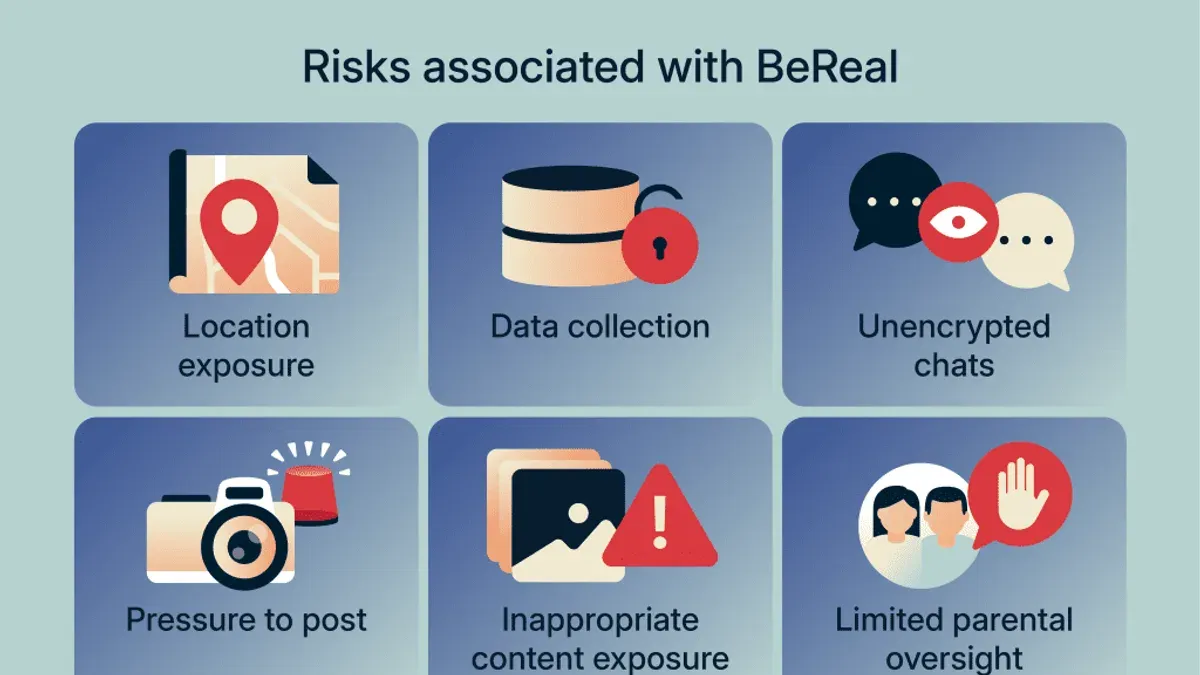
This article provides a clear, balanced answer to the common question: is BeReal safe? It examines the app's unique approach to social media, highlighting both the benefits and the risks tied to its design and user behavior.
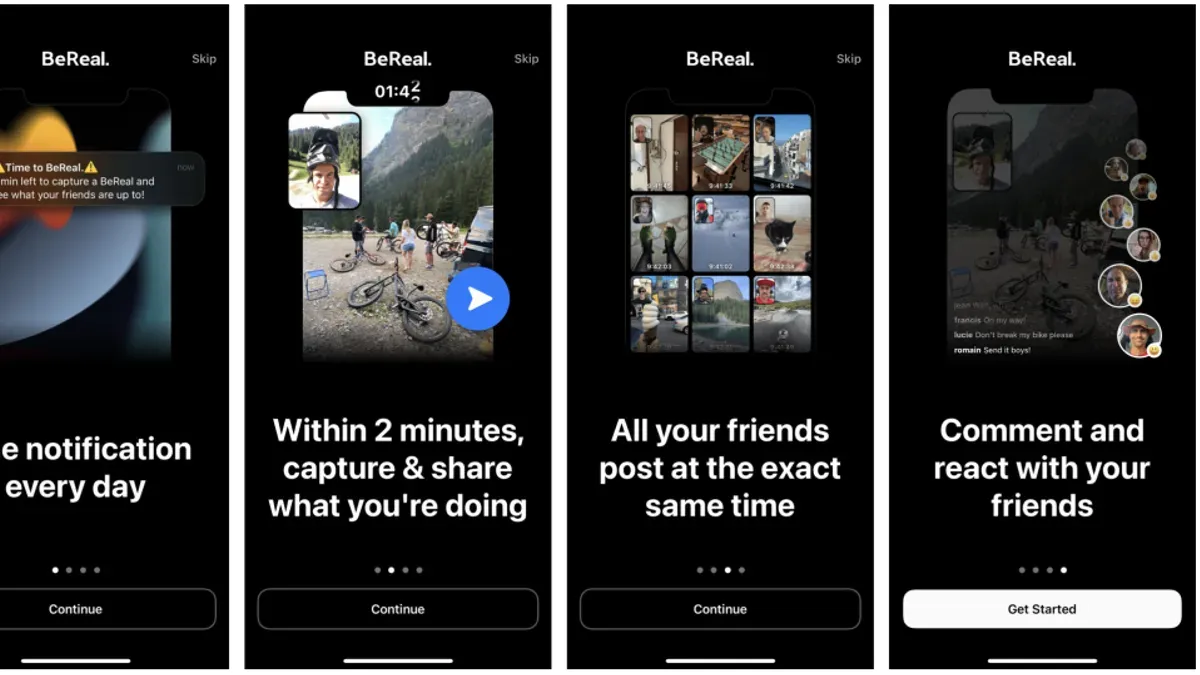
BeReal prompts users once a day to share a spontaneous photo, encouraging authenticity but also raising concerns about privacy and potential oversharing. While the app restricts sharing to a close friends list by default, users can still choose to post publicly, which may expose location and personal details unintentionally.
Understanding these nuances is vital for parents, teens, and anyone cautious about social media use. This article outlines specific safety considerations, including how age affects risk levels and practical steps to control privacy settings effectively.
Is BeReal safe to use?
BeReal offers a distinct approach to social media by prompting users once daily to share an unedited photo within a limited timeframe, encouraging authenticity over curated content. This moment-in-time sharing reduces the pressure to edit or stage posts, which can be a positive for mental well-being. However, this model also involves automatic location tagging, which raises privacy concerns as it can reveal a user’s exact whereabouts to their network.
From a security perspective, BeReal maintains standard data protection practices similar to other mainstream social apps. There are no widely reported security breaches or incidents compromising user data. The app collects typical personal information and usage data but allows users to control who sees their posts by adjusting privacy settings, such as sharing only with friends rather than the entire community.
Compared to larger platforms, BeReal’s smaller but rapidly growing user base means fewer targets for large-scale cyberattacks, though this does not eliminate risks. Users should remain cautious about location sharing and consider limiting their audience to trusted contacts. Overall, BeReal balances authenticity and privacy reasonably well, but users must actively manage settings to maintain safety.
Tip: Adjust the "Who can see my Real-time location" setting in the app’s privacy menu to restrict location visibility to trusted friends only.
Is BeReal safe for kids and teens?
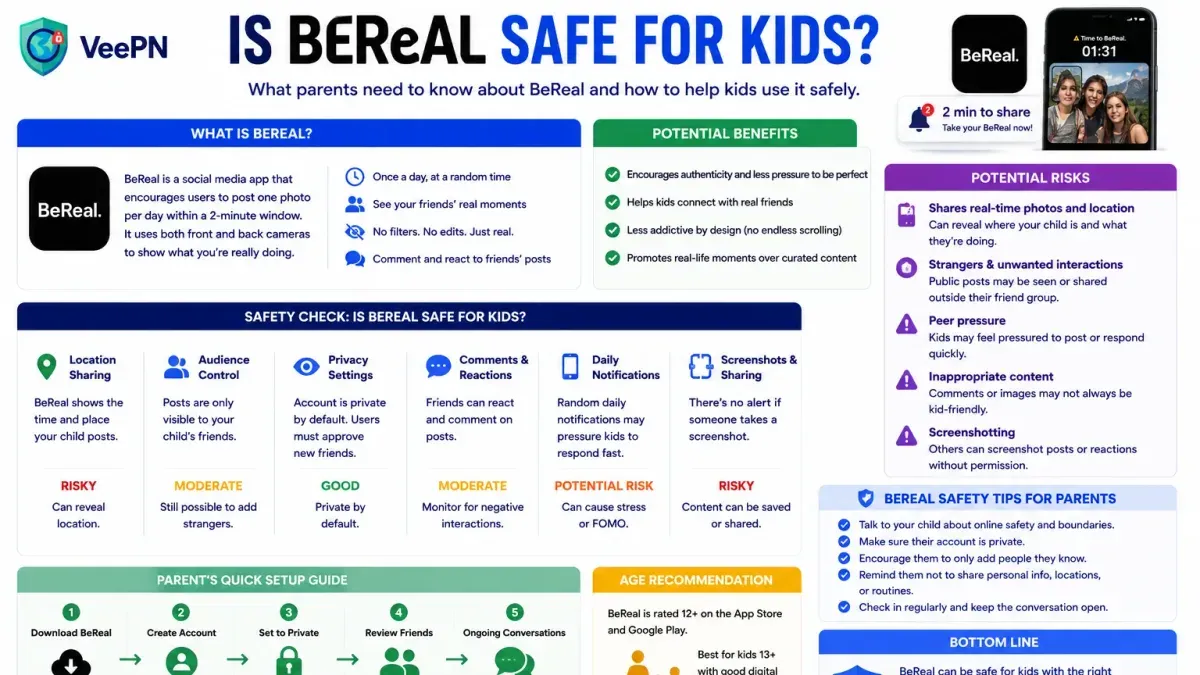
BeReal is not entirely safe for kids and teens, particularly those between 12 and 14 years old, due to challenges in enforcing its minimum age requirement of 13 and risks related to peer pressure and exposure to strangers. The app's age gate relies on user honesty, and there have been instances where younger users access the platform despite guidelines.
Users in this age group may face unique risks, including feeling compelled to post timely content to fit in, which can lead to anxiety or oversharing. Additionally, BeReal’s design encourages sharing real-time images that may inadvertently reveal sensitive information or locations, raising concerns about exposure to unknown viewers.
Parental controls are limited within BeReal itself, but privacy settings allow users to restrict their audience to 'Friends Only' or designate specific friends, reducing exposure. Child safety organizations emphasize the importance of parents discussing online boundaries and monitoring app use rather than relying solely on in-app controls.
User feedback highlights that while moderation exists, it is sometimes insufficient to prevent inappropriate content or interactions among minors. Experts recommend that parents combine BeReal’s privacy features with open conversations about digital risks and encourage responsible sharing habits.
Tip: Encourage teens to use BeReal with a limited friends list and review privacy settings together to ensure safer sharing.
How to use BeReal on PC safely
BeReal does not offer an official desktop application or fully supported web version, which limits direct access on a PC. Users seeking to use BeReal on a computer typically rely on Android emulators like BlueStacks or web-based tools that simulate mobile environments. While emulators can provide a way to run the app, they come with inherent security risks such as potential malware exposure or compromised login data if downloaded from unverified sources.
When using an emulator, it is crucial to download it from the official website, keep the software updated, and avoid granting unnecessary permissions. Web-based tools claiming to offer BeReal access often require login credentials; these services can pose phishing risks and should be approached with caution or avoided altogether.
Best practices include enabling two-factor authentication on the BeReal account, using strong, unique passwords, and regularly reviewing authorized devices and sessions within account settings. Users should avoid entering credentials on third-party sites and refrain from sharing screenshots or sensitive information when using PC access methods.
Tip: Stick to official app stores and trusted emulator sources, and treat PC access as a convenience rather than a full replacement for the mobile app to maintain security integrity.
Understanding common BeReal safety concerns and tips
BeReal safety is often misunderstood and should not be confused with unrelated terms like 'boreal safety gear' or 'barely safe for work,' which are entirely different contexts. The main safety concerns with BeReal center on location sharing, sensitive photo content, and social engineering risks.
Users sometimes inadvertently share their exact location or reveal personal details in photos, which can be exploited by malicious actors. For example, a user posting a photo outside their home could expose their address to strangers. Social engineering risks include fake friend requests or phishing attempts through direct messages.
Practical safety measures include carefully managing the friend list to allow only trusted contacts and using BeReal's visibility settings to restrict who can see posts. The app allows users to set their posts to "Friends Only" or customize visibility per post. Educating users, especially teens, on spotting suspicious profiles and avoiding sharing sensitive information is crucial.
Tip: Regularly review and update privacy settings under "Settings & Privacy > Privacy" to ensure location and content visibility align with your comfort level.
While photo-sharing apps have seen privacy breaches, vigilance and informed use of BeReal's controls can significantly reduce risks and make the experience safer.
Is BeReal still popular and widely used?
BeReal remains moderately popular but has experienced fluctuations in user engagement since its initial surge. App store analytics show that while daily downloads have decreased from peak levels, the app retains a dedicated user base, particularly among younger demographics seeking more authentic social media experiences.
Social media mentions have become less frequent compared to the app’s early viral phase, reflecting a natural tapering typical of many niche social platforms. Expert commentary suggests that BeReal’s core appeal—spontaneous, unfiltered sharing—helps sustain interest but also limits mass adoption due to its less polished, more vulnerable format.
Popularity directly affects safety; a larger, active community supports stronger moderation and quicker identification of harmful content or behavior. As BeReal’s growth slows, maintaining effective moderation can become more challenging, potentially impacting the overall user experience and safety environment.
Tip: Users and parents should monitor app updates and community activity levels as indicators of ongoing support and safety improvements.
Further reading
- How to Verify an App’s Legitimacy Before Downloading
- Is AOL Mail Safe? A Clear Look at Its Security and Privacy
- Is Apple ID Safe? A Clear Look at Security and Risks
Frequently asked questions
Do people still use bereal?
Yes, BeReal maintains an active user base, especially among younger audiences who appreciate its unique approach to authentic social sharing. While it may not dominate mainstream social media, it continues to engage users seeking a less curated experience.
Is bereal still a thing?
BeReal remains relevant in certain social circles as a platform promoting spontaneous photo sharing without filters or heavy editing. Its popularity varies by region and demographic but it still holds a niche appeal.
Is beal bank safe?
Beal Bank is a federally insured financial institution subject to regulatory oversight and security standards typical of U.S. banks. Customers should verify specific account protections and security measures with the bank directly for their particular needs.
Is beal bank a safe bank?
Beal Bank operates under federal banking regulations, providing the usual safeguards expected of a U.S. bank. As with any financial institution, prospective customers should review current reviews and financial health indicators before banking.
Is bereal safe for 13 year olds?
BeReal is designed for users aged 13 and older, but safety concerns depend on user behavior and supervision. Parents should discuss privacy settings, sharing boundaries, and recognize that the app’s spontaneous posting may expose teens to unintended sharing or peer pressure.
Limits of this advice
This article does not cover advanced technical security audits of BeReal’s backend infrastructure or internal data policies that are proprietary and not publicly disclosed. Individuals or organizations seeking detailed information on BeReal’s server security, data encryption methods beyond standard app settings, or legal compliance should consult specialized cybersecurity experts or official regulatory documents.
The most practical next step for anyone considering BeReal is to spend time exploring its privacy and notification settings thoroughly. Adjusting who can see posts by navigating to Profile > Settings > Privacy and carefully selecting whether to share with all friends, a custom group, or only a few contacts can greatly reduce exposure. Combining this with regular conversations about cautious posting habits helps balance openness with personal safety on the platform.