Understanding Advance Fee Scams: How They Work and How to Avoid Them
Discover how advance fee scams trick victims into paying upfront fees for fake promises and learn how to avoid them.

This article explains the mechanics of an advance fee scam, focusing on the psychological and procedural methods scammers use to deceive victims.
An advance fee scam typically involves a request for payment upfront in exchange for goods, services, or financial benefits that never materialize. Scammers often exploit trust and urgency, creating pressure to pay quickly before victims recognize red flags. Understanding these tactics can help identify suspicious requests that go beyond common warnings about unsolicited offers or too-good-to-be-true deals.
By examining the subtle techniques used to manipulate emotions and decision-making, readers can better protect themselves and others from falling prey to such frauds.
What is an advance fee scam
An advance fee scam is a type of fraud where a victim is persuaded to pay money upfront in return for a promised benefit that never materializes. These scams demand an initial fee—often described as processing, legal, or administrative costs—before the victim can receive a larger sum of money, a loan, a job, or a lucrative investment opportunity.
Common scenarios include fake loan offers, fraudulent investment deals, and nonexistent job offers. For example, an individual might receive an unsolicited message offering a large loan with no credit checks but requiring a small “advance fee” to release the funds. Once the fee is paid, the scammer disappears or produces excuses to request further payments.
Scammers lure victims by creating a sense of urgency or exclusivity, promising quick access to significant financial gains or career opportunities. These promises often exploit financial desperation or ambition, making the victim more likely to overlook warning signs.
Globally, advance fee scams remain widespread with thousands of reports each year, especially through online platforms and email. While exact numbers vary, law enforcement agencies and consumer protection groups frequently highlight advance fee fraud as a persistent and costly crime.
To illustrate, consider a person who receives an email claiming they have won a lottery or inheritance but must pay a fee to cover taxes or legal charges before receiving the funds. After paying, the victim realizes the prize was fictitious and the scammer cannot be reached.
How do advance fee scams work
Advance fee scams typically begin with initial contact through email, phone calls, social media, or online ads. Scammers present an appealing offer—such as a loan approval, investment opportunity, or job position—that requires the victim to pay a fee upfront to access funds, secure the job, or cover administrative costs.
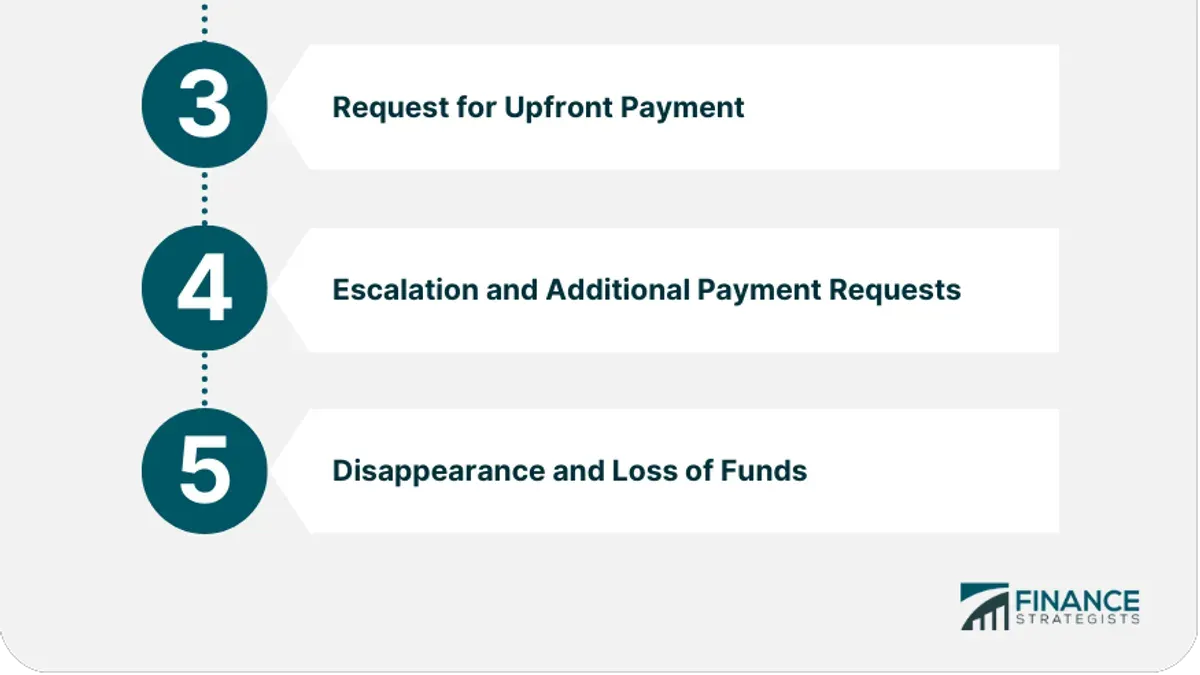
The process often follows a pattern: after the initial fee payment, the scammer claims additional fees are needed due to taxes, processing, or unexpected complications. This cycle of repeated demands continues until the victim becomes suspicious or unable to pay further.
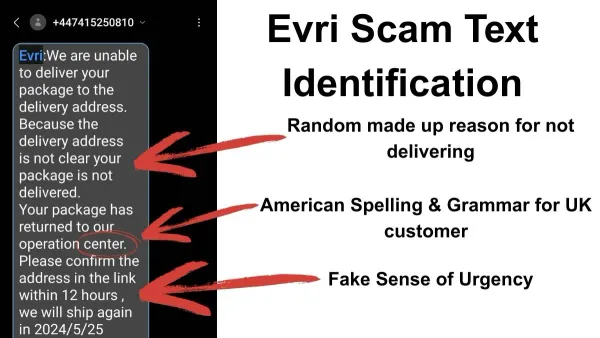
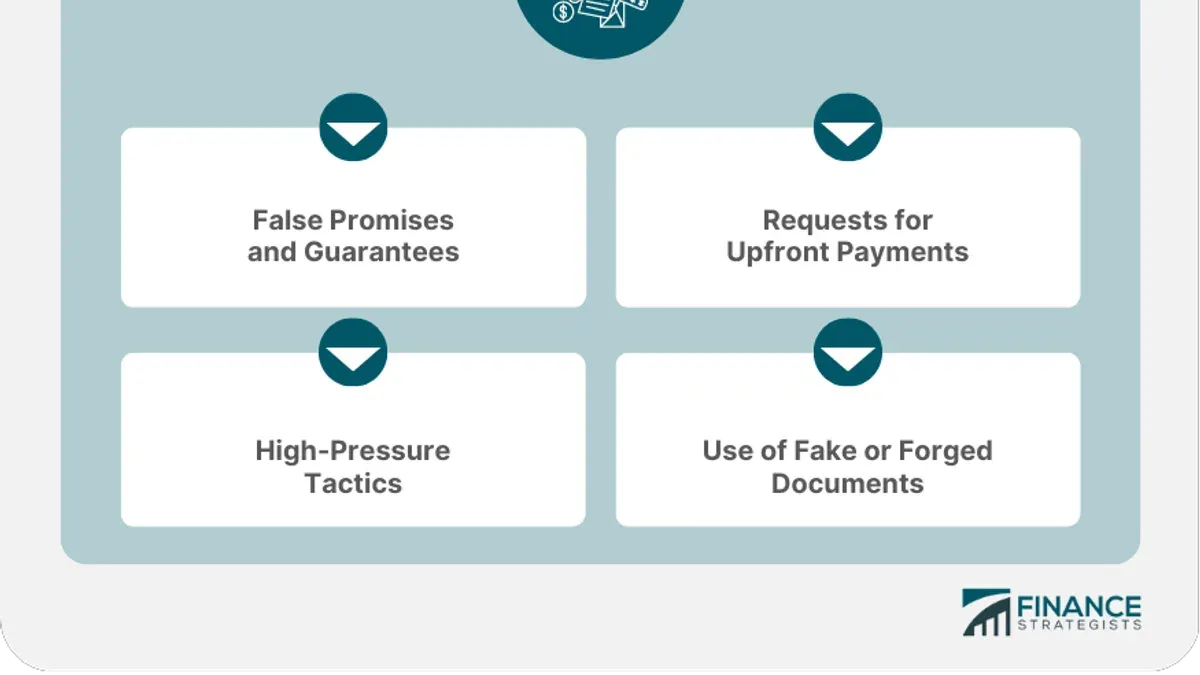
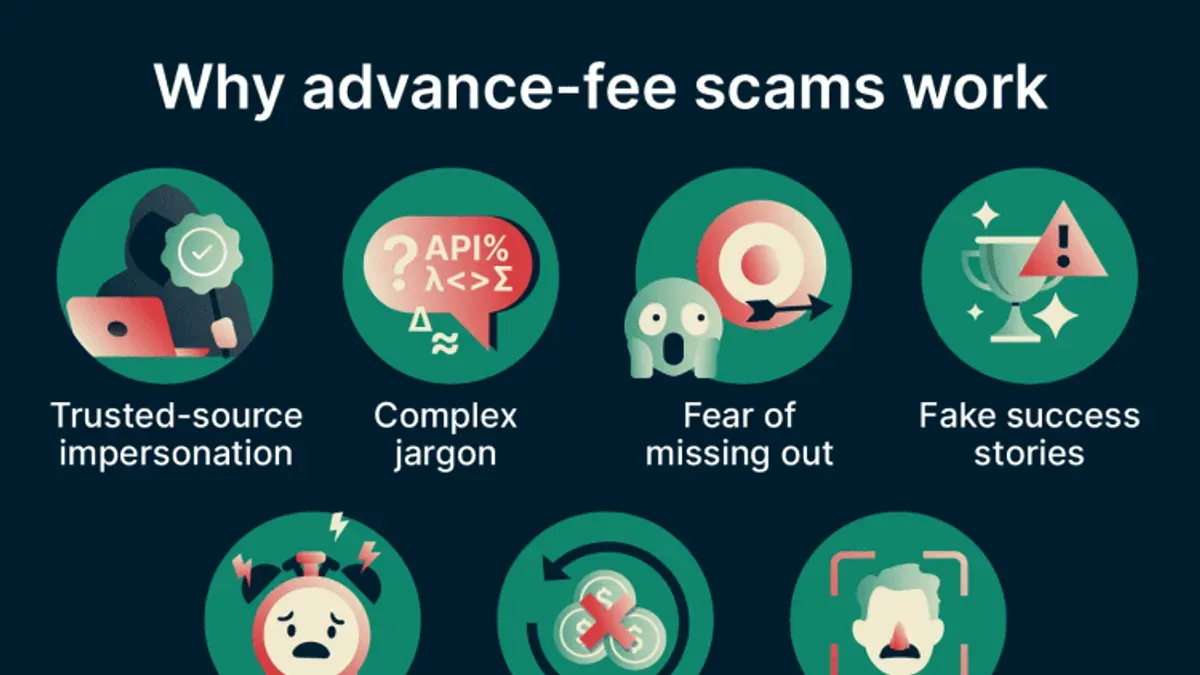
Psychological tactics play a critical role in compliance. Scammers create a sense of urgency, pressuring victims to act quickly before the opportunity expires. They also build trust by providing official-sounding documents or engaging in friendly communication. Pressure to keep details confidential isolates victims from advice, increasing their vulnerability.
Variations include advance fee loan scams, where victims are promised large loans but must pay fees first; investment scams offering high returns contingent on upfront payments; and job scams requiring fees for training or background checks.
For example, a victim might receive a job offer requiring a "processing fee" via wire transfer. After payment, additional fees for "work permits" or "equipment" are requested. The victim, eager to start the job, complies repeatedly until realizing the offer was fake.
Tip: Be cautious of unsolicited offers demanding upfront fees and verify legitimacy through official channels before making payments.
Is advance financial a scam and is advance cash legit
Not all services using the terms "advance financial" or "advance cash" are scams. Legitimate cash advance providers offer short-term loans or credit card cash advances regulated by financial authorities, with clear terms, fees, and consumer protections. For example, many banks and licensed lenders provide cash advances through credit cards, where fees and interest rates are disclosed upfront.
However, scammers often adopt similar names to create a false sense of legitimacy. Fake "advance financial" or "advance cash" schemes typically ask for upfront payments or personal information without offering verifiable credit products. They may promise large loan amounts with little or no credit check but require fees before any funds are released.
A concrete example: a legitimate cash advance might come from a known credit card issuer where the borrower accesses funds directly via an ATM or online portal with a transparent fee schedule. In contrast, a scam might contact the individual unsolicited, requesting an "advance fee" to process a loan that never materializes.
Warning signs of scams include:
- Requests for payment before loan approval or disbursement.
- Pressure tactics to act immediately.
- Lack of verifiable contact information or regulatory licensing.
- Unsolicited offers arriving via email or phone calls.
Regulatory bodies like the Consumer Financial Protection Bureau provide guidelines for cash advances, emphasizing transparency and fair lending practices. Checking official registries or lender reviews can help distinguish legitimate services from frauds.
Tip: Verify the lender’s licensing status through state financial regulatory websites before engaging with any advance cash or financial service.
Why am I being charged a cash advance fee and can cash advance fee be waived
Cash advance fees are legitimate charges imposed by banks or credit card issuers when a cardholder withdraws cash using their credit card or obtains cash-like transactions, such as gambling chips or money orders. These fees compensate the issuer for the higher risk and immediate availability of funds compared to regular purchases.
Commonly, cash advance fees are a percentage of the amount withdrawn, often around 3% to 5%, with a minimum flat fee, for example, $5 or $10. For instance, if a cardholder withdraws $200 in cash, a 3% fee would result in a $6 charge. This fee is separate from any interest accrued, which typically starts immediately without a grace period.
Some misconceptions link cash advance fees to scams, especially when individuals encounter unexpected fees after using their card for cash transactions. However, these fees are standard banking practices clearly outlined in cardholder agreements. They should not be confused with advance fee scams, which involve fraudulent upfront payment requests for non-existent services.
Waivers or reductions of cash advance fees are rare but possible under specific conditions. Some banks may waive fees for premium account holders or during promotional periods. Additionally, certain financial institutions might reduce fees if the cash advance was due to an error or fraud, but this requires contacting customer service and providing supporting information.
Example: A credit card user withdrawing $300 at an ATM is charged a 4% cash advance fee ($12) plus ATM fees. If the user holds a premium card, this fee might be waived, but generally, fees apply and interest begins immediately.
Tip: Reviewing the credit card agreement and contacting the issuer can clarify fee structures and eligibility for any waivers.
Advance fee scam examples
One common scenario involves fake investment opportunities. For instance, a scammer may present a seemingly lucrative real estate deal requiring an upfront "processing fee" before releasing detailed plans. Victims paying this fee received no further communication, losing their money without any actual investment.
In a notable case reported by law enforcement, an individual responded to an online advertisement promising high returns from a foreign property fund. After paying multiple advance fees over several weeks under various pretexts—legal clearances, taxes, and insurance—the victim discovered the entire operation was fictitious.
Advance fee job scams often ask candidates to pay for training or placement services upfront. A typical example involves a supposed recruitment agency that charges applicants a "registration fee" or "background check" cost before arranging interviews. After payment, no job materializes, and the recruiter disappears.
Such a case was documented where a group of job seekers paid fees ranging from modest to substantial amounts, only to find the agency untraceable and no employment offered. Authorities emphasized that legitimate employers rarely require fees from candidates.
Cryptocurrency advance fee scams exploit the hype around digital assets. Scammers promise exclusive access to initial coin offerings (ICOs) or crypto investment platforms, requesting advance payments to secure a spot or cover transaction fees. Victims often encounter fake websites and untraceable wallet addresses.
One widely reported incident involved a fraudulent crypto platform that collected advance fees from thousands, vanishing before any tokens were distributed. Law enforcement highlighted the sophisticated use of professional-looking websites and social media endorsements to build credibility.
How to fix advance fee scam problems
Victims or those suspecting an advance fee scam should act quickly to limit financial damage and increase chances of recovery. The first step is to immediately stop all communication with the suspected scammer and avoid sending any further payments.
Next, contact the bank or credit card issuer to freeze or close compromised accounts. This prevents continued unauthorized transactions and helps secure funds. For example, a person who paid an upfront fee for a fake investment and then noticed unusual withdrawals should call their bank's fraud department and request a hold on the account.
Reporting the incident to consumer protection agencies and law enforcement is essential. In the United States, victims can report to the Federal Trade Commission (FTC) via ftc.gov/complaint or call 1-877-FTC-HELP. The Internet Crime Complaint Center (IC3) accepts online reports at ic3.gov. Many countries have similar fraud hotlines and consumer bureaus that provide assistance and collect data to track scam patterns.
Tip: Document all communications, payment receipts, and any details about the scam. This information can support investigations and potential recovery efforts.
Recovery success varies widely depending on the scam type and how promptly victims act. While full financial restitution is rare, early reporting can sometimes lead to frozen funds or uncover scam networks.
Preventive measures include verifying credentials of service providers, using official channels for transactions, consulting trusted advisors before payments, and maintaining skepticism of unsolicited offers requiring upfront fees.
Common mistakes to avoid with advance fee scams
One frequent error is overlooking unsolicited requests for money, especially when they come from seemingly trustworthy sources. Victims often ignore warning signs such as pressure to pay fees quickly or vague explanations about the payment’s purpose. For instance, receiving an unexpected email offering a lucrative job opportunity but demanding an upfront fee to process the application should raise immediate suspicion.
Another common pitfall is making rushed decisions under emotional appeals or tight deadlines. Scammers create urgency, claiming limited-time offers or threatening loss of opportunity, pushing individuals to act before verifying details. This tactic exploits natural instincts to avoid missing out or to solve financial stress quickly.
Sharing personal or financial information prematurely is also a critical vulnerability. Providing bank details, social security numbers, or copies of identification documents without confirming legitimacy often leads to identity theft or unauthorized transactions. An example is responding to a scammer’s request for a "verification" of identity before any official contract or agreement is presented.
Experts emphasize that many victims fall prey because they trust the tone or appearance of communications rather than verifying through independent channels. A practical safeguard is pausing to consult official websites or contacting organizations directly to confirm any financial requests.
Tip: Never send money or share sensitive information without independently verifying the requester’s identity and the legitimacy of the offer.
Further reading
- How to Check If an Email Sender Is Legit: Step-by-Step Guide
- How to Check If an Online Store Is Legit: A Step-by-Step Guide
- How to Check If a Website Is Legit: A Step-by-Step Guide
- How to Recover and Secure a Facebook Account After a Hack
Frequently asked questions
What is advance fee fraud?
Advance fee fraud is a type of scam where victims are persuaded to pay money upfront for goods, services, or financial gains that never materialize. Scammers often promise large returns or exclusive deals but require an initial fee to proceed. Once the fee is paid, the scammer disappears or invents new reasons for additional payments.
What is advanced fee fraud?
Advanced fee fraud is another term for advance fee fraud and refers to the same deceptive practice. The variation in wording does not indicate a different scam type but is commonly used interchangeably in discussions about fraud involving upfront payments. Both terms describe schemes that rely on victims paying fees before receiving promised benefits.
What are advance fee scams?
Advance fee scams encompass a variety of fraudulent schemes where upfront payment is solicited under false pretenses. These scams can involve fake lotteries, bogus loan offers, employment opportunities, or inheritance claims. The common element is the request for an initial fee, which once paid, leads to the victim losing their money without receiving the promised outcome.
What is advance fee scam?
An advance fee scam is a specific fraudulent act where a scammer requests a payment in advance, claiming it is necessary to secure a larger benefit. The scam exploits trust and urgency to convince victims to pay fees before any legitimate transaction occurs. Typically, the promised service or financial gain never happens, leaving the victim at a loss.
What is advance fee fraud
Advance fee fraud is the practice of tricking individuals into paying fees upfront for services or returns that do not exist. It is characterized by the false promise of something valuable in exchange for an advance payment. The fraud is completed when the scammer fails to deliver and often demands additional fees, exploiting the victim’s hope or desperation.
Limits of this advice
This article does not provide legal advice or guarantee recovery of funds lost to advance fee scams. Readers facing significant financial loss or legal issues should consult qualified attorneys, law enforcement, or consumer protection agencies for tailored assistance and potential remedies.
Identifying and avoiding advance fee scams is a critical preventive step, but resolving the consequences often requires professional support beyond general guidance.
Taking immediate action to report suspected scams to official channels is the most effective next step. This often involves contacting local law enforcement, the Federal Trade Commission (FTC), or relevant consumer protection organizations. Prompt reporting increases the chance of mitigation and helps authorities track scam patterns to protect others.
Tip: Keep detailed records of all communications and transactions related to a suspected scam as this information can be vital for investigations and potential recovery efforts.