Types of Phishing Attacks: A Complete Guide to Recognize and Understand Them
This article explains the types of phishing attacks and helps readers identify which are most relevant to their security environment.

This article explains the types of phishing attacks and helps readers identify which are most relevant to their security environment.
Phishing remains a leading method for cybercriminals to gain unauthorized access by exploiting human trust. Understanding the various types of phishing attacks is essential for prioritizing defense strategies, especially as attacks evolve to target mobile devices and high-profile individuals such as company executives. From broad campaigns to highly tailored approaches, the landscape includes email phishing, vishing (phone-based), smishing (SMS-based), and spear phishing, among others. Security-conscious professionals and IT decision-makers benefit from distinguishing these attack types to allocate resources effectively and implement appropriate safeguards.
What types of phishing attacks are there
Phishing is a cyberattack technique designed to deceive individuals into revealing sensitive information or performing actions that compromise security. Attackers leverage various communication channels to distribute malicious content or impersonate trusted sources.
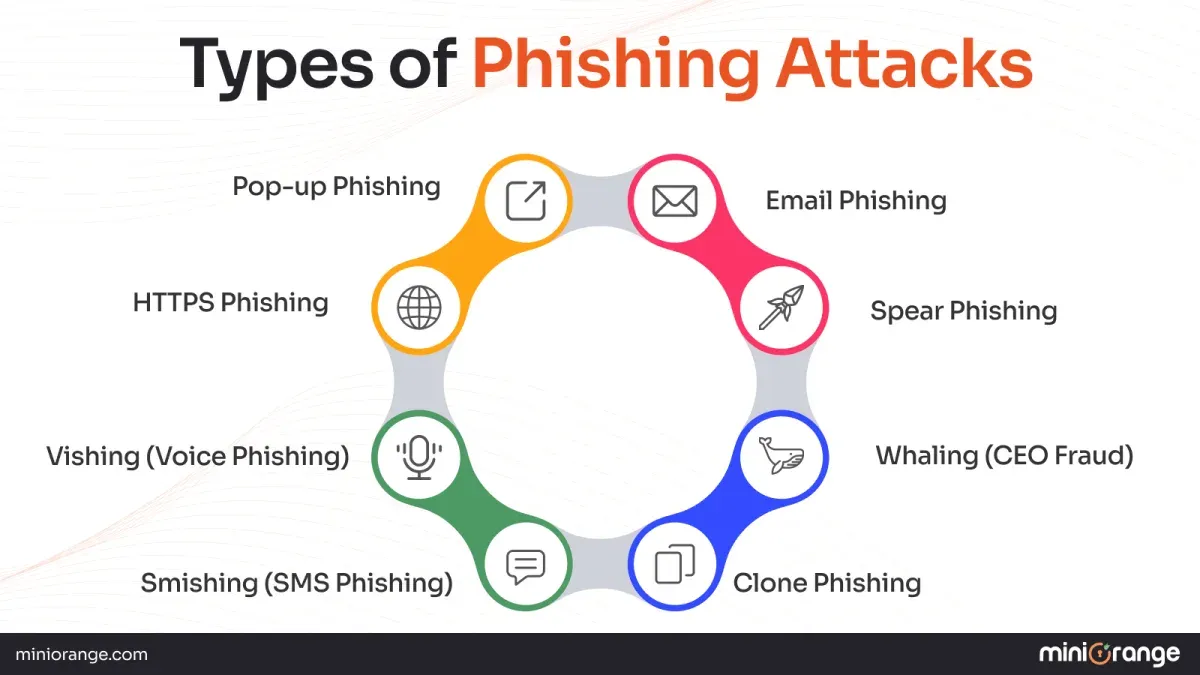
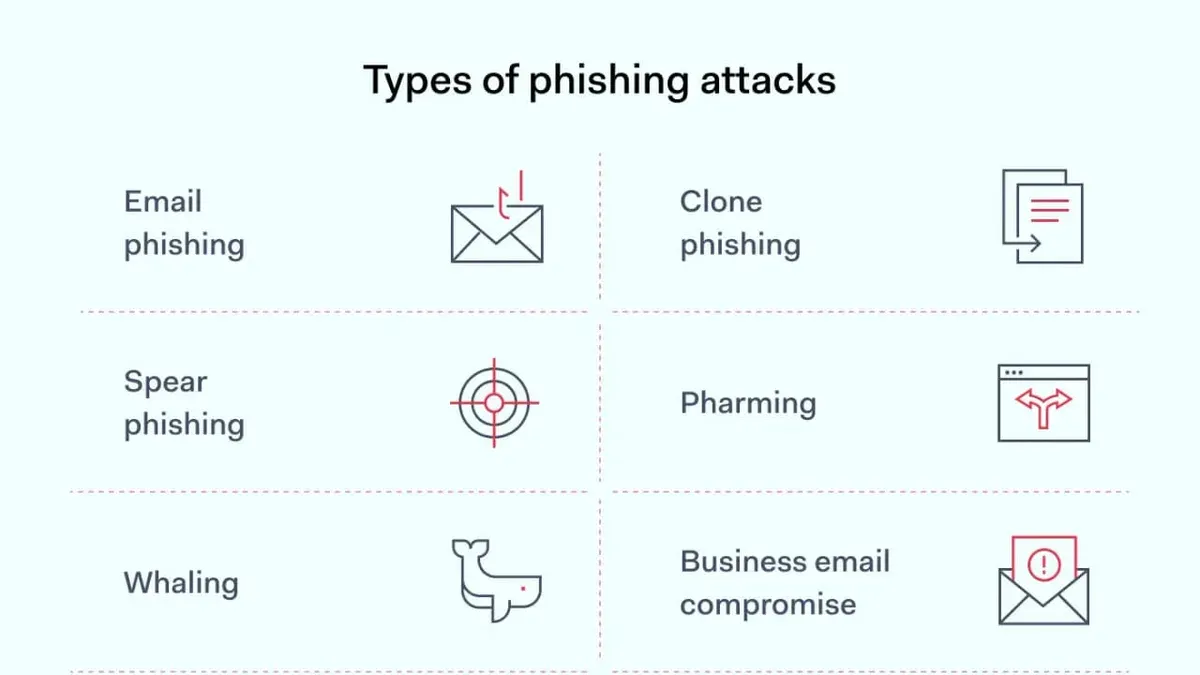
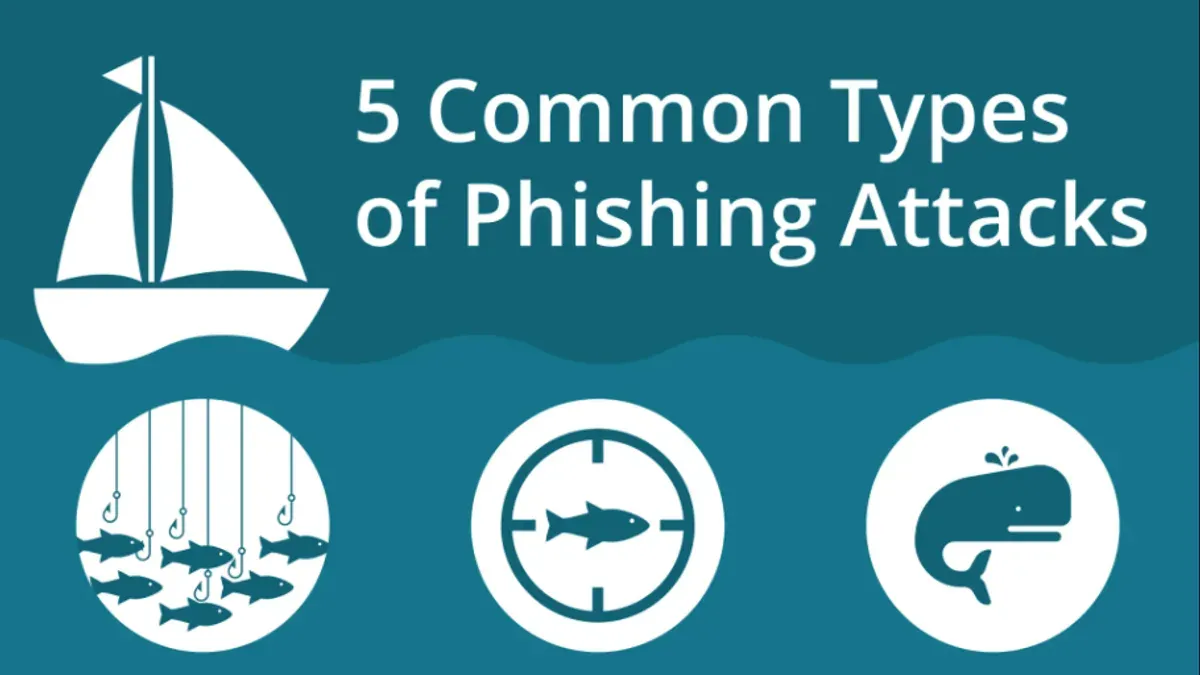
The main categories of phishing attacks include email phishing, spear phishing, whaling, smishing, vishing, and quishing. Email phishing is the broadest and most common form, characterized by mass-distributed fraudulent emails that often mimic legitimate organizations to trick recipients into clicking malicious links or attachments.
Spear phishing targets specific individuals or organizations with tailored messages based on prior research, increasing the likelihood of success. Whaling is a subtype of spear phishing that specifically aims at high-profile executives or decision-makers, often involving carefully crafted emails that appear to come from trusted partners or internal sources.
Smishing and vishing exploit mobile communication channels—smishing uses SMS text messages, while vishing uses phone calls—to trick victims into divulging confidential data or installing malware. Quishing, a more recent variant, uses QR codes embedded in messages or physical locations to direct victims to malicious websites.
For example, a spear phishing email might impersonate a company’s IT department asking a targeted employee to reset their password via a provided link, which leads to a fake login page capturing their credentials. Cybersecurity reports consistently identify email phishing as the most prevalent vector, but mobile-based smishing and vishing attacks are increasing as mobile device use grows.
How many types of phishing attacks are there
The exact number of phishing attack types is difficult to pin down due to the constantly evolving nature of cyber threats and the overlapping characteristics among various methods. Most cybersecurity frameworks identify between five and seven core phishing categories, but these classifications often blend as attackers adapt techniques.
Commonly recognized core types include email phishing, spear phishing targeting specific individuals or groups, whaling aimed at high-profile executives, smishing which uses SMS messages, vishing conducted via voice calls, and quishing that exploits QR codes. For instance, while spear phishing targets a particular employee with personalized information, whaling focuses explicitly on executives or high-value targets within an organization.
Emerging types and hybrid attacks complicate classification further. An attack might combine smishing and vishing by sending an SMS that prompts the victim to call a malicious number. Some cybersecurity sources present comparison tables illustrating these overlaps, showing how the boundaries between attack types are fluid rather than fixed.
For example, a financial services employee might receive a tailored email (spear phishing) followed by a phone call (vishing) from someone impersonating IT support, demonstrating how multiple phishing styles can be leveraged in one campaign to increase success chances.
Tip: Security defenses should prioritize core phishing types relevant to the specific organizational context while remaining vigilant for hybrid and emerging methods.
What type of phishing attack uses phone calls
Vishing, or voice phishing, is a phishing attack conducted through phone calls. Attackers impersonate trusted entities such as banks, government agencies, or tech support representatives to manipulate victims into providing sensitive information or performing actions that compromise security.
In a typical vishing scenario, a caller might claim to be from a bank’s fraud department, informing the target of suspicious activity on their account and urging immediate verification of personal details. Alternatively, attackers may pose as IT support, requesting remote access to a computer to resolve a fabricated issue. These social engineering techniques rely on the urgency and authority conveyed through voice communication, which can be more persuasive than written messages.
One notable example involved a series of calls targeting employees at a financial services firm. The attackers pretended to be from the company’s internal IT helpdesk, convincing staff to disclose login credentials. This led to unauthorized access to confidential systems and significant data breaches. Such incidents highlight how vishing exploits trust and authority in voice interactions.
Tip: Always verify the caller's identity independently before sharing any sensitive information or performing requested actions during unsolicited calls.
What type of phishing attack targets particular individuals
Spear phishing is a highly targeted form of phishing that focuses on specific individuals or organizations rather than casting a wide net. Unlike general phishing, which relies on generic messages sent to many recipients, spear phishing attackers gather detailed personal or organizational information to craft convincing, tailored messages that appear legitimate.
Attackers often use publicly available data from social media profiles, company websites, or previous data breaches to personalize emails or messages. These communications may reference recent events, roles within the company, or personal interests to gain the recipient's trust and increase the likelihood of engagement.
Common spear phishing targets include employees with access to sensitive data, IT administrators, finance personnel, and executives. For example, a spear phishing email might impersonate a trusted vendor requesting payment or a colleague asking for login credentials to resolve an urgent issue.
One notable spear phishing campaign involved attackers impersonating a company’s finance director to request wire transfers, resulting in significant financial losses. Such campaigns demonstrate the attack's sophistication and potential impact, often bypassing traditional spam filters due to their personalized nature.
Tip: Verifying unexpected requests through secondary channels, such as a phone call, can help detect spear phishing attempts.
What type of phishing attack targets company executives
Whaling is a specialized form of spear phishing that targets high-level executives within organizations, such as CEOs, CFOs, and other senior leaders. These attacks focus on individuals who have access to sensitive company information and financial resources, making them particularly valuable to cybercriminals.
Attackers often craft highly personalized and convincing emails that appear to come from trusted sources, such as board members or business partners. The messages typically request urgent actions like wire transfers, confidential data disclosures, or approval of sensitive transactions. Because executives frequently handle high-stakes decisions, a successful whaling attack can lead to significant financial losses or severe reputational damage.
One notable example involves a global technology firm where an attacker impersonated the CEO and instructed the finance department to transfer a large sum to an overseas account. The fraud went unnoticed for days, resulting in millions lost before the deception was uncovered. This incident underscores how whaling attacks exploit trust and authority to bypass standard security controls.
Tip: Implementing multi-factor authentication and strict verification procedures for financial requests can reduce the risk of falling victim to whaling.
What type of phishing attack is smishing
Smishing is a phishing attack that exploits SMS text messaging rather than email to deceive targets. Unlike traditional email phishing, smishing messages appear as text alerts or notifications on mobile devices, often prompting urgent action such as clicking a link or responding with sensitive information.
Typical smishing messages may claim to be from a bank alerting the recipient of suspicious activity, a delivery service requesting confirmation of a package, or a supposed tech support warning about a device issue. The goal is to trick the recipient into revealing personal data, downloading malware, or visiting fraudulent websites designed to steal credentials.
Mobile devices face unique vulnerabilities that amplify smishing risks. For example, mobile operating systems sometimes automatically convert links into clickable text, increasing the likelihood of accidental engagement. Additionally, mobile users often rely on SMS for two-factor authentication, which attackers may try to intercept or spoof.
Smishing attacks are becoming more frequent as mobile device use grows, with reports indicating a notable rise in mobile-related phishing incidents. Compromise rates can be high because users may trust text messages more than emails and respond quickly without scrutinizing the content.
Example: A user receives a text stating, "Your bank detected unusual activity. Visit https://secure-bank-alert.com immediately to verify your identity." The link leads to a fake login page designed to capture banking credentials.
Tip: Verify unexpected SMS requests by contacting the institution directly through official channels before responding or clicking links.
Types of phishing attacks on mobile devices
Mobile devices face a diverse range of phishing attacks beyond smishing, exploiting unique platform features and user behaviors. SMS remains a common vector, but attackers increasingly utilize malicious apps and social media phishing to compromise mobile users.
Malicious apps often masquerade as legitimate software on app stores or through sideloading, embedding phishing attempts within permissions requests or deceptive interfaces. Social media phishing on mobile capitalizes on the constant connectivity and instant messaging, tricking users into clicking fraudulent links or sharing sensitive data.
Quishing, or QR code phishing, has emerged as a mobile-specific threat where attackers distribute QR codes that, when scanned, direct users to phishing websites or prompt malicious app downloads. For instance, a user might receive a QR code purportedly linking to a restaurant menu but instead is led to a counterfeit login page designed to steal credentials.
The detection and prevention of mobile phishing are challenging due to smaller screen sizes limiting URL visibility, permissions that users often grant without scrutiny, and the blending of phishing content within trusted apps. Studies indicate that mobile phishing attacks have a higher success rate compared to desktop due to these factors and the prevalence of on-the-go device usage.
Tip: Users should verify QR codes from trusted sources and scrutinize app permissions carefully before installation to reduce mobile phishing risks.
Common phishing attack mistakes to avoid
One frequent error is confusing legitimate emails with phishing attempts or dismissing actual phishing messages as safe. For example, an employee might delete a genuine password reset notification mistaking it for phishing, leading to account lockouts and operational delays.
Overreliance on technical controls such as spam filters and antivirus software can create a false sense of security. Without ongoing user education and awareness, these tools cannot prevent all phishing attempts, especially sophisticated or targeted ones.
Mobile devices often receive less security attention, yet ignoring mobile-specific threats like smishing or malicious app links increases vulnerability. Users may click on harmful links in text messages or social media apps, assuming they are safe due to the device's portable nature.
Failing to verify unexpected communications, particularly phone calls and texts requesting sensitive information, remains a major pitfall. A common scenario involves an employee receiving a call appearing to be from IT support asking for login credentials; without verification through official channels, this can lead to credential compromise.
Tip: Always confirm unexpected requests via a separate, trusted communication method before responding or taking action.
Further reading
- Types of Malware: What They Are and How They Impact Security
- Types of Hackers Explained: Who They Are and What They Do
- How to Spot and Report Wells Fargo Scam Texts Safely
- How to Identify and Protect Yourself from Norton Renewal Scam Emails
Frequently asked questions
What kind of phishing attacks are there?
Phishing attacks come in various forms including email phishing, spear phishing, whaling, smishing, and vishing. These attacks differ mainly in their delivery method and target audience, ranging from broad, generic campaigns to highly targeted attempts against specific individuals or executives.
What are 3 types of phishing attacks?
Three common types of phishing attacks are email phishing, which uses fraudulent emails to trick recipients; spear phishing, targeting specific individuals with personalized messages; and smishing, which relies on SMS text messages to deceive victims.
What are the common phishing attacks?
Common phishing attacks include email phishing, where attackers send deceptive emails; spear phishing targeting particular individuals or roles; and vishing, which involves phone calls aimed at extracting sensitive information. These methods often exploit trust and urgency to prompt quick, unconsidered responses.
What are different types of phishing attacks?
Different phishing attacks include broad-based email phishing, targeted spear phishing, whaling aimed at high-profile executives, smishing using SMS, and vishing conducted by phone. Each type uses distinct tactics and communication channels to compromise data or credentials.
What are 3 types of phishing attacks
Three types of phishing attacks are whaling, which targets senior executives; smishing, involving text message scams; and vishing, conducted through voice calls. These attacks vary in complexity and are selected based on the attacker’s objectives and the victim’s profile.
Limits of this guide and further steps
This article does not cover all possible phishing variants exhaustively due to the constantly evolving threat landscape. Readers should supplement this guide with organization-specific threat intelligence and consult professional cybersecurity advisors for tailored risk assessments. Technical prevention methods such as advanced email filtering, multi-factor authentication deployment, and incident response strategies require specialized resources and are beyond the scope of this overview.
The most useful next step is to conduct a thorough phishing risk assessment specific to the organization’s environment and user base. This includes identifying which phishing attack types pose the greatest threat based on industry, employee roles, and device usage patterns. Prioritizing defenses accordingly will optimize resource allocation and enhance overall resilience against phishing attempts.