Types of Hackers Explained: Who They Are and What They Do
This article explains the types of hackers, their motivations, and roles beyond traditional labels to help improve cybersecurity understanding.

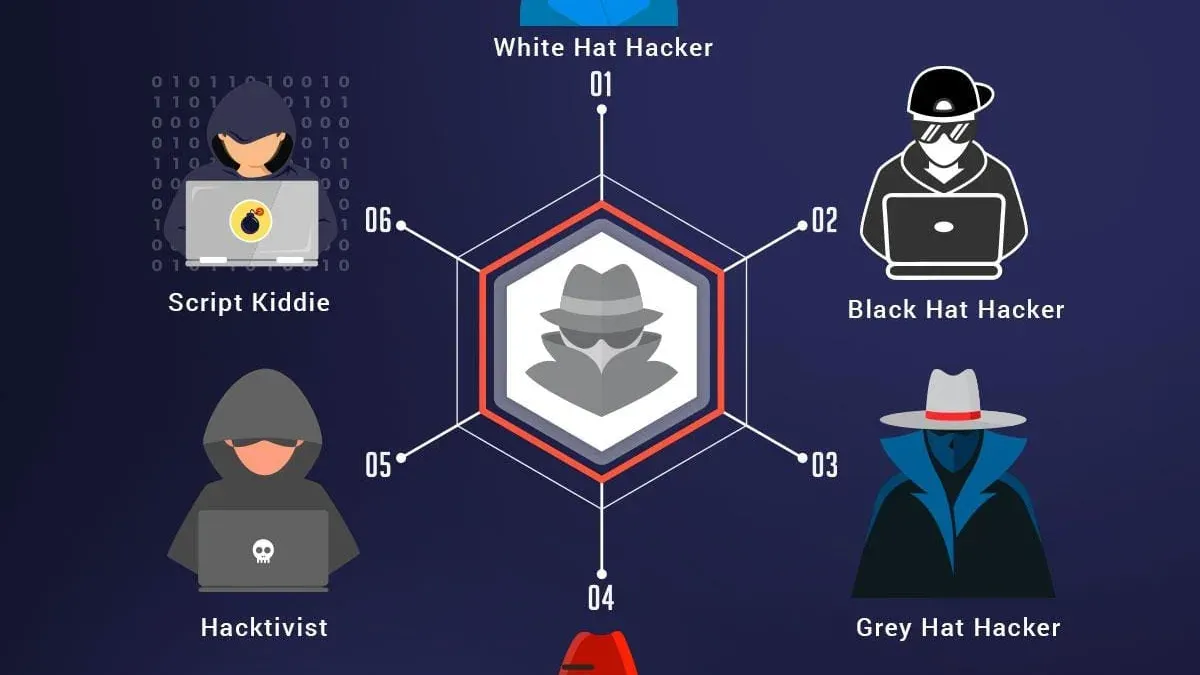
This article explains the types of hackers by exploring the varied categories beyond the traditional black, white, and grey hat labels.
Hackers are often oversimplified into these three groups, but the reality includes a spectrum of motivations, skills, and ethical considerations. Understanding these nuances is essential for cybersecurity enthusiasts, students, and professionals aiming to assess risks, pursue ethical hacking careers, or develop security policies.
Some hacker groups, like Anonymous and DedSec, embody archetypes that combine activism, ideology, and technical expertise, challenging straightforward definitions. This guide clarifies these distinctions and cultural references, presenting a comprehensive view of who hackers are and what they do.
What types of hackers are there
Hackers can be broadly categorized based on their intent and actions, which range from malicious to ethical to ambiguous. The most commonly recognized groups are black hat, white hat, and grey hat hackers. Black hat hackers pursue illegal activities, often aiming for financial gain, data theft, or disruption. White hat hackers, also known as ethical hackers, use their skills to identify security weaknesses and help organizations improve defenses through authorized testing. Grey hat hackers operate in a morally grey area, sometimes breaking laws but without malicious intent, often disclosing vulnerabilities publicly or to affected parties.
Motivations behind hacking vary widely. Financial gain is a primary driver for many black hats, while activism or “hacktivism” motivates others to expose perceived injustices. Curiosity and a desire to improve system security often fuel white hat efforts. For example, the Bug Bounty programs run by companies like Microsoft and Google have rewarded ethical hackers for responsibly reporting thousands of vulnerabilities, significantly strengthening product security.
Cybersecurity incident reports typically show a high proportion of attacks linked to malicious black hat activities, but the role of ethical hackers is crucial for prevention. An everyday analogy is a locksmith: a black hat might pick locks for theft, a white hat tests locks to improve security, and a grey hat might test locks without permission but report weaknesses afterward.
Tip: Understanding hacker motivations helps organizations tailor cybersecurity strategies to defend against real threats and leverage ethical hacking benefits.
What are the different types of hackers
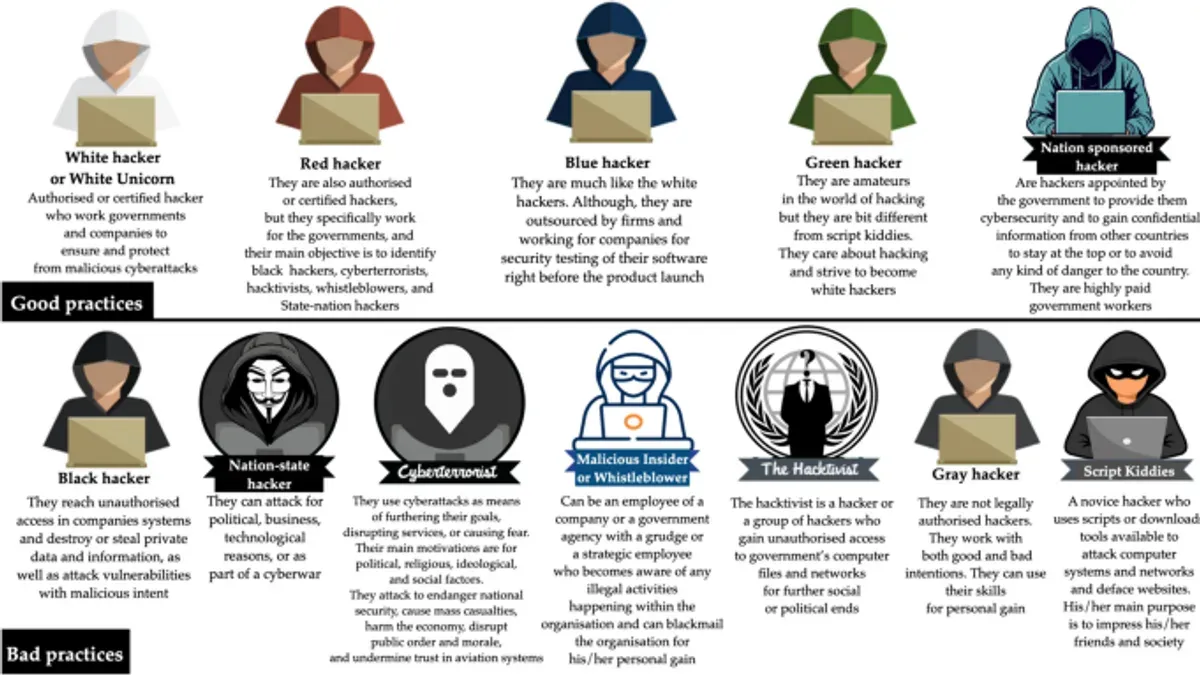
Beyond the broad categories, there are several specific types of hackers defined by their skills, intentions, and affiliations. Script kiddies are amateur hackers who use pre-made tools to exploit vulnerabilities without deep understanding; their activities are often disruptive but less sophisticated. Hacktivists leverage hacking to promote political or social causes, exemplified by groups like Anonymous, known for coordinated cyber protests targeting governments or corporations.
Nation-state hackers operate under government direction, focusing on espionage, disruption, or sabotage. Their operations are highly sophisticated, exemplified by groups like APT28 linked to Russian intelligence. Cybercriminal gangs are organized groups motivated by financial gain, using ransomware or fraud schemes; for example, the REvil group has targeted global companies with ransomware attacks.
Insiders pose significant risks from within organizations, often exploiting access privileges for personal gain or sabotage. Studies show insider threats contribute to a notable portion of corporate breaches, emphasizing the challenge of internal security.
In contrast, ethical hackers work to strengthen security by conducting penetration tests and responsibly disclosing vulnerabilities. These professionals simulate attacks to identify weaknesses before malicious actors can exploit them, playing a crucial role in proactive cybersecurity.
Tip: Understanding these nuanced hacker roles aids in tailoring security strategies to specific threats and motivations.
What type of hackers are Anonymous
Anonymous is a decentralized hacker collective known primarily for its hacktivist activities, which blend political activism with digital disruption. Emerging from online forums in the mid-2000s, Anonymous operates without formal leadership, enabling loosely coordinated campaigns driven by shared ideological goals rather than hierarchical control.
Their tactics often include distributed denial-of-service (DDoS) attacks, website defacements, data leaks, and social media campaigns aimed at exposing perceived injustices or opposing censorship. These actions place Anonymous outside traditional hacker categories, as their motivations are primarily political and social rather than purely malicious or purely ethical cybersecurity testing.
A notable example is Operation Payback, launched to support the anti-Stop Online Piracy Act (SOPA) movement, involving coordinated attacks on organizations seen as threats to internet freedom. This operation illustrated how Anonymous harnesses collective power to influence public discourse and challenge authority.
Experts describe Anonymous as emblematic of hacktivism, where technology meets activism in complex ways that complicate binary ethical labels. Their fluid membership and unpredictable actions resist simple classification, reflecting the evolving nature of digital protest in cybersecurity culture.
What type of hackers are DedSec
DedSec is a fictional hacker group prominently featured in the Watch Dogs video game series, portraying a rebellious, anti-establishment collective that fights against corporate and government surveillance through high-profile cyber operations. Their depiction emphasizes a youthful, activist ethos, blending hacking skill with social justice motives, which appeals to popular culture’s fascination with digital resistance.
Unlike real-world hacker groups, DedSec’s activities are dramatized for entertainment, often involving elaborate, large-scale disruptions portrayed with cinematic flair. In reality, hacker groups tend to be more fragmented, cautious, and focused on specific goals, such as financial gain, espionage, or ideological causes, rather than the sweeping, symbolic acts shown in the games.
The media portrayal of DedSec influences public perception by romanticizing the hacker identity, simplifying complex ethical considerations into narratives of heroism or villainy. This can lead to misunderstandings about the risks and motivations behind real hacking, as well as the diversity of hacker communities and their varying impacts on cybersecurity.
For example, DedSec’s fictional mission to expose a corrupt corporation through hacking mirrors real-world whistleblowing cases, but actual operations require extensive planning, legal risks, and often use less visible methods. Thus, while DedSec captures the imagination, it represents an idealized archetype rather than an accurate blueprint of hacker behavior.
Tip: Recognize that fictional hacker groups like DedSec shape cultural views but do not fully represent the ethical and operational realities of actual hackers.
Types of hackers and what they do
Black hat hackers typically engage in malicious activities such as phishing, deploying malware, and launching ransomware attacks. Phishing involves tricking individuals into revealing sensitive information through deceptive emails or websites. Malware, including viruses and spyware, is designed to damage or gain unauthorized access to systems. Ransomware encrypts data, demanding payment for its release. These methods aim to steal data, cause disruption, or extort money.
White hat hackers focus on penetration testing and ethical disclosure. They simulate cyberattacks on systems with permission to identify vulnerabilities before criminals can exploit them. Their work often includes detailed reports and recommendations to improve security, adhering strictly to legal frameworks and professional codes of conduct.
Grey hat hackers operate in a more ambiguous space, sometimes probing systems without explicit permission. While their intentions may not be malicious, their actions can still violate laws or ethical norms. For example, a grey hat might discover a security flaw and inform the affected organization without prior consent, potentially risking legal consequences.
| Hacker Type | Common Techniques | Purpose |
|---|---|---|
| Black Hat | Phishing, malware, ransomware | Data theft, disruption, financial gain |
| White Hat | Penetration testing, vulnerability scanning | Security improvement, authorized testing |
| Grey Hat | Unauthorized probing, vulnerability disclosure | Security awareness, ethical ambiguity |
For instance, a black hat hacker might send a phishing email impersonating a bank to steal login credentials, while a white hat tester would attempt similar access only within a controlled environment and with consent to help strengthen the bank's defenses.
Tip: Understanding these practical differences clarifies how hacker motives and methods influence cybersecurity strategies.
Types of hackers in cybersecurity
In cybersecurity, understanding hacker types directly informs defense strategies and roles. Ethical hackers, also known as penetration testers, replicate the methods of malicious hackers to identify system weaknesses before they can be exploited. For example, penetration testers might use social engineering tactics combined with technical exploitation to assess an organization’s vulnerability to phishing and malware attacks.
Insider threats represent another significant challenge. These are individuals within an organization who misuse access privileges, intentionally or accidentally, posing risks that traditional external defenses might not detect. Managing insider threats requires a combination of behavioral analytics, access controls, and continuous monitoring tailored to internal users.
Nation-state actors exemplify highly sophisticated hackers often targeting critical infrastructure or intellectual property for geopolitical purposes. Their operations typically involve advanced persistent threats that bypass conventional security measures over extended periods. For instance, reports have documented state-sponsored groups infiltrating government networks using zero-day vulnerabilities, emphasizing the need for layered defense and intelligence sharing across sectors.
Tip: Incorporating red team exercises, where security teams simulate real-world hacker attacks, helps organizations prepare for diverse threat actors including insiders and state-sponsored hackers.
Types of hackers hats and their ethical implications
The terms black hat, white hat, and grey hat originate from old Western films where villains wore black hats and heroes wore white hats, symbolizing moral alignment. In cybersecurity, these hats represent the ethical stance and legality of hackers' actions. Black hats exploit systems for personal or financial gain, often breaking laws, while white hats operate with permission to strengthen security.
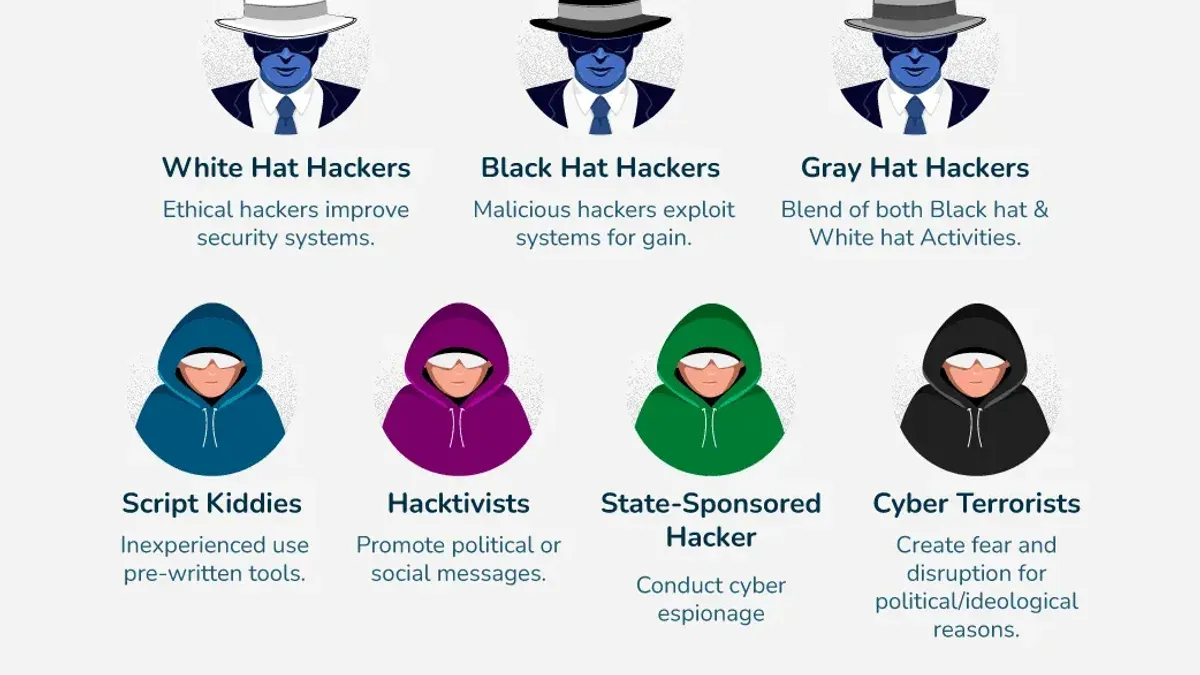
Grey hats occupy an ambiguous space, sometimes breaching systems without authorization but typically without malicious intent. This raises ethical dilemmas, as their actions can expose vulnerabilities but also violate legal norms. A notable example involved a security researcher who accessed a company’s network without consent to identify a critical flaw; although no harm was done, legal repercussions followed because the law prohibits unauthorized access regardless of intent.
Emerging classifications such as yellow hats focus on proactive vulnerability discovery with explicit consent, often emphasizing responsible disclosure. These evolving categories reflect the complexity of ethical frameworks like utilitarianism and deontological ethics applied in cybersecurity, shaping how society judges hacker behavior legally and morally.
Tip: Understanding the ethical and legal boundaries that define each hacker 'hat' category helps clarify the risks and responsibilities involved in cybersecurity activities.
Common mistakes in understanding hacker types
One frequent misconception is that all hackers engage in criminal activities. This stereotype overlooks the diversity within the hacking community, where many individuals work legitimately to improve security systems. Public perception surveys often reveal a strong association between hacking and crime, but experts emphasize that hacking can be a tool for both harm and defense.
Another common error is assuming that all hacking is illegal or malicious. Ethical hackers, for example, operate within legal frameworks to identify vulnerabilities before they can be exploited. The line between categories such as black, white, and grey hats is not always clear-cut, with motivations and methods sometimes overlapping.
Consider a cybersecurity professional who discovers a software flaw without authorization but reports it responsibly to the vendor. Such an act might technically breach policy but aims to protect users, illustrating how rigid labels can miss nuances in intent and impact.
Recognizing the fluidity among hacker types helps in crafting balanced security policies and avoiding unfair stigmatization. It also fosters a better understanding of the human elements behind hacking activities, which range from malicious intent to ethical responsibility.
Tip: When evaluating hackers, consider their intent, methods, and outcomes rather than relying solely on labels or stereotypes.
Further reading
- Types of Cyber Attacks: A Comprehensive Explainer Guide
- Can Hackers Steal Passwords Saved in Chrome? What You Should Know
- Can Hackers See You Through Your Phone Camera? What You Need to Know
- Can Hackers Hack Your Phone Through WiFi? What You Should Know
Frequently asked questions
What types of hackers exist?
Hackers are commonly categorized as white hat, black hat, and grey hat based on their ethical stance and intent. Beyond these, there are also script kiddies, hacktivists, state-sponsored hackers, and insider threats. Each type varies in motivation, skill level, and impact on cybersecurity.
What are 2 types of hackers?
Two common types of hackers are white hat and black hat hackers. White hats use their skills legally to improve security, while black hats exploit vulnerabilities for malicious purposes.
What kind of hackers are there?
There are ethical hackers who help organizations secure systems, malicious hackers who breach systems for personal gain or disruption, and hacktivists who pursue political or social goals. Other categories include state-sponsored actors and amateur hackers with limited skills.
What kind of hackers?
Hackers range from ethical security professionals to cybercriminals and activists. Their classification depends on their methods, goals, and adherence to legal boundaries.
What is hacking types of hackers?
Hacking types refer to the different classifications of hackers based on their behavior and objectives. These include ethical hackers (white hats), malicious hackers (black hats), and those operating in ethical grey areas (grey hats), each playing distinct roles in cybersecurity.
Limits of This Guide
This article does not provide guidance on engaging in hacking activities or bypassing legal frameworks; it is intended for informational and educational purposes only. Individuals seeking to develop practical hacking skills or pursue ethical hacking careers should consult certified training programs and adhere strictly to legal and organizational policies. This overview does not cover technical exploits, penetration testing methodologies, or real-time threat mitigation steps.
The most useful next step for readers is to explore formal cybersecurity certifications, such as the Certified Ethical Hacker (CEH) or Offensive Security Certified Professional (OSCP), which provide structured knowledge and ethical frameworks for understanding hacker types in practical contexts. Engaging with reputable resources and communities that emphasize legal and ethical standards will deepen comprehension beyond theoretical profiles.