Types of Cyber Attacks: A Comprehensive Explainer Guide
This guide explains the types of cyber attacks, covering technical methods and psychological tactics to help you identify and defend against threats.

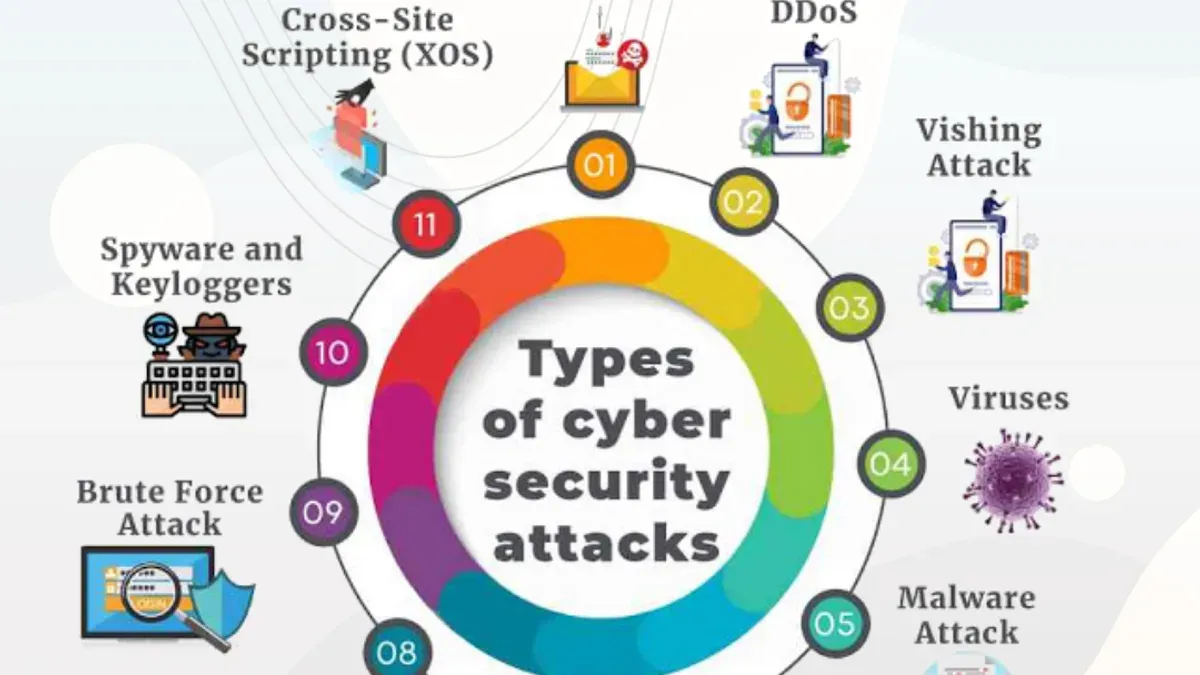
This article explains the types of cyber attacks, highlighting both technical methods and the psychological tactics attackers use to succeed.
Cyber attacks vary widely, but many exploit human behavior as much as software vulnerabilities. Understanding these attacks requires recognizing how manipulation, trust, and urgency are used to bypass technical defenses.
From phishing emails that impersonate trusted contacts to vishing calls that pressure victims into revealing sensitive information, each type targets specific human factors. This guide provides clear explanations to help readers identify common threats and consider effective security measures.
What are types of cyber attacks
A cyber attack is an attempt by individuals or groups to breach digital systems, networks, or devices to steal, alter, or destroy data, disrupt operations, or gain unauthorized access. Such attacks have become increasingly relevant as more personal, business, and critical infrastructure activities rely on digital technologies.
Cyber attacks broadly fall into two categories: technical attacks and social engineering. Technical attacks exploit software vulnerabilities, hardware weaknesses, or network gaps, while social engineering targets human psychology to manipulate individuals into revealing confidential information or performing unsafe actions.
Common attack vectors include malware infections, phishing emails, ransomware, denial-of-service attacks, and insider threats. Targets range from individual users to large businesses and essential infrastructure like power grids or healthcare systems.
For example, the 2017 WannaCry ransomware attack affected hundreds of thousands of computers worldwide by exploiting a technical vulnerability in outdated Windows systems. This incident illustrates how cyber attacks can disrupt services and cause widespread damage.
Tip: Recognizing that cyber attacks combine technical and psychological tactics helps in building comprehensive defenses.
What types of cyber attacks are phishing, vishing, and smishing
Phishing, vishing, and smishing are closely related social engineering attacks that exploit human trust to gain unauthorized access or deliver malware. Phishing typically involves deceptive emails that impersonate legitimate organizations, urging recipients to click malicious links or provide sensitive credentials. For example, a fake bank email might warn about suspicious account activity, prompting a user to enter login details on a fraudulent site.
Vishing uses voice calls to create a sense of urgency or trust, often pretending to be from banks, government agencies, or tech support. A common vishing scenario is a caller claiming to be from a bank’s fraud department asking the victim to verify account information immediately to prevent unauthorized transactions.
Smishing operates through SMS/text messages, sending malicious links or fake alerts to trick users into downloading malware or revealing personal data. For instance, a text message might claim the recipient won a prize and provide a link that installs harmful software.
All three methods rely on psychological manipulation—urgency, authority, and trust—to bypass technical defenses. Attackers choose the delivery channel based on the target's habits, with phishing emails being the most widespread, vishing targeting those more likely to respond to calls, and smishing leveraging the immediacy of texts.
Tip: Verifying the source independently before responding to any unexpected email, call, or text can reduce the risk of falling victim to these attacks.
What type of cyber attack is phishing
Phishing is a cyber attack that deceives individuals into divulging sensitive information, such as passwords or financial details, by masquerading as a trustworthy entity. Commonly delivered through emails, these messages often urge recipients to click on malicious links or download harmful attachments. An example includes an email claiming to be from a bank asking the recipient to verify account information due to suspicious activity.
There are several phishing variants. Spear phishing targets specific individuals or organizations with personalized messages, increasing the likelihood of success. Clone phishing involves replicating a legitimate email previously sent, but altering links or attachments to malicious ones. Whaling focuses on high-profile targets like executives, using tailored content to exploit their authority.
Typical signs of phishing attempts include urgent language prompting immediate action, unfamiliar sender addresses that mimic legitimate ones, suspicious URLs that do not match official websites, and unexpected attachments. Recognizing these indicators is essential to avoid falling victim.
Phishing remains one of the most prevalent cyber threats, often leading to financial losses and data breaches. For instance, a phishing email appearing as a software update notification might trick a user into installing malware that compromises credentials.
What type of cyber attack involves crafting a personalized message
Spear phishing is the primary cyber attack type that relies on crafting highly personalized messages to deceive specific individuals or organizations. Unlike generic phishing, spear phishing attackers gather detailed information about their targets, such as job roles, interests, recent activities, and social connections, often through social media, company websites, or data breaches.
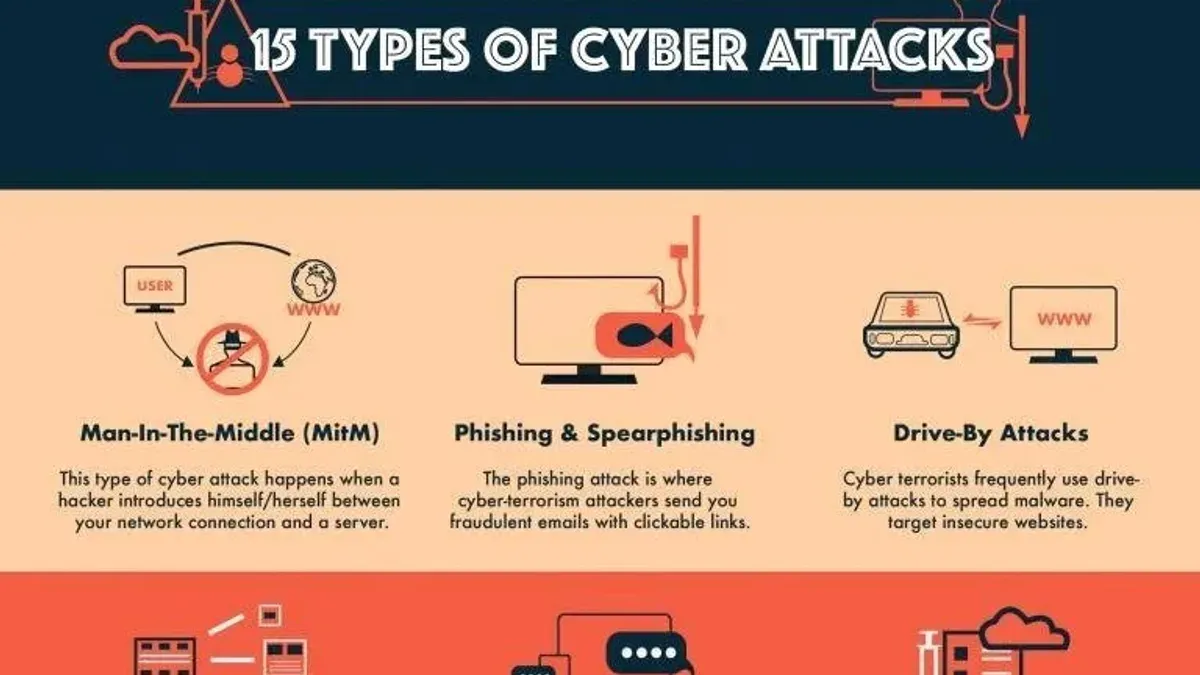
This tailored approach significantly increases the success rate because the message appears credible and relevant, reducing suspicion. For instance, an attacker might impersonate a company executive in an email to a finance employee, requesting a wire transfer. The use of the executive’s actual name, writing style, and references to ongoing projects makes the request seem legitimate.
Real-world examples include attacks where spear phishing emails led to unauthorized access to corporate networks or fraudulent financial transactions. Compared to generic phishing, spear phishing’s precision makes it harder to detect and more effective.
Tip: Verify unusual requests by contacting the sender through a separate communication channel to confirm authenticity.
What type of cyber attack targets human psychology
Social engineering in cybersecurity refers to techniques that manipulate human psychology to bypass security measures. Rather than exploiting technical vulnerabilities, these attacks exploit emotions and cognitive biases to trick victims into revealing information or performing actions that compromise security.
Common psychological tactics include fear, urgency, authority, and curiosity. For example, an attacker might impersonate a high-ranking official (authority) demanding immediate password changes (urgency) to prevent account suspension (fear). Such manipulation increases the likelihood of compliance without critical scrutiny.
Examples of social engineering attacks include phishing, vishing (voice phishing), pretexting, and baiting. Pretexting involves creating a fabricated scenario to gain trust, while baiting uses enticing offers or files to lure victims into executing malicious actions.
Psychological studies on manipulation reveal how these tactics exploit automatic human responses, such as obedience to authority and the desire to avoid negative consequences. An illustrative scenario is receiving a phone call from someone claiming to be IT support, warning that the network is compromised and requesting immediate login credentials to fix the issue. The combination of perceived authority and urgent threat can lead to inadvertent disclosure of sensitive data.
How many types of cyber attacks are there
The total number of cyber attack types varies depending on how they are classified, with many cybersecurity frameworks grouping them by their method or target. Commonly, attacks fall into four broad categories: malware-based, social engineering, network attacks, and physical attacks.
Malware attacks include viruses, worms, ransomware, and spyware, which rely on malicious software to disrupt or access systems. Social engineering attacks manipulate human psychology and include phishing, vishing, and smishing, as previously covered. Network attacks exploit vulnerabilities in network protocols or devices; examples include man-in-the-middle attacks, denial-of-service (DoS), and DNS spoofing. Physical attacks involve direct tampering with hardware or infrastructure, such as stealing devices or damaging cables.
For example, a ransomware attack (malware) encrypts data and demands payment, often initiated via a phishing email (social engineering), illustrating how multiple attack types can combine. Authoritative cybersecurity frameworks, like those from NIST or CIS, list dozens of specific attack types within these groups, but no single definitive count exists due to evolving tactics.
Tip: Understanding attack types by categories helps in prioritizing defenses and recognizing complex, multi-vector threats.
Common types of cyber attacks on businesses and their mitigations
Businesses frequently face ransomware attacks, where malicious software encrypts critical data until a ransom is paid. Distributed Denial of Service (DDoS) attacks overwhelm networks, causing service outages that disrupt operations. Insider threats, whether malicious or accidental, pose risks through unauthorized data access or leakage. Supply chain attacks compromise trusted vendors to infiltrate business systems indirectly.
Mitigating these threats requires a combination of technical controls and human-focused strategies. Regular patch management closes vulnerabilities exploited by ransomware and supply chain attacks. Network segmentation limits the spread and impact of breaches. Employee training enhances awareness of social engineering tactics that often precede these attacks.
For example, a mid-sized company facing frequent attempted ransomware intrusions improved resilience by enforcing automated patch updates, segmenting critical servers from user workstations, and running quarterly phishing simulations. This approach reduced successful attacks and minimized downtime, illustrating how layered defenses protect both technology and personnel.
Types of cyber attacks with explanation and images
Visual aids help clarify how cyber attacks unfold, making complex methods easier to grasp. An infographic showing the phishing email flow, for example, outlines steps from crafting a deceptive message, sending it to numerous recipients, to victims clicking malicious links or attachments that lead to credential theft or malware installation. This step-by-step visualization highlights typical user errors like ignoring sender verification or unexpected requests.
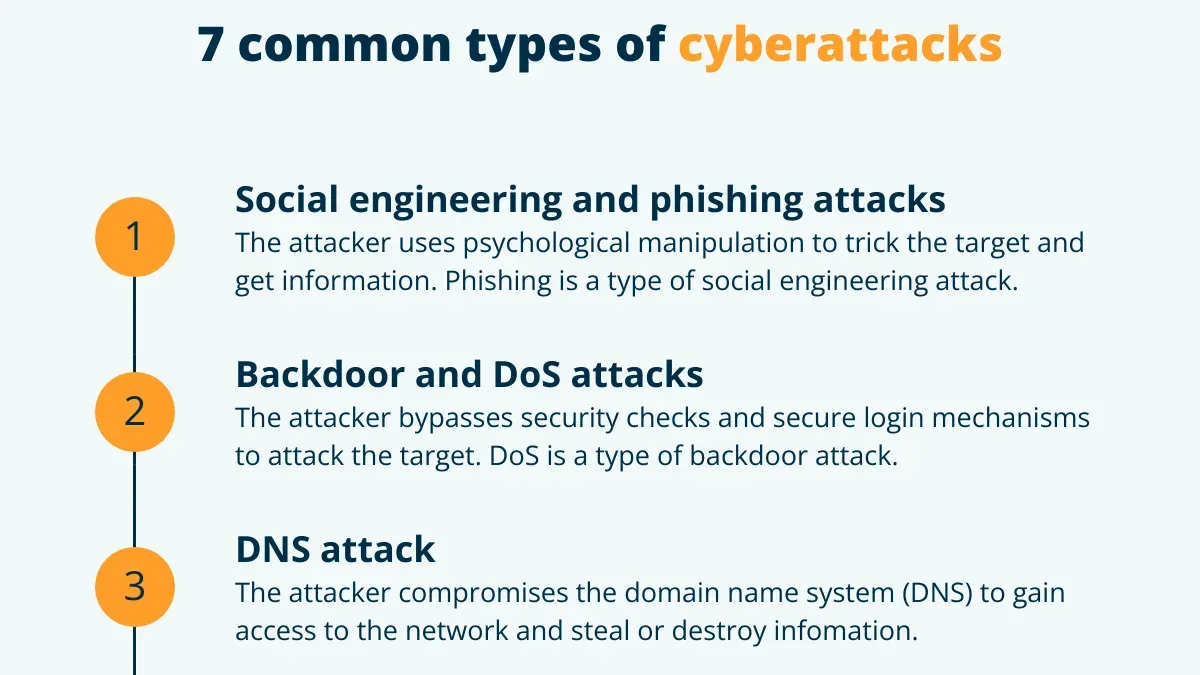
Another useful image compares delivery methods—email, SMS, phone calls—against common targets such as individuals, businesses, or infrastructure. This side-by-side layout demonstrates how social engineering attacks adapt their approach depending on the medium and victim profile, emphasizing the psychological tactics involved.
A malware infection process diagram illustrates stages starting with delivery (via email or drive-by downloads), installation, command and control communication, and payload execution, helping readers visualize the lifecycle of a technical attack.
For example, a spear phishing visual might show a hacker researching a company executive’s interests, crafting a personalized email referencing a recent project, and the executive unknowingly opening a harmful attachment. Such images, paired with concise explanations, make abstract threats tangible and reinforce the human factor in cyber vulnerabilities.
Mistakes to avoid when defending against cyber attacks
One common mistake is underestimating social engineering risks. Attackers often bypass technical defenses by manipulating individuals. For example, a large corporation experienced a costly breach when an employee responded to a convincing email impersonating a company executive, leading to unauthorized fund transfers.
Overreliance on technology without comprehensive user training also increases vulnerability. Security software alone cannot prevent users from falling for deceptive tactics such as fake login pages or malicious attachments.
Neglecting software updates and backups is another frequent error. Outdated systems can contain unpatched vulnerabilities exploited by ransomware or malware. Regular backups minimize damage by allowing data restoration after an attack.
Failing to verify sources and credentials can lead to credential theft or unauthorized access. For instance, clicking on a link in an unsolicited message without confirming its legitimacy may install malware or redirect to phishing sites. Experts recommend adopting strict verification protocols, such as contacting senders through official channels before acting on unexpected requests.
Tip: Combine technical safeguards with continuous employee education and enforce clear policies on verifying communications to reduce successful attacks.
Further reading
- Understanding Advance Fee Scams: How They Work and How to Avoid Them
- Brushing Scam Explained: What It Is and How to Protect Yourself
- How to Stop Brute Force Login Attacks on WordPress: A Step-by-Step Guide
- How to Recover and Secure a Facebook Account After a Hack
Frequently asked questions
What type of cyberattack involves crafting a personalized message?
This type of cyberattack is known as spear phishing. It involves creating highly targeted messages tailored to a specific individual or organization, often using personal information to increase credibility and the likelihood of success.
What are the different types of cyber attacks?
Cyber attacks include a variety of methods such as phishing, vishing (voice phishing), smishing (SMS phishing), ransomware, malware infections, denial-of-service attacks, and man-in-the-middle attacks. Each type exploits different vulnerabilities, either technical or psychological.
What are some common types of cyber attacks?
Common cyber attacks include phishing scams that trick users into revealing sensitive information, ransomware that encrypts data for ransom, malware that damages or steals data, and denial-of-service attacks that overwhelm systems to disrupt services.
How many types of cyber attacks are there
The number of cyber attack types is broad and continually evolving, but generally, they can be categorized into a few dozen distinct types based on attack vectors and objectives. These categories cover technical methods and those exploiting human psychology.
What are some common types of cyber attacks
Frequently encountered cyber attacks include phishing, ransomware, malware, social engineering attacks, and denial-of-service attacks. These commonly target both individuals and organizations to gain unauthorized access, steal data, or disrupt operations.
What this advice does not cover and when to seek specialized help
This article focuses on common and impactful cyber attack types but does not cover every niche or emerging threat, such as advanced persistent threats (APTs), zero-day exploits, or highly targeted nation-state attacks. Organizations with complex infrastructures or those in regulated industries should consult specialized cybersecurity professionals or resources tailored to their specific environment and threat landscape.
For most individuals and small to medium-sized businesses, the single most useful next step is to implement a layered defense strategy starting with strong authentication methods, regular software updates, and employee training focused on recognizing social engineering tactics. Prioritizing these actions helps reduce vulnerability to attacks that exploit human psychology and technical weaknesses alike.