How to Build and Use a Technology Implementation Roadmap
A technology implementation roadmap visually maps steps, timelines, and responsibilities to align technology projects with business objectives and ensure smooth execution.

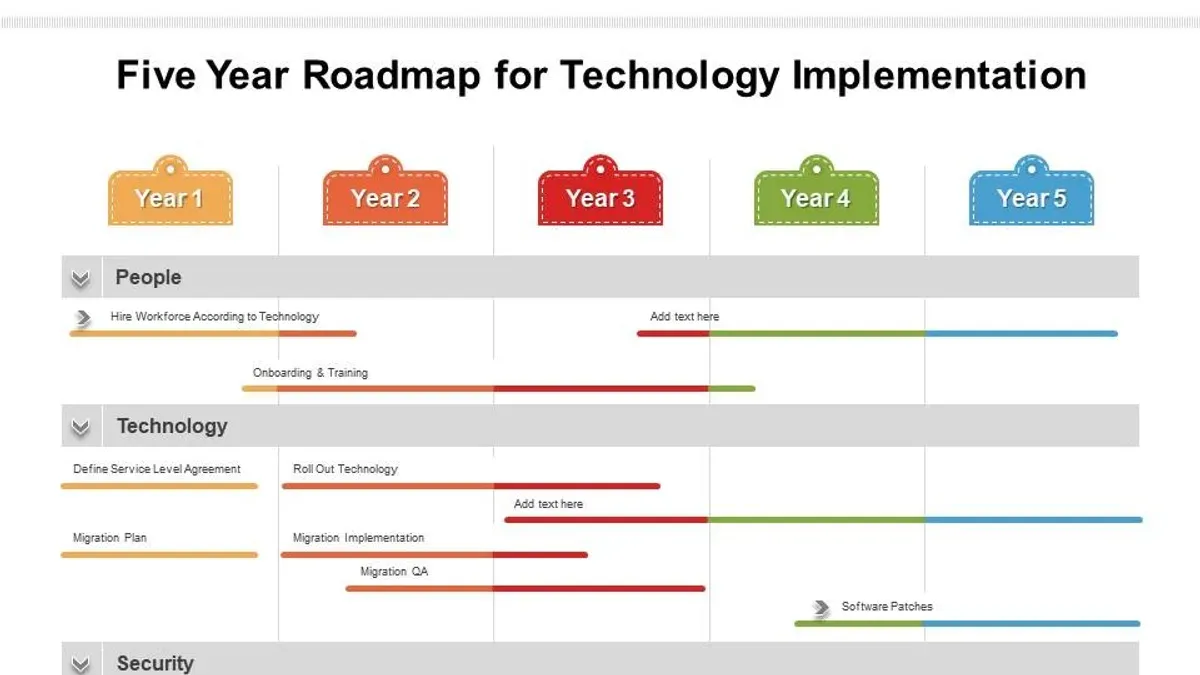
A well-constructed technology implementation roadmap can prevent this chaos by visually mapping out the steps, timelines, and responsibilities needed to bring technology initiatives into alignment with business objectives.
It includes strategic objectives, major themes, milestones, and task dependencies, providing clarity and focus throughout your project lifecycle.
Getting the sequence of planning right is crucial: a proven process breaks development into three phases with seven clear steps that ensure each decision builds on a solid foundation.
Overview of technology implementation roadmap
Every limit and setting name below comes from ProductPlan, Wikipedia, ProjectManager (full list at the end), as of November 2026.
What is a technology roadmap and why it matters
A technology roadmap is a high-level visual summary that outlines the vision and detailed plans for complex technology initiatives within an organization. It helps you connect business objectives with technology projects by defining strategic goals, major themes often called themes and epics, timelines, milestones, and clear responsibilities.
You risk deploying redundant tools, maintaining outdated systems, increasing cybersecurity vulnerabilities, and missing opportunities for growth. The roadmap acts as a strategic guide that aligns your technology efforts to your broader business aims.
Your roadmap visually maps the sequence of technology upgrades, critical project phases, key deliverables, and who owns each task. This prevents misaligned priorities and keeps all stakeholders focused on the end goal.
This approach ensures that complex internal IT projects stay coordinated, on schedule, and aligned with your company’s vision. The roadmap is essential to avoid costly missteps and wasted resources in technology implementation.Learn more.
What is an implementation roadmap and how it supports projects
An implementation roadmap is a detailed visual plan that lays out the steps, timelines, and responsibilities required to translate a technology strategy into actionable results. It provides a clear project timeline with defined start and end dates, sequences tasks logically, and highlights key milestones that mark significant progress.
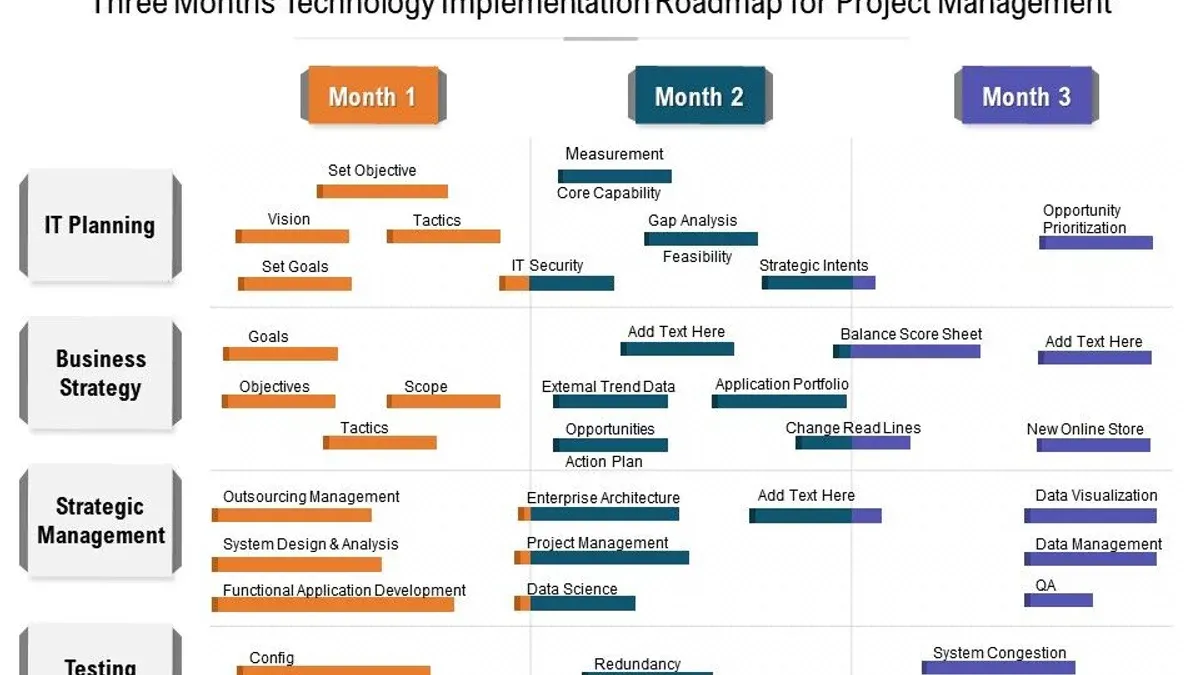
Task dependencies are a crucial element, showing how tasks relate and depend on one another, which helps prevent bottlenecks and schedule conflicts. This clarity supports cross-team coordination and ensures that all efforts align with overarching business goals.
For example, when launching a new enterprise software system, an implementation roadmap would schedule phases like requirements gathering, development, testing, and deployment, with assigned owners and milestone checkpoints. This structure keeps the project organized, making it easier to track progress and adjust as needed, especially when multiple teams work on interdependent activities.
Using an implementation roadmap is essential when projects involve complex task relationships and collaboration across departments, as it visually connects every step necessary to deliver on strategic objectives implementation roadmap.
How to create a technology roadmap step by step
Skipping this phase risks misalignment and wasted effort.
Next, enter the development phase, which involves seven critical steps in order: identify the product focus first to set clear objectives; then specify system requirements that support those objectives. Follow with defining relevant technology areas to explore options. Next, determine key drivers shaping your choices, such as market demands or regulatory factors. Afterward, generate alternatives for each technology area and evaluate them. Finally, consolidate recommendations into a coherent roadmap. Changing this sequence causes confusion, overlooked dependencies, and ineffective planning.
For example, if you define technology areas before the product focus, you risk selecting irrelevant technologies, wasting resources.
Conclude with follow-up activities: review the roadmap regularly, communicate updates to stakeholders, and adjust as priorities evolve. Regular reassessment ensures the roadmap stays aligned with business goals throughout the project lifecycle. This three-phase process with its detailed steps is essential to create a functional, actionable technology roadmap.source
Common pitfalls when creating and using technology roadmaps
Using technical jargon when presenting your roadmap alienates non-technical stakeholders. Executives and business leaders may not grasp key details, weakening their support and causing confusion. Instead, translate technical terms into clear business impacts to keep everyone aligned.
Failing to regularly update your roadmap risks falling out of sync with shifting priorities. Projects encounter unexpected obstacles and evolving goals; a static roadmap leads to misaligned efforts and wasted resources. Schedule routine reviews to adjust timelines, resources, and objectives as needed.
Operating without any roadmap leads to fragmented decisions and reactive management. Without a clear plan, you risk inefficiencies, redundant spending, increased security vulnerabilities, and missed growth opportunities. Imagine a team launching multiple IT initiatives independently, causing duplicated work and conflicting priorities that slow overall progress.
| Symptom | Cause | Fix |
|---|---|---|
| Stakeholders confused or disengaged | Overly technical language | Use plain language focused on business outcomes |
| Project drifts off schedule or scope | Roadmap not reviewed or updated | Establish regular roadmap checkpoints |
| Inconsistent or conflicting IT decisions | No roadmap guiding strategy | Create and enforce a clear technology roadmap |
How to choose the right roadmap format and tools for your project
If it includes both technical teams and executives, opt for web-based software that allows you to create multiple tailored views. This approach ensures clear communication across diverse stakeholders.
When your goal is to align technology initiatives tightly with business objectives, build a comprehensive technology roadmap. It must integrate strategic goals, timelines, milestones, and resource plans to provide a holistic picture for decision-making.
For projects involving multiple interdependent tasks and cross-team collaboration, use implementation roadmaps featuring explicit timelines, task dependencies, and milestones. This clarity supports coordination and progress tracking.
For example, ProjectManager offers dynamic roadmaps with dependency linking and real-time dashboards, ideal for managing complex project tasks. Creately Roadmap Maker enables collaborative creation and updating of roadmaps, perfect for aligning strategy and sharing across teams.
Decision criteria in brief: if your audience is mixed, choose web-based tools; if resource and strategy alignment is critical, pick tools that support comprehensive roadmaps; if task dependencies dominate, select implementation-focused tools. This decision matrix guides your tool and format choice for effective roadmap creation.
How technology roadmaps optimize resources and manage risks
For instance, knowing that a cloud migration overlaps with a security upgrade helps you plan shared resources and prevent bottlenecks.
Capacity planning benefits significantly as you avoid redundant tools that drain budgets and outdated systems that hinder performance. By mapping dependencies and timelines, you ensure your technology stack evolves in a coordinated way, optimizing both human and financial resources. This proactive approach turns potential risks into manageable tasks, securing project success.
What to do after your technology implementation roadmap is in place
Begin by regularly reviewing the roadmap against actual project progress. Check milestones and deadlines frequently to ensure tasks are on track and adjust if delays or accelerations occur.
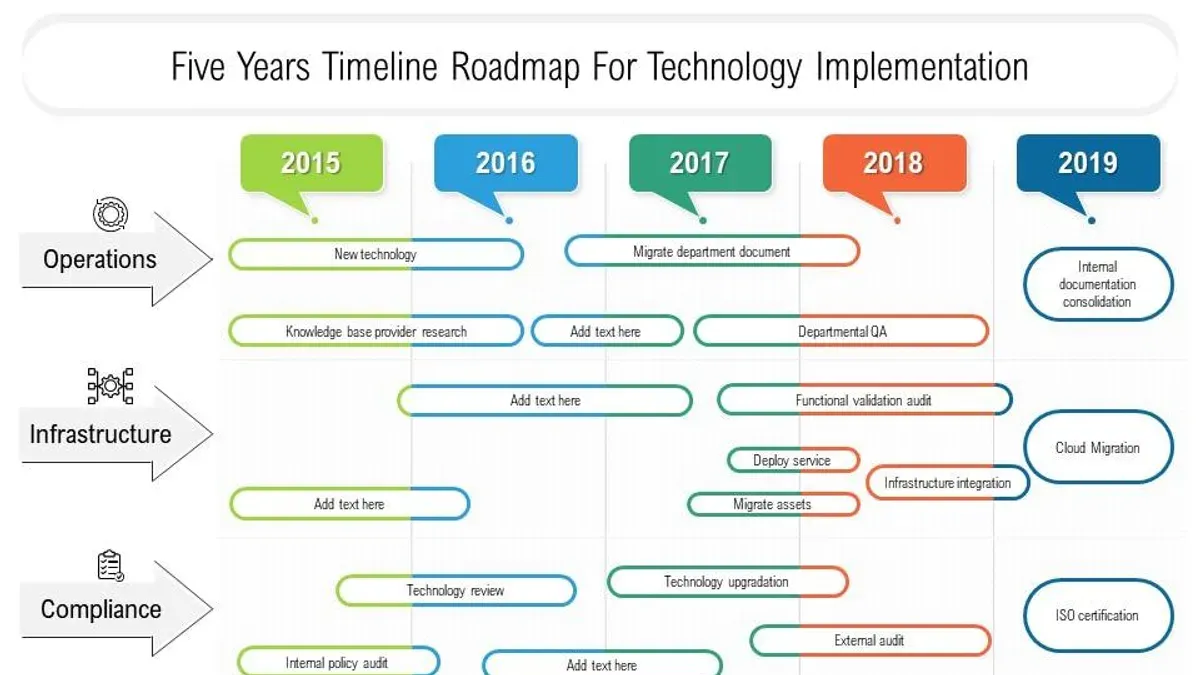
Reassess the roadmap at key intervals throughout the project lifecycle. This helps you respond to shifting business priorities or unexpected risks. For example, if a new security vulnerability emerges, update the roadmap immediately to incorporate mitigation steps and revise timelines.
Maintain flexibility by documenting changes clearly and communicating updates to all stakeholders. Avoid rigid adherence to the initial plan when circumstances evolve. You can undo or reprioritize roadmap elements if they no longer align with business objectives, but only after careful impact analysis.
One practical step is scheduling a roadmap review meeting one week after launch to confirm alignment and identify early adjustments. Continuing this cadence supports proactive decision-making and keeps the project aligned with its goals throughout implementation. Regular review and reassessment are essential for sustained success.
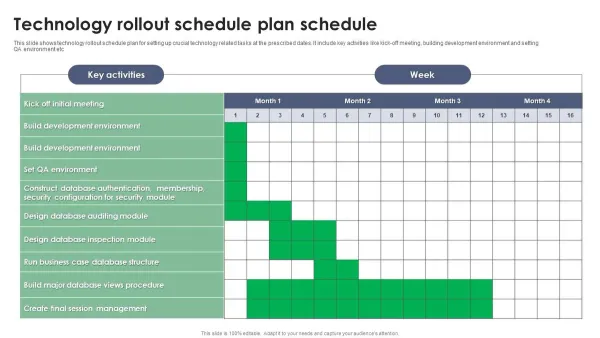
- Understanding Your Technology Rollout Timeline for Smooth Implementation
- How to Build and Use an Effective Rollout Feedback Loop
- How to Secure Stakeholder Buy-In for New Technology in 2026
- How to Plan and Run a Pilot Program for New Technology
Frequently asked questions
How to develop a technology roadmap?
Developing a technology roadmap involves following a structured sequence of phases and steps that clarify goals, assess current capabilities, and plan for future initiatives. The process begins with defining strategic objectives, followed by identifying technology needs, evaluating options, and setting timelines. Adhering to the correct order ensures alignment with business goals and avoids costly rework.
What is technology roadmapping?
Technology roadmapping is a strategic planning method that aligns technology initiatives with business objectives over time. It involves visualizing technology development paths, resource allocation, and milestone scheduling to guide decision-making and investment. This process helps manage complexity and anticipate future challenges.
What is an implementation roadmap?
An implementation roadmap is a detailed plan that translates technology roadmaps into actionable project steps. It supports projects by organizing tasks, timelines, roles, and dependencies, ensuring effective execution. This roadmap bridges strategic vision and operational delivery.
Where can I find a project implementation roadmap template?
Templates for project implementation roadmaps are commonly available through project management software platforms and business consulting resources. Choosing one depends on your project size and complexity; some formats integrate well with tools like Microsoft Project or Jira, while others are suited for simpler spreadsheet-based tracking. Selecting a template aligned with your project’s needs follows the decision matrix approach detailed in the article.
Final thoughts on managing your technology implementation roadmap
Maintaining a technology implementation roadmap demands regular reviews to ensure it remains aligned with evolving business priorities and technology landscapes. A day or week after setting it, verify that stakeholder roles, timelines, and resource allocations are clear and feasible. Over time, update or remove items that no longer fit the strategic direction or that have been completed to keep the roadmap actionable and relevant.
Start by scheduling a review meeting within the first week after finalizing your roadmap. This session should focus on confirming that all dependencies and milestones are practical and that communication channels among teams are established. Addressing these details early prevents misalignment and supports smoother execution.
Sources checked
- How to Build a Technology Roadmap | ProductPlan — ProductPlan
- Technology roadmap - Wikipedia — Wikipedia
- How to Make an Implementation Roadmap (Template Included) — ProjectManager
- IT Strategy Roadmap: The Complete Guide — ImpactMyBiz
- What is Technology Roadmap?: Key Components with Examples | Creately — Creately