How to Understand and Measure Technology Adoption Effectively
Understand how to distinguish true technology adoption from mere awareness using effective survey design and targeted questions.

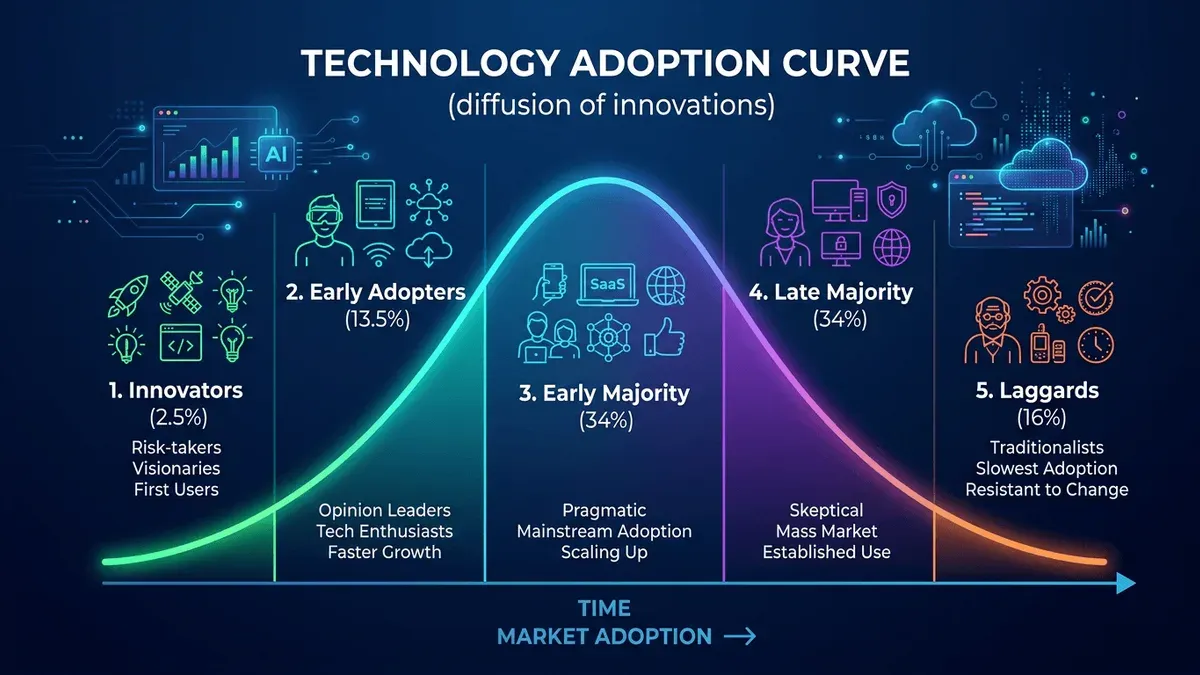
A common failure is confusing adoption with mere awareness or interest, which leads to misleading conclusions.
It also measures usage frequency, satisfaction, barriers, and overall impact, ensuring you understand not just if people know the technology, but how deeply they have embraced it.
Settings, menu paths and limits here were checked against Classpop! in November 2026.
What does adoption mean in technology
This means adoption requires more than awareness or interest; it demands sustained and practical use.
Awareness means users know the technology exists. Interest signals a desire to explore it. Trial involves initial hands-on use, while sustained use shows the technology has become a regular part of workflows.
Employees first hear about it (awareness), then explore its features (interest), try it on a small project (trial), and finally make it their standard platform for managing tasks (sustained use). Only at this final stage can you say true adoption has occurred.
Measuring adoption accurately requires distinguishing these stages clearly. Surveys that mix awareness or interest with adoption risk overestimating how deeply the technology is used. A well-designed survey includes questions targeting each stage separately to ensure you capture actual integration, not just recognition or curiosity. This approach helps avoid common pitfalls in assessing technology adoption.
How to measure adoption of technology
Key elements include assessing usage frequency, user satisfaction, barriers faced, and the impact on productivity or outcomes. Without these, you risk incomplete or misleading insights.
Each stage demands distinct questions to avoid conflating users who merely know about the technology with those actively using it. For instance, ask if respondents have heard of the tool (awareness), tried it at least once (trial), or use it regularly (sustained use).
Combining all responses obscures meaningful patterns—trial users have different needs and obstacles than regular users. For example, asking about frequency of use should only apply to those who have moved beyond awareness and interest.
Survey questions might include: "How often do you use the technology in your daily work?" or "What barriers prevent you from using it more?" This approach captures both quantitative and qualitative data essential for informed decisions. A clear survey design ensures you measure true adoption, not just surface-level familiarity. More on survey design elements.
How to use technology adoption survey questions to capture barriers
Your survey should include questions that probe challenges users face, their satisfaction with the technology, and the support they need. These insights pinpoint obstacles that can stall adoption and guide targeted interventions.
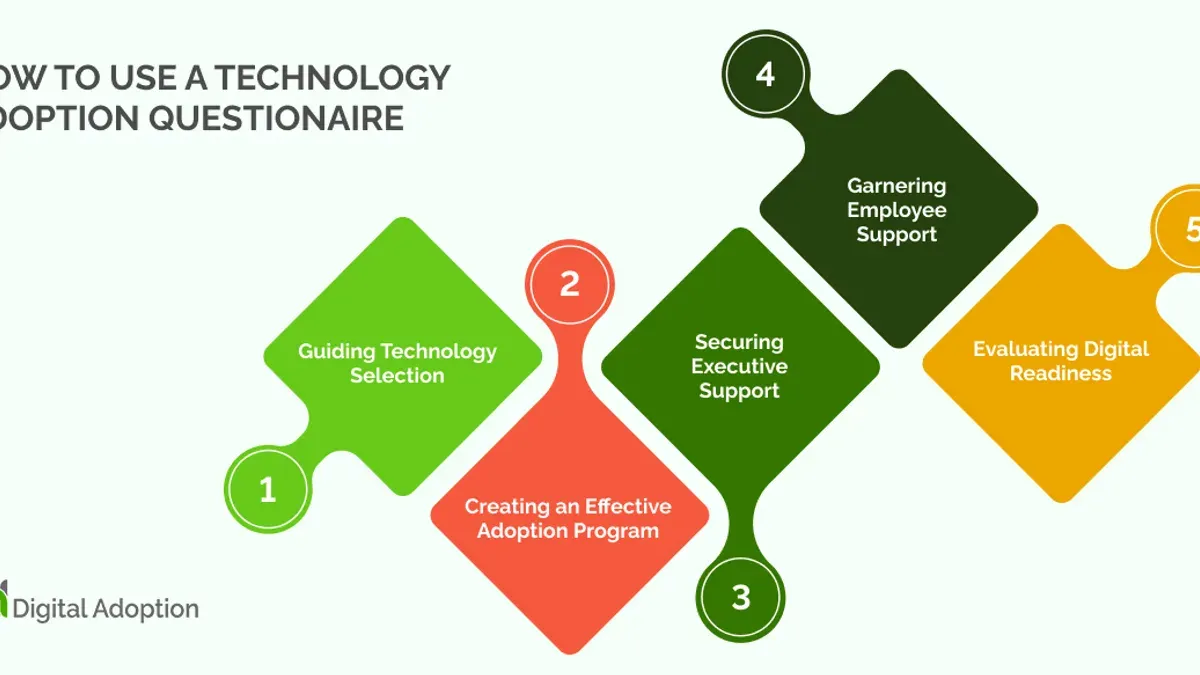
For instance, ask users to identify specific difficulties encountered during initial setup or regular use. Include rating scales for satisfaction and open fields for describing unmet support needs. This approach reveals not just if users struggle, but why and where support can be enhanced.
Capturing these barriers allows you to tailor training, communication, or technical fixes to real user pain points, boosting adoption effectiveness. If your goal is to understand adoption blockers, incorporate questions on user challenges and satisfaction explicitly in your survey design. This strategic focus turns raw data into actionable guidance for improving adoption outcomes.Technology Adoption Survey
Common mistakes in technology adoption surveys
This mistake occurs when surveys ask if users know about a technology but do not verify if they actively use it. Adoption means regular, sustained use, not just familiarity. For instance, a survey might report high adoption rates simply because many respondents have heard of the technology, ignoring whether they actually engage with it.
Users can be at very different points—some just aware, others trying the technology, and some fully integrated users. Lumping all these stages together blurs insights and leads to decisions based on mixed data rather than clear trends.
Surveys that neglect questions about challenges users face miss critical information needed to improve adoption. Without identifying obstacles, efforts to increase adoption may target the wrong issues or miss key user needs.
How to decide the right survey approach for your technology adoption needs
This segmentation prevents conflating basic awareness with actual adoption, providing detailed insights into each group's behavior.
This approach helps identify specific pain points and guides targeted interventions.
If both detailed adoption stage data and barrier insights are critical, combine these approaches into a comprehensive survey. For example, a company managing a new software rollout across departments with varying tech proficiency should segment questions by user stage and include barrier queries to understand resistance or usability issues fully.
| Your situation | Recommended survey design | Key reason |
|---|---|---|
| Diverse user groups with varying adoption levels | Multi-stage and segmented survey targeting adoption stages and user segments | Detailed insights require separating users by adoption phase to avoid conflating awareness with adoption |
| Need to identify obstacles blocking adoption | Survey focused on barriers, satisfaction, and support questions | Targeted questions reveal specific challenges and areas for improvement |
| Requirement for both adoption stage and barrier insights | Comprehensive survey combining segmented adoption stages with barrier questions | Provides a complete picture of adoption status and the reasons behind adoption gaps |
This decision framework helps you align your survey design with your organization's structure and objectives, ensuring you gather actionable data rather than ambiguous or incomplete results. Starting without segmentation or barriers focus risks missing critical adoption nuances or user frustrations.
What to do after collecting technology adoption survey data
Start by analyzing the survey results segmented by adoption stages like awareness, trial, and sustained use. This helps you spot where users drop off or where adoption lags. For example, if trial users show low satisfaction, focus on improving onboarding or support at that stage.
Next, address any barriers identified. If many respondents cite lack of training as an obstacle, organize targeted sessions or create easy-to-access resources. This targeted action directly tackles adoption blockers and boosts user confidence.
Plan regular follow-ups. Schedule subsequent surveys or check-ins to monitor progress, ensuring that improvements have the intended effect. A follow-up one to two months later can reveal if users moved from trial to regular use or if new barriers emerged.
Maintain your survey data by updating questions as your technology or user base evolves. Remove outdated items to keep responses relevant. Also, revisit your segmentation criteria periodically to reflect changes in user behavior or organizational goals.
For instance, after a survey showed low sustained use due to unclear benefits, a company redesigned its communication strategy. A follow-up survey confirmed increased sustained use, showing the value of iterative action based on data. This cycle of analyze, act, and reassess is key to sustaining technology adoption over time.
- Understanding Your Technology Rollout Timeline for Smooth Implementation
- How to Set Up a Summer Technology Schedule That Works in 2026
- How to Secure Stakeholder Buy-In for New Technology in 2026
- How to Define and Track Success Metrics for a Technology Rollout
Frequently asked questions
What is technology adoption?
Technology adoption is the process by which individuals or organizations begin to use and integrate a new technology into their regular activities. It involves progressing through stages such as becoming aware of the technology, developing interest, trying it out, and then maintaining sustained use.
What does adoption mean in technology?
In technology, adoption specifically refers to the stage when users move beyond awareness and interest to actively and consistently use the technology. It excludes simply knowing about the technology and focuses on the actual integration into workflows or behaviors.
How to measure adoption of technology?
Measuring technology adoption involves using surveys that segment users by stages: awareness, interest, trial, and sustained use. This approach prevents conflating mere awareness with actual adoption. Survey questions should capture these stages distinctly to provide clear insights into where users stand in the adoption process.
Common mistakes in technology adoption surveys and how to avoid them
- Confusing awareness with adoption: Asking only if users know about the technology can inflate adoption rates. Avoid this by including questions that identify user stages such as trial and sustained use.
- Ignoring barriers in survey questions: Surveys that omit questions about obstacles miss critical insights. Include targeted questions that capture specific adoption barriers to understand what hinders progress.
- Using ambiguous or leading questions: Vague wording can produce unreliable data. Design clear, neutral questions focused on concrete behaviors or experiences.
- Failing to check data quality after collection: Overlooking data anomalies or inconsistencies can misdirect decisions. Review response patterns and completeness soon after collection to identify and address issues.
- Choosing an unsuitable survey approach: A one-size-fits-all method may not fit your organization's needs. Use a decision matrix considering factors like user base size, technology complexity, and resource availability to select the right approach.
To select the best survey approach, consider your situation carefully. If you have a large, diverse user base and need detailed stage-specific insights, a multi-phase survey targeting awareness, trial, and sustained use works well. For smaller teams or when quick feedback is essential, concise surveys focusing on key barriers may be sufficient. When resource constraints limit survey length, prioritize questions that yield actionable data related to adoption stages rather than general attitudes. Align your method with your organization's scale, goals, and available resources for the most effective measurement.
Sources
- Cooking Classes in Los Angeles — Classpop!