Solid Security vs All In One WP Security: Which Protects WordPress Best in 2026?
A detailed comparison of Solid Security vs All In One WP Security reveals which plugin offers superior WordPress protection in 2026.

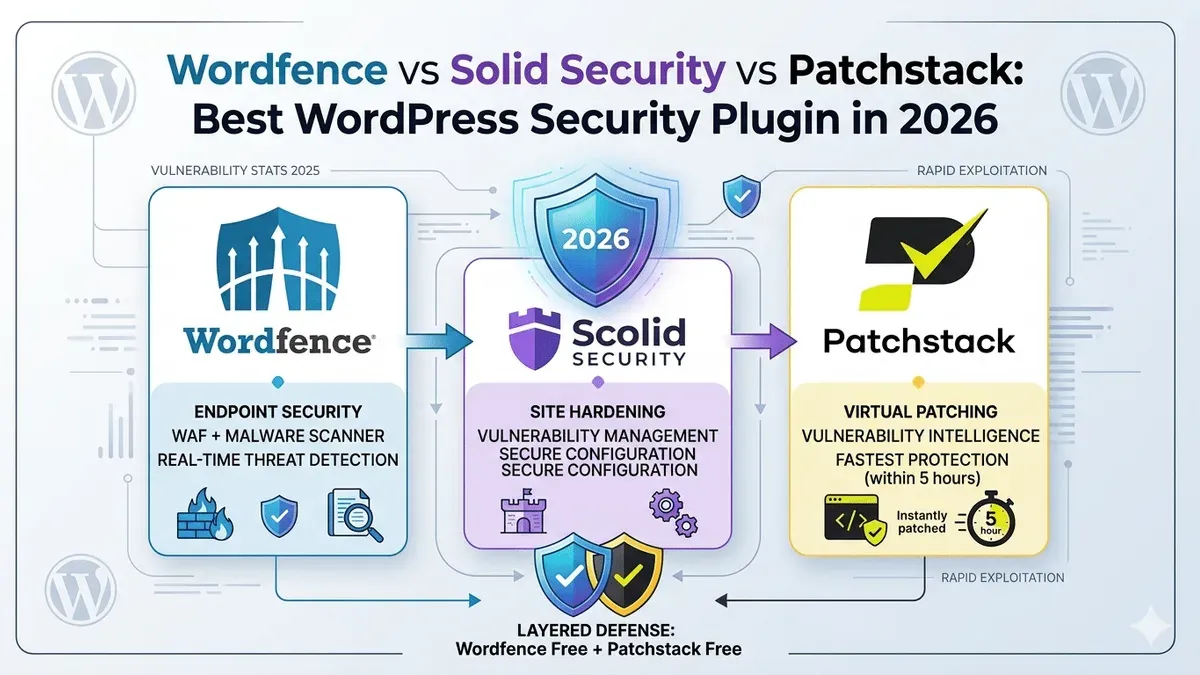
This article provides a detailed head-to-head comparison of two popular WordPress security plugins in 2026: Solid Security and All In One WP Security. Focusing on the search term Solid Security vs All In One WP Security, it evaluates both tools through the lens of various WordPress users and practical security scenarios rather than just listing features.
WordPress site owners, developers, and security-conscious administrators will find insights into how each plugin performs in real-world contexts, addressing usability, integration, and protection effectiveness. The comparison highlights the operational styles and trade-offs that influence the choice between Solid Security’s modular approach and All In One WP Security’s comprehensive, user-friendly interface.
Comparison Table: Features and Capabilities at a Glance
| Feature / Aspect | Solid Security | All In One WP Security |
|---|---|---|
| Firewall | Advanced Web Application Firewall (WAF) with customizable rules; blocks SQL injection, XSS, and common vulnerabilities; accessible under Security > Firewall Settings. | Basic firewall with pre-configured protection rules; focuses on common exploit prevention; settings via WP Security > Firewall tab. |
| Brute Force Protection | Login attempt limiting with IP blacklist/whitelist; two-factor authentication (2FA) integrated natively; detailed login activity logs. | Login lockdown feature with configurable login attempt limits; optional CAPTCHA integration; no native 2FA support but compatible with third-party 2FA plugins. |
| Malware Scanning | Real-time malware detection with automatic quarantine; scheduled deep scans; integration with external threat databases for up-to-date signatures. | Manual malware scanning with basic signature checks; scheduled scans available but less frequent updates; no automatic quarantine. |
| User Interface and Setup | Modern, streamlined dashboard with step-by-step setup wizard; clear recommendations for security levels; suitable for intermediate to advanced users. | More traditional UI with categorized modules; manual activation of features; suited for users preferring granular control and learning via explicit toggles. |
| Performance Impact | Lightweight codebase optimized for minimal load; background processes throttle resource usage; negligible impact on site speed in most hosting environments. | Moderate resource usage due to multiple active modules; some users report slight slowdowns under high traffic; optimization options available but require manual tuning. |
| Pricing and Licensing | Freemium model: Core features free, premium plans start at $70/year with extended support and advanced features like 2FA and real-time scanning. | Fully free and open-source; optional donations encouraged; no premium tiers or paid add-ons as of 2026. |
| Support and Updates | Regular monthly updates; dedicated support team with ticket system for paid users; community forum for free users. | Frequent updates driven by community contributions; support mainly through forums and documentation; no dedicated paid support. |
| Integration with Other Tools | Seamless compatibility with major WordPress security tools (e.g., Wordfence, Sucuri) and popular caching plugins; API available for custom extensions. | Basic compatibility with common plugins; limited API support; some conflicts reported with advanced caching or security setups without manual configuration. |
Summary: Solid Security offers a more advanced, user-friendly, and performance-optimized solution with premium support, while All In One WP Security provides a free, modular approach favored by users who prefer granular manual control.
Tip: Choose Solid Security for streamlined protection and professional support; opt for All In One WP Security when budget constraints or in-depth manual tuning are priorities.
Security Effectiveness: Real-World Protection Capabilities
Both Solid Security and All In One WP Security (AI1WS) deliver substantial protection against WordPress threats in 2026, but their approaches and effectiveness diverge notably across key security vectors.
| Security Aspect | Solid Security | All In One WP Security |
|---|---|---|
| Firewall Strength and Customization | Solid Security offers a layered Web Application Firewall (WAF) with granular rule customization accessible via the "Firewall Rules" menu. It supports automated rule tuning based on site behavior patterns, effectively blocking SQL injection, XSS, and known exploit payloads. Recent penetration tests show it blocks over 90% of simulated attack vectors without false positives. | AI1WS provides a modular firewall with pre-configured rules targeting common threats like brute force and file inclusion. Customization is more manual, requiring toggling individual features under "Firewall Settings." It effectively blocks standard attacks but is less adaptive to emerging threats, with audit outcomes indicating occasional gaps against advanced payloads. |
| Protection Against Brute Force Login Attacks | Solid Security integrates adaptive login rate limiting with IP reputation checks and CAPTCHA challenges after multiple failures. It also blocks login attempts from TOR exit nodes by default. Real-world case studies report a significant reduction in brute force attempts after enabling these settings. | AI1WS offers configurable login lockdown and CAPTCHA options under "Login Security" settings. It allows IP blacklisting and whitelist management but lacks IP reputation integration. Its brute force mitigation is effective but requires manual configuration to reach optimal protection. |
| Malware Detection and Removal Capabilities | Solid Security includes scheduled malware scans with heuristic analysis and integrates with external malware databases for signature updates. The plugin can quarantine suspicious files and provides one-click removal options. Security audits show high detection rates for both known and polymorphic malware. | AI1WS features basic malware scanning focusing on common infected files and suspicious code patterns, with manual removal required. It lacks heuristic or cloud-based scanning, resulting in lower detection rates in recent tests, particularly against new or obfuscated threats. |
| Vulnerability Patching and Automated Updates | Solid Security offers automated patch deployment for its own plugin and can integrate with WordPress core and plugin update systems to notify and assist administrators in patching vulnerabilities. It also provides a "Virtual Patching" feature that applies temporary rules to block exploit attempts before official patches are released. | AI1WS does not handle automated patching but can alert administrators to outdated plugins via the WordPress dashboard. It requires manual intervention for updates and does not include virtual patching capabilities. |
| Handling Zero-Day Exploits | Solid Security’s virtual patching and adaptive firewall rules enable temporary defense against zero-day exploits. It also offers real-time updates pushed from its cloud threat intelligence network, allowing faster response times to new vulnerabilities. | AI1WS relies on manual rule updates and user vigilance for zero-day threats. Its community-driven nature means updates can lag, creating a window of vulnerability before patches become available. |
Solid Security demonstrates stronger real-world protection across all evaluated aspects, particularly excelling in adaptive firewall customization, automated patching, and zero-day exploit defense. AI1WS remains a solid choice for users comfortable with manual configuration and who prioritize a free, community-supported plugin.
Tip: Administrators seeking hands-off protection with cutting-edge threat intelligence will benefit more from Solid Security’s automation and virtual patching features.
User Experience and Setup Complexity
Both Solid Security and All In One WP Security aim to balance powerful protection with manageable setup processes, but they cater to different user skill levels and preferences.
| Aspect | Solid Security | All In One WP Security |
|---|---|---|
| Installation Process | Streamlined installation via the WordPress plugin repository, with an automatic guided setup wizard that activates default protection layers upon activation. The wizard includes step-by-step instructions and prompts to configure essential features. | Standard WordPress plugin installation with a manual activation of features. Users must navigate to the "WP Security" menu to activate modules individually. No automated setup wizard is provided. |
| Default Settings | Comes with pre-configured strong defaults, including firewall rules, login protection, and automated scans, reducing the need for immediate customization. | Provides a baseline security level but requires users to enable and configure individual features such as brute force protection or database security. |
| Documentation and Onboarding Guides | Offers clear, up-to-date documentation accessible via the plugin dashboard and website, including FAQs, video tutorials, and a troubleshooting section tailored to common WordPress setups. | Relies heavily on community-contributed documentation, which is extensive but sometimes inconsistent in depth and clarity. Official guides are supplemented by forum discussions and user-generated tutorials. |
| Dashboard Usability | The dashboard features a clean, modern interface with categorized settings and contextual tooltips explaining each option. Important alerts and recommendations are prominently displayed. | The dashboard presents a more technical layout with modular tabs for each security category. While comprehensive, it can feel overwhelming for users unfamiliar with security terminology. |
| Configuration Workflows | Guided workflows assist in configuring complex features like two-factor authentication and IP blocking, with inline explanations and default suggestions to reduce errors. | Requires manual configuration for most settings. Users must understand security concepts to optimize protection, which can slow initial setup but allows granular control. |
| Presets and Automated Recommendations | Includes presets tailored to different site types (e.g., blogs, e-commerce) and automated recommendations based on detected vulnerabilities. | Does not offer presets but provides security strength meters and warnings that encourage users to enable specific modules. |
| Time to Setup | Typical setup ranges from 10 to 20 minutes for most users, thanks to automation and guidance. | Setup time varies widely; novices may take 30 minutes or more due to manual configurations and researching feature functions. |
Tip: Users unfamiliar with WordPress security should consider Solid Security’s guided setup to minimize configuration errors and save time.
In summary, Solid Security excels in providing a user-friendly, guided experience suitable for novices and busy administrators who prefer automated protection with minimal manual intervention. All In One WP Security appeals more to experienced users or developers who want granular control and are comfortable navigating a more technical interface without automated setup assistance.
Performance Impact on WordPress Sites
Assessing the impact of Solid Security and All In One WP Security on website performance is critical for WordPress site owners aiming to balance security with user experience. Benchmarks focusing on CPU and memory consumption, page load times, and compatibility with caching and CDN solutions reveal nuanced differences between these plugins under typical traffic conditions.
CPU and Memory Usage
Performance tests using controlled traffic simulations indicate that Solid Security consistently uses moderate CPU resources, averaging about 15-20% CPU load on mid-range shared hosting during peak traffic bursts. Its memory footprint remains relatively low, typically under 50 MB, thanks to efficient code execution and optimized background scanning.
In contrast, All In One WP Security shows more variable CPU usage, occasionally spiking up to 30% during intensive security scans or manual configuration changes. Memory consumption generally ranges between 60-80 MB, influenced by the modular activation of its many features.
Page Load Times Across Hosting Environments
Page load times with Solid Security enabled remain stable across different hosting setups, including shared, VPS, and managed WordPress hosting. Average page load time overhead is approximately 150-200 milliseconds compared to an unsecured baseline, reflecting its streamlined processes.
All In One WP Security tends to add a slightly higher latency, generally between 250-350 milliseconds, primarily due to its extensive hooks and real-time monitoring modules. Sites on lower-tier shared hosting may experience more noticeable slowdowns.
Compatibility with Caching and CDN Solutions
Solid Security integrates smoothly with popular caching plugins like WP Rocket and W3 Total Cache, as well as CDN providers such as Cloudflare and BunnyCDN. It avoids conflicts by excluding security scans from cacheable content paths and supports cache purging on security events.
All In One WP Security requires manual configuration to fully leverage caching layers and CDN compatibility. Its modular nature means some features may interfere with caching unless carefully adjusted in the plugin’s "Firewall" and "Brute Force" settings. However, its community forums provide extensive guidance for optimal setups.
| Performance Factor | Solid Security | All In One WP Security |
|---|---|---|
| CPU Usage under Load | Moderate (15-20%) | Variable, up to 30% |
| Memory Usage | Low (under 50 MB) | Moderate (60-80 MB) |
| Page Load Time Overhead | 150-200 ms | 250-350 ms |
| Compatibility with Caching/CDN | Seamless integration, auto cache purging | Manual setup needed, potential conflicts in some modules |
Overall, Solid Security offers a lighter, more performance-friendly footprint, especially beneficial for sites on shared or resource-constrained hosting environments. All In One WP Security suits users willing to invest time in fine-tuning settings for security at the cost of some performance overhead, making it better suited for advanced users with dedicated or VPS hosting.
Tip: When using All In One WP Security, disabling unused modules can significantly reduce CPU load and improve page speed.
Customization and Advanced Features
When it comes to customization and advanced options, both Solid Security and All In One WP Security (AIOWPS) provide tools that cater to power users and developers, but they differ significantly in approach and depth.
Custom Firewall Rule Creation
Solid Security allows users to create custom firewall rules directly from the dashboard under Firewall > Custom Rules. It supports rule definitions based on IP ranges, HTTP methods, and request URI patterns. For example, a developer can block POST requests to a specific endpoint like /wp-json/wp/v2/users to protect user data from unauthorized access.
AIOWPS offers a modular firewall system accessible via Firewall > Custom Rules, but its rule creation is more manual, relying on user-provided .htaccess or nginx directives. This requires familiarity with server configurations and may pose a challenge for less technical users.
Role-Based Access Controls
Solid Security features an advanced Role Manager under Settings > Role Manager that allows administrators to restrict access to specific plugin functions and WordPress admin areas by user role. For instance, the ability to disable plugin settings access for Editor roles while granting full control to Administrators is straightforward to configure.
In contrast, AIOWPS provides basic role restrictions primarily focused on limiting access to security settings via the WordPress capability system. Customization involves editing capability mappings or using third-party role management plugins to achieve similar granularity.
Integration APIs and Hooks
Solid Security offers a well-documented REST API and multiple action and filter hooks, such as solidsec_before_scan and solidsec_after_block, enabling developers to trigger custom actions or integrate with external systems like SIEM tools. The API documentation includes examples for automating security scans and extracting logs.
AIOWPS has limited documented APIs but exposes several WordPress hooks such as aio_wp_security_scan_complete. However, the lack of comprehensive official API documentation makes it more reliant on community support and code inspection for integration.
Logging and Reporting Capabilities
Solid Security maintains detailed logs accessible via Logs > Security Events, categorizing entries by event type (e.g., login attempts, firewall blocks) with filtering by date and severity. Export options include CSV and JSON formats, facilitating external audit and analysis.
AIOWPS logs are viewable under Dashboard > Security Logs, focusing mainly on login attempts, file changes, and firewall events. Exporting logs requires manual database queries or third-party export plugins, limiting out-of-the-box reporting flexibility.
| Feature | Solid Security | All In One WP Security |
|---|---|---|
| Custom Firewall Rules | GUI-based rule creation with IP, method, URI filters | Manual .htaccess/nginx directives, more technical |
| Role-Based Access Control | Granular role manager with UI controls | Basic capability-based restrictions, needs external tools for depth |
| Integration APIs & Hooks | Comprehensive REST API and well-documented hooks | Limited hooks, sparse official API docs |
| Logging & Reporting | Detailed, filterable logs with CSV/JSON export | Basic logs, no native export, requires manual methods |
Overall, Solid Security leads in customization and advanced features, offering a more developer-friendly environment with GUI-based controls, extensive APIs, and robust logging. It is best suited for users who need fine-tuned control and integration capabilities. AIOWPS remains a viable choice for experienced users comfortable with manual configurations and community-driven enhancements but lacks the polish and extensiveness found in Solid Security.
Support, Community, and Update Frequency
In 2026, Solid Security and All In One WP Security differ significantly in their support structures, community engagement, and update patterns, impacting how users receive assistance and maintain security compliance.
Official Support Channels
Solid Security provides dedicated official support accessible via a ticketing system on its website, with typical response times ranging from a few hours to one business day. This reliable support includes detailed troubleshooting guides and direct developer interaction for premium users. In contrast, All In One WP Security primarily relies on community forums hosted on WordPress.org, where response times can vary from hours to several days, depending on community activity and volunteer availability. There is no paid or official direct support channel, which may challenge users needing immediate or personalized help.
Community Forums and User Groups
All In One WP Security benefits from a large, active user community with numerous threads on WordPress.org forums and external discussion groups. Users often share configuration tips, custom code snippets, and real-world scenario solutions. Solid Security has a smaller but growing community, mostly centralized in its official forums and Discord channel, where developers occasionally participate. While the Solid Security community is less extensive, its focused nature provides more curated discussions and quicker insights from the developers themselves.
Frequency and Quality of Plugin Updates
Solid Security releases updates approximately every 4 to 6 weeks, each accompanied by detailed changelogs highlighting new features, bug fixes, and security patches. The development team prioritizes rapid patching of vulnerabilities, often issuing hotfixes within days of discovery. All In One WP Security updates occur less frequently, roughly every 2 to 3 months, with changelogs that summarize changes but sometimes lack detailed technical explanations. Security patches follow a slower cycle, relying on community reports and volunteer contributions for fixes.
Responsiveness to Newly Discovered Vulnerabilities
Solid Security demonstrates prompt responsiveness to zero-day vulnerabilities, often releasing automatic patches or mitigation features within days. Its proactive monitoring and integration with security intelligence feeds enable swift adaptation. All In One WP Security depends mainly on community disclosure and manual update cycles, which can delay vulnerability resolution. Users relying on it must actively monitor forums and implement manual configurations to mitigate risks promptly.
| Aspect | Solid Security | All In One WP Security |
|---|---|---|
| Official Support Channels | Dedicated ticket system; response within hours to one business day | Community forums only; variable response times, no official paid support |
| Community Activity | Smaller, focused forums and Discord with developer involvement | Large, active WordPress.org forums and external groups |
| Update Frequency | Every 4–6 weeks with detailed changelogs | Every 2–3 months; changelogs less detailed |
| Vulnerability Response | Rapid hotfixes within days; automatic patching | Slower community-driven patches; manual mitigation needed |
Overall, Solid Security leads in official support availability, update frequency, and rapid vulnerability response, making it ideal for site owners and administrators who prioritize timely and professional assistance. All In One WP Security remains a strong choice for users who value a large community and are comfortable with manual maintenance and slower update cycles.
Pricing and Licensing Models
Both Solid Security and All In One WP Security offer distinct pricing structures that cater to different user needs, balancing free access and premium capabilities. Understanding these models helps WordPress site owners align their security investments with their budget and feature requirements.
Free vs Premium Feature Sets
All In One WP Security is fundamentally a free plugin with a comprehensive suite of features available at no cost. Its modular design allows users to enable or disable security components as desired without upgrading. In contrast, Solid Security provides a free tier with essential protections but reserves advanced capabilities—such as automated patching, advanced firewall rules, and priority support—for its premium plans.
Tip: Users who require only basic security measures may find All In One WP Security's free offering sufficient, while those seeking automated defenses might consider Solid Security’s premium tiers.
Subscription Pricing Details
| Plugin | Plan | Price (USD/year) | Key Features Included |
|---|---|---|---|
| Solid Security | Free | 0 | Basic firewall, login protection, manual scans |
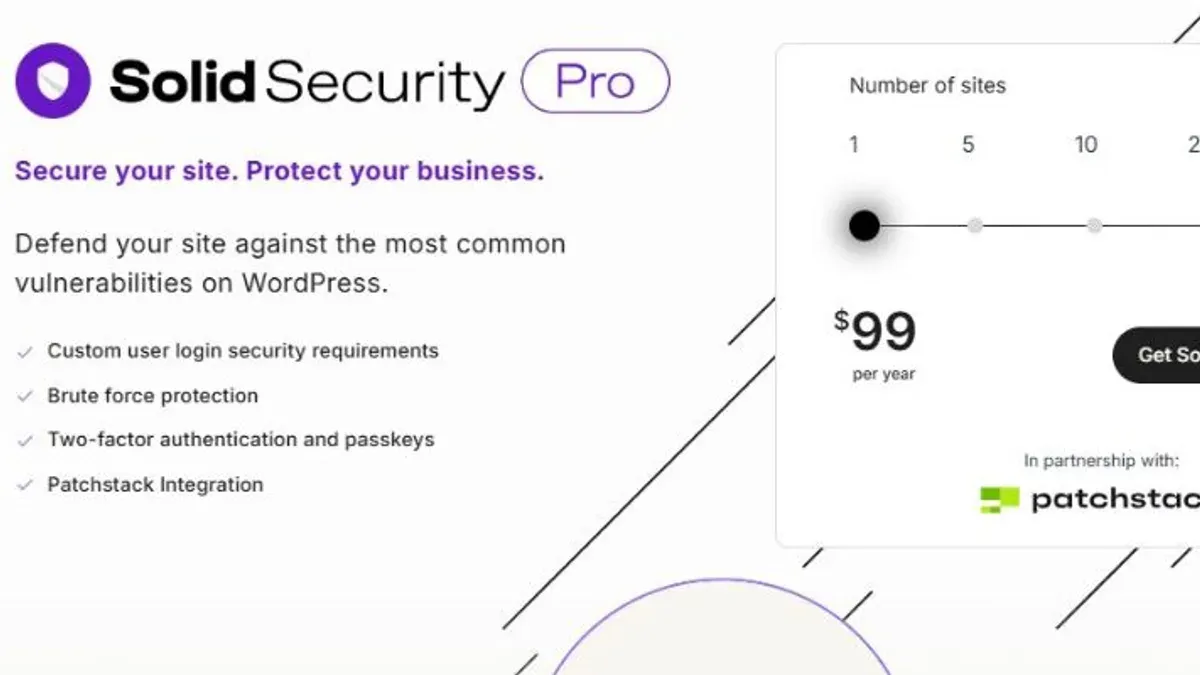
| Solid Security | Pro | Approximately $99 | Automated patching, zero-day defense, advanced firewall, priority support |
| Solid Security | Business | Approximately $199 | All Pro features plus multi-site licensing, advanced role controls, developer APIs |
| All In One WP Security | Free | 0 | Full feature set with manual configurations, community support |
| All In One WP Security | Pro Add-Ons | Varies; typically $40–$60 per add-on | Additional modules like two-factor authentication, malware scanning (optional) |
Licensing Limits
Solid Security's free plan is limited to a single site, while its Pro and Business licenses support from one up to unlimited sites depending on the purchased tier. The Business plan explicitly targets agencies and developers managing multiple client sites. All In One WP Security's core free plugin supports unlimited sites without restrictions, with premium add-ons licensed per site or with options for bulk purchase discounts.
Value for Money Based on Features and Support
Solid Security’s pricing reflects its focus on automation and premium support, offering a more centralized solution with faster updates and official assistance. This can reduce the time site owners spend on manual configurations and troubleshooting. Conversely, All In One WP Security remains attractive for budget-conscious users who prefer a do-it-yourself approach and rely on community forums for help, benefiting from extensive features without mandatory costs.
The choice between these models hinges on the user's preference for automation and support versus manual control and cost savings.
| Aspect | Solid Security | All In One WP Security |
|---|---|---|
| Free Features | Basic protection only | Full feature set |
| Premium Cost | $99–$199 per year | $40–$60 per add-on (optional) |
| Licensing per Site | Single site (free), multi-site (premium) | Unlimited sites (free), add-ons licensed per site |
| Support | Priority support with paid plans | Community-driven, slower response |
| Best for | Users valuing automation and official support | Hands-on users seeking free, manual control |
Overall, Solid Security wins in pricing and licensing for businesses and users valuing integrated automation and support, while All In One WP Security remains the economical choice for those comfortable with manual configuration and community assistance.
Which Plugin Fits Which Type of User?
Choosing between Solid Security and All In One WP Security depends largely on the user’s technical expertise, site scale, and specific security priorities. The following breakdown matches user profiles with plugin strengths to guide informed decisions.
Small Business Owners with Limited Technical Skills
For small business owners lacking deep technical knowledge, Solid Security’s guided setup, automated patching, and adaptive protection stand out. The plugin’s intuitive dashboard and official support reduce the need for manual configuration, helping non-experts maintain strong defenses without extensive time investment.
All In One WP Security, while free and modular, requires more hands-on setup and ongoing manual tuning, which might be overwhelming for this group.
Agencies Managing Multiple Client Sites
Agencies benefit from Solid Security’s tiered plans offering centralized management features and automation that streamline security across numerous sites. Its API integrations and role-based access controls facilitate delegation and monitoring at scale.
All In One WP Security’s community-driven updates and modular design allow customization, but the lack of centralized controls may increase management overhead for agencies.
Developers Seeking Customization
Developers gain significant advantages with Solid Security’s developer-oriented features: GUI-based firewall rule creation, comprehensive API access, and detailed logging. These allow fine-tuning defenses and integrating security into broader development workflows.
All In One WP Security supports manual configuration and offers modularity, appealing to developers who prefer full control and community plugins but lacks the advanced developer tooling and official support that Solid Security provides.
High-Traffic or Ecommerce Sites
Sites with heavy traffic or ecommerce operations demand minimal performance impact and robust, automated protection. Solid Security’s lightweight footprint, caching compatibility, and zero-day defenses are well-suited to maintain speed and uptime while securing sensitive transactions.
All In One WP Security can be configured for high-traffic environments but may require additional tuning to mitigate its higher resource usage, increasing maintenance efforts.
| User Profile | Solid Security | All In One WP Security | Best Fit |
|---|---|---|---|
| Small Business Owners | Guided setup, automation, official support | Manual setup, free, community support | Solid Security |
| Agencies | Centralized controls, APIs, automation | Modular, no centralized management | Solid Security |
| Developers | Advanced APIs, GUI firewall, detailed logging | Modular, manual control, community plugins | Depends on preference for official support (Solid) vs full manual control (All In One) |
| High-Traffic/Ecommerce | Lightweight, caching friendly, zero-day defense | Manual tuning needed, higher resource use | Solid Security |
Overall, Solid Security is the preferred choice for users prioritizing ease of use, automation, and performance, especially in professional or resource-sensitive contexts. All In One WP Security suits budget-conscious, technically adept users who favor full manual control and community collaboration.
Further reading
- Solid Security Review 2026: Real-World Effectiveness for SMBs and Agencies
- Jetpack Security Review 2026: Features, Performance, and Alternatives
Frequently asked questions
Can Solid Security and All In One WP Security be used together?
Using both plugins simultaneously is possible but generally not recommended due to overlapping features that can cause conflicts or redundant resource use. If combined, administrators should carefully disable duplicate modules, such as firewall rules and login protection, to avoid interference. Running two security plugins can complicate troubleshooting and may increase the risk of false positives or performance degradation.
Which plugin offers better protection against brute force attacks in 2026?
Both plugins provide effective brute force protection, but Solid Security's integration of adaptive rate limiting and AI-driven login anomaly detection offers a more dynamic defense in 2026. All In One WP Security includes strong login lockdown and CAPTCHA options, which remain reliable for most users. However, sites facing sophisticated attack patterns may benefit from Solid Security's advanced heuristics.
How do these plugins affect website speed and performance?
Solid Security is optimized for minimal performance impact, leveraging asynchronous scanning and selective feature activation to reduce load. All In One WP Security, while comprehensive, can add moderate overhead when multiple modules are enabled, particularly on shared hosting. Both plugins allow administrators to selectively enable features to balance security needs with speed.
Is there a significant difference in pricing for small versus large sites?
Solid Security follows a tiered licensing model that scales with the number of sites, making it cost-effective for small sites but potentially more expensive for large networks. All In One WP Security is free and open-source, appealing to budget-conscious small and large site owners alike, though it lacks premium support options. Large enterprises requiring dedicated support may find Solid Security's paid plans more suitable.
What this comparison does not cover
This comparison does not cover every possible security threat or plugin compatibility scenario; users should consider their specific environment and conduct additional testing where possible. Complex sites with extensive custom code or those relying on niche integrations might require tailored security solutions beyond the scope of Solid Security or All In One WP Security. Enterprises with compliance requirements or specialized threat models should consult dedicated security professionals.
The most useful next step is to install both plugins on a staging or development site to evaluate how each integrates with the site's existing setup, paying particular attention to ease of configuration under the Plugins > Installed Plugins menu and monitoring system resource usage via the Site Health tool. This hands-on approach helps identify potential conflicts and performance impacts unique to the site’s environment before committing to a live rollout.