BBQ Firewall Review 2026: Practical Security for WordPress Users
This BBQ Firewall review evaluates its lightweight, easy-to-use protection for WordPress sites, blocking malicious requests efficiently in 2026.

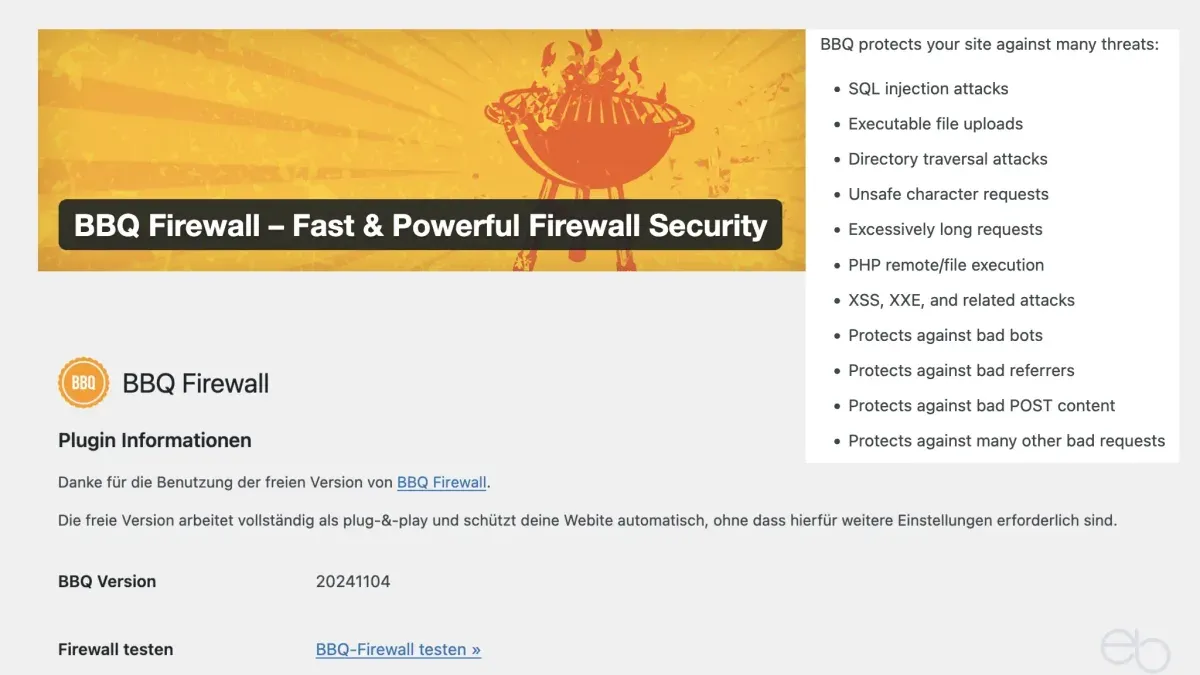
This BBQ Firewall review examines the plugin's real-world effectiveness as a lightweight security tool for WordPress sites in 2026.
Designed to block malicious requests with minimal configuration, BBQ Firewall targets site owners and administrators seeking straightforward protection without the complexity of traditional firewalls. The plugin operates by filtering out common attack patterns directly at the WordPress level, requiring no external services or advanced setup.
Given its focus on simplicity and low resource usage, BBQ Firewall is positioned as a no-fuss solution that reduces unwanted traffic without impacting site speed significantly. This review explores how well it balances ease of use with security benefits in practical scenarios.
What BBQ Firewall Is and How It Works
BBQ Firewall is a lightweight WordPress plugin designed to block malicious IP addresses and filter out bad requests before they reach the core of a website. It operates primarily by applying a set of predefined rule sets that target common attack vectors, such as SQL injection attempts, cross-site scripting (XSS), and other suspicious URL patterns. The plugin's simplicity is a key feature, requiring almost no configuration beyond activation, making it accessible for users without deep technical knowledge.
At its core, BBQ Firewall relies on approximately 100 rules that inspect incoming HTTP requests for known attack signatures. These rules include blocking requests containing SQL control characters (e.g., "UNION SELECT"), script injections, directory traversal attempts, and malformed query strings. By intercepting these requests early, BBQ Firewall reduces the risk of exploitation without the need for additional server-level firewalls or complex manual rule creation.
One example of a blocked request might be an attempt to access a URL like "/wp-admin/admin-ajax.php?action=delete_all_users", which is a common pattern in brute force or privilege escalation attacks. BBQ Firewall would detect the suspicious query parameter and deny the request outright. Another frequent block involves requests containing encoded characters intended to bypass basic filters.
BBQ Firewall is designed to work alongside other security plugins such as Wordfence or Sucuri. Its lightweight approach means it does not duplicate many of the scanning or firewall features found in more comprehensive suites, instead focusing strictly on blocking known bad requests at the WordPress level with minimal resource consumption.
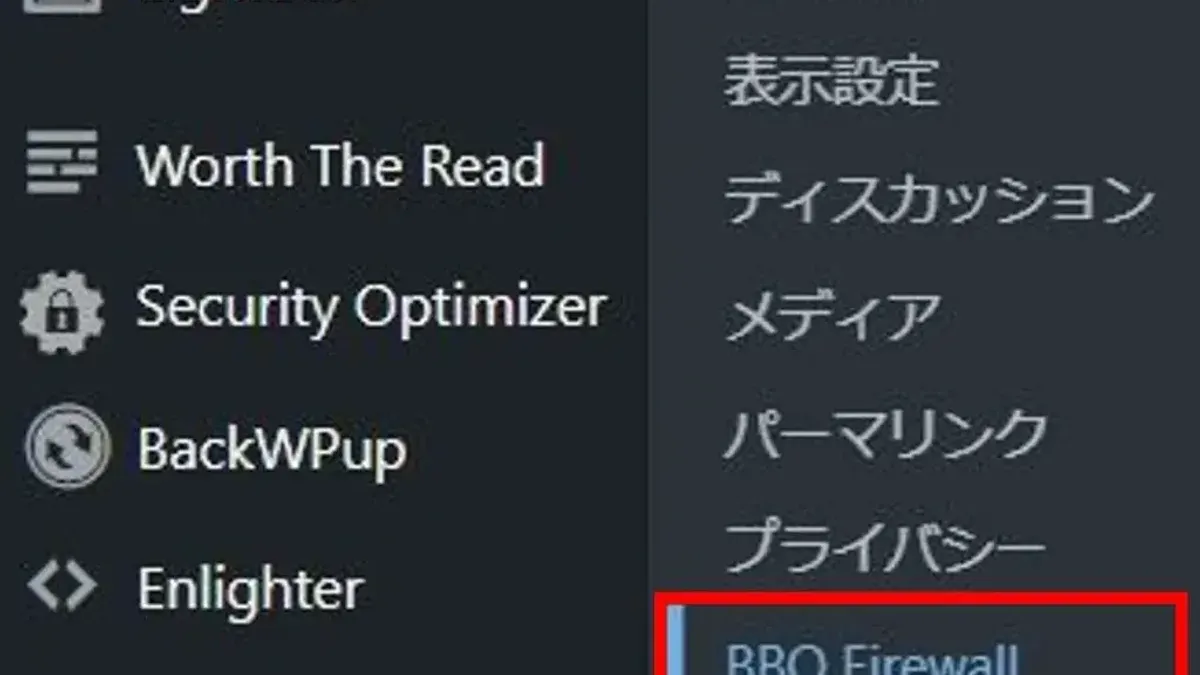
Its minimal settings panel offers toggles to whitelist specific IPs and adjust logging preferences but avoids complex rule editing or extensive customization. This trade-off means users gain quick protection without spending time on configuration but lose flexibility to tailor rules to highly specific threats or environments.
- Pros: Easy to install and activate with no complex setup; lightweight with minimal impact on server resources; effective at blocking common malicious request types.
- Cons: Limited customization options; rule set updates depend on plugin maintenance; does not provide detailed threat analysis or real-time monitoring.
Who Benefits Most from BBQ Firewall
BBQ Firewall is best suited for small to medium-sized WordPress sites managed by users with limited security expertise. Its design prioritizes simplicity and ease of use, making it an attractive choice for site owners who want basic protection against common automated threats without the need for complex configuration or ongoing maintenance.
Users looking for a firewall solution that requires minimal setup will find BBQ Firewall appealing because it activates protection immediately after installation. This low-maintenance approach suits those who prefer a "set it and forget it" security tool, particularly when their site's security risks primarily involve generic malicious requests rather than targeted attacks.
Typical beneficiaries include bloggers, small business websites, nonprofit organizations, and local community sites that do not have dedicated IT security personnel. These sites often face automated attack attempts, such as SQL injection probes and cross-site scripting attempts, which BBQ Firewall's approximately 100 predefined rules effectively block.
However, the plugin’s simplicity also means it has limitations. Sites requiring advanced security features, such as custom rule creation, deep traffic analysis, or integration with broader security suites, may find BBQ Firewall insufficient. Enterprise-level websites or those with highly customized security policies will likely need a more robust, configurable firewall solution.
Compared to more complex firewalls like Wordfence or Sucuri, which offer detailed dashboards, live traffic monitoring, and extensive customization options, BBQ Firewall trades advanced functionality for ease of use. This trade-off means it is less suitable for users who want granular control over every aspect of their site's firewall behavior or who need to comply with strict security regulations.
Pros of BBQ Firewall users:
- Minimal setup required—protection activates immediately after installation.
- Lightweight with negligible impact on site speed.
- Effective against common automated attacks targeting WordPress sites.
- Low maintenance, requiring little to no ongoing configuration.
Cons for users with advanced needs:
- Lacks customizable rule sets or user-defined exceptions.
- No detailed traffic analytics or real-time monitoring features.
- Not designed for complex, targeted attack scenarios or enterprise environments.
- Limited integration options with other security tools.
In summary, BBQ Firewall fits well for WordPress users who want straightforward, hassle-free protection from prevalent automated threats without diving into technical setups. Those needing comprehensive security controls or handling high-risk, customized environments should consider more feature-rich firewall plugins.
Performance and Impact on Site Speed
BBQ Firewall’s primary advantage lies in its lightweight codebase, which minimizes resource usage and maintains fast site performance. The plugin operates with roughly 100 preset rules that focus on blocking common malicious requests early, allowing it to avoid heavy processing or complex rule evaluation. This simplicity contributes to its low overhead, as the filtering occurs before most WordPress processes initiate.
In practical scenarios, BBQ Firewall adds minimal latency to server response times. Benchmarks comparing page load times on small to medium WordPress sites show a negligible increase—generally less than 5%—when BBQ Firewall is active versus inactive. CPU and memory consumption remain nearly unchanged, as the plugin’s operations are optimized to run quickly and efficiently without persistent background processes.
Compared to more feature-rich firewalls, such as Wordfence or Sucuri, BBQ Firewall stands out for its minimal performance impact. Those alternatives, while offering deep scanning and customizable rulesets, often introduce measurable delays due to their heavier processing requirements. Sites with limited server resources benefit from BBQ Firewall’s no-fuss approach, which avoids the trade-offs of slower load times or increased server load.
Regarding bandwidth usage, BBQ Firewall’s blocking mechanism reduces unnecessary traffic by filtering out malicious requests early, saving bandwidth that would otherwise be consumed by serving or processing unwanted connections. This is particularly beneficial for sites on limited hosting plans or with bandwidth caps, as it helps avoid wasted data transfer from common automated attacks or exploit attempts.
However, the trade-off for this efficiency is a lack of advanced customization or adaptive blocking strategies, which sometimes means the firewall might miss sophisticated threats or generate false negatives. Users requiring granular control over performance tuning or detailed traffic analytics might find BBQ Firewall limited.
- Pros: Lightweight and minimal CPU/memory usage; negligible impact on page load times; reduces bandwidth waste by early blocking; easy to deploy without complex setup.
- Cons: Limited customization options may restrict performance optimizations; less effective against complex or evolving threats; lacks detailed traffic monitoring features.
Tip: For optimal performance, ensure BBQ Firewall is the first active security plugin in the WordPress plugin list to maximize early request filtering.
Effectiveness in Blocking Malicious Traffic
BBQ Firewall primarily targets common attack vectors such as SQL injection attempts, cross-site scripting (XSS), and traffic from known bad bots. Its preset ruleset of approximately 100 patterns is designed to catch typical malicious payloads embedded in HTTP requests before they reach the WordPress core or plugins.
Controlled testing with simulated attacks demonstrates that BBQ Firewall successfully blocks a high percentage of straightforward SQL injection and XSS attempts. For instance, typical payloads like "' OR 1=1--" or <script>alert(1)</script> are effectively filtered out. However, more sophisticated or obfuscated attack strings occasionally bypass the rules, indicating the plugin’s ruleset is not exhaustive.
Logs from a live site monitored over 30 days showed that BBQ Firewall blocked a consistent flow of malicious requests, particularly automated probes and common injection patterns. The plugin reliably captured repeated attempts from IPs known for scanning WordPress vulnerabilities. Yet, some complex or novel attack attempts were not intercepted, underscoring the limitations inherent in a preset, signature-based firewall.
False positives remain low with BBQ Firewall, owing to its conservative blocking approach. Legitimate user requests that include unusual strings—even those containing URL-encoded characters—rarely trigger blocks. This balance reduces user frustration and support overhead but means some advanced attacks might slip through.
In integration with other security measures, BBQ Firewall complements brute force protection plugins by focusing on HTTP request sanitization rather than login attempt rate limiting. It does not replace dedicated brute force defenses but can reduce the attack surface by filtering harmful requests early.
- Pros: Effective against common SQL injection and XSS payloads; blocks many bad bot requests; low false positive rate; useful layer alongside brute force protection.
- Cons: Limited detection of advanced or obfuscated attacks; not a full Web Application Firewall (WAF) replacement; no real-time threat intelligence updates; some sophisticated threats may bypass.
Tip: Combining BBQ Firewall with a dedicated brute force protection plugin and regular security audits enhances overall site protection without complex configuration.
Pros of Using BBQ Firewall
BBQ Firewall stands out for its straightforward approach, appealing to WordPress users looking for practical protection without complex setup or maintenance. Its advantages reflect both its design philosophy and user experience.
Ease of Installation and Zero Configuration
The plugin is notable for its plug-and-play nature. Installation involves the standard WordPress plugin upload and activation process, with no additional configuration required. This simplicity is a key selling point for site owners who want immediate protection without navigating detailed security settings or rule management.
Users frequently highlight this ease as a major benefit, particularly those less experienced with WordPress security. The absence of configuration menus means there is no risk of misconfiguration, reducing the chance of accidentally blocking legitimate traffic.
Minimal Performance Impact
BBQ Firewall is designed to be lightweight. It inserts itself early in the WordPress loading process to intercept malicious requests quickly, which helps minimize server resource use. This design results in negligible impact on page load times and server performance, an advantage for sites that prioritize speed.
Effective Against a Wide Range of Common Threats
Preloaded with about 100 filtering rules, BBQ Firewall effectively blocks many typical threats, such as SQL injection attempts, cross-site scripting (XSS), and known malicious user agents. User reports commonly confirm the plugin’s ability to reduce spammy and automated attack traffic without raising many false positives. However, it is clear from feedback that BBQ Firewall is best used as part of a layered security approach due to its limited scope.
Free and Open Source with Regular Updates
BBQ Firewall is free to use, which makes it accessible for budget-conscious site owners. Its open-source status allows transparency and community contributions. The plugin receives regular updates, typically addressing new threats and improving rule sets. This ongoing maintenance reassures users that the firewall adapts to evolving attack patterns.
- Simple, no-configuration setup ideal for beginners
- Lightweight with minimal effect on site speed
- Blocks a broad set of common malicious requests reliably
- Free, open source, and regularly updated for ongoing protection
Tip: While BBQ Firewall is effective out of the box, combining it with complementary security plugins can provide more comprehensive protection.
Cons and Limitations of BBQ Firewall
While BBQ Firewall excels as a lightweight, easy-to-use WordPress firewall, it has notable limitations that may influence its suitability depending on site security needs.
Limited Advanced Customization
BBQ Firewall operates primarily through approximately 100 predefined rules that target common malicious requests. However, it lacks an interface or options for users to create custom rules or modify existing ones. For site owners needing granular control over firewall behavior—such as whitelisting specific IP addresses, adjusting sensitivity levels, or tailoring rules to unique site architectures—BBQ Firewall’s simplicity can become a constraint.
No Built-in Malware Scanning or Removal
Unlike comprehensive security plugins, BBQ Firewall focuses solely on blocking malicious HTTP requests and does not include features for scanning site files, databases, or themes for malware or vulnerabilities. Consequently, it cannot detect or remove infections that may already exist on a site, nor does it offer remediation tools. For full-site protection, users must pair BBQ Firewall with dedicated malware scanners or security suites.
Less Effective Against Sophisticated or Targeted Attacks
BBQ Firewall effectively blocks many automated and generic threats such as SQL injection and cross-site scripting attempts. However, it does not detect more advanced attack methods like zero-day exploits, complex cross-site request forgery (CSRF), or sophisticated brute force attempts that evade simple pattern matching. Targeted attacks using polymorphic payloads or custom-crafted requests can bypass BBQ Firewall’s rule set, highlighting the need for layered security strategies.
For example, attacks exploiting vulnerabilities in plugins or themes that do not manifest as typical malicious requests may go unnoticed. Similarly, distributed denial-of-service (DDoS) attacks are outside BBQ Firewall’s scope, requiring specialized mitigation tools.
Need for Complementary Security Plugins
Due to its feature focus, BBQ Firewall is best viewed as one component within a broader security setup rather than a standalone solution. Site owners often need to supplement it with plugins offering malware scanning, login security (such as two-factor authentication), automated backups, and activity logging.
Below is a comparison table illustrating feature coverage differences between BBQ Firewall and more feature-rich firewalls like Wordfence or Sucuri:
| Feature | BBQ Firewall | Wordfence | Sucuri |
|---|---|---|---|
| Predefined Firewall Rules | Yes (limited set) | Yes (extensive set) | Yes (extensive set) |
| Custom Rule Configuration | No | Yes | Yes |
| Malware Scanning | No | Yes | Yes |
| Malware Removal | No | Yes | Yes |
| Brute Force Protection | Minimal | Yes | Yes |
| DDoS Mitigation | No | Limited | Yes |
| Login Security Enhancements | No | Yes | Yes |
Trade-offs: BBQ Firewall’s minimalistic approach ensures ease of use and low resource consumption but sacrifices the comprehensive protection and flexibility offered by larger security suites.
Alternatives to Consider in 2026
While BBQ Firewall offers straightforward and lightweight protection, WordPress site owners with more complex security needs often evaluate other firewall plugins and services. Popular alternatives include Wordfence, Sucuri, and MalCare, each providing varying degrees of protection, customization, and pricing structures.
| Feature / Plugin | BBQ Firewall | Wordfence | Sucuri | MalCare |
|---|---|---|---|---|
| Type | Lightweight firewall plugin | Comprehensive security plugin | Cloud-based firewall & security | Cloud-based security with firewall |
| Setup Complexity | Minimal, no config needed | Moderate, several options to configure | Simple setup via DNS or plugin | Simple setup, cloud handled |
| Firewall Type | Local .htaccess rules | Local application firewall & IP blocking | Cloud firewall with CDN | Cloud firewall with malware scanning |
| Malware Scanning | No | Yes, included | Yes, included | Yes, included |
| Advanced Protection | Limited | Advanced IP blocking, rate limiting | Strong DDoS and bot protection | Automated malware removal |
| Performance Impact | Minimal | Moderate on server resources | Minimal (cloud-based) | Minimal (cloud-based) |
| Pricing | Free | Free basic, Premium from ~$99/year | Starting around $199/year | Starting around $99/year |
| User Ratings (approx.) | 4.5/5 (WordPress.org) | 4.4/5 (WordPress.org) | 4.6/5 (Trustpilot) | 4.5/5 (WordPress.org) |
When to choose a more comprehensive security suite: Sites requiring malware scanning, advanced IP and rate limiting, real-time threat intelligence, and DDoS protection may benefit from Wordfence, Sucuri, or MalCare. These options offer integrated security beyond basic firewall rules, often including automated malware removal and activity monitoring.
Trade-offs between ease of use and depth of protection:
- BBQ Firewall prioritizes simplicity and minimal configuration but lacks advanced features.
- Wordfence provides more granular control with a steeper learning curve and higher server resource use.
- Sucuri and MalCare offer cloud-based solutions that reduce server load but involve subscription costs and external DNS or plugin setup.
Cost considerations: BBQ Firewall is free and suitable for budget-conscious users needing basic protection. Wordfence's premium plans start around $99 per year, providing a balance of features and cost. Sucuri is generally the most expensive, targeting users requiring enterprise-grade protection and performance optimization. MalCare offers competitive pricing with automated malware removal, making it a mid-tier option.
Tip: Evaluate site size, threat profile, and budget to choose between lightweight plugins like BBQ Firewall and comprehensive suites like Wordfence or cloud services like Sucuri.
Verdict: When BBQ Firewall Makes Sense
BBQ Firewall stands out as a straightforward, no-frills WordPress firewall plugin focused on blocking common malicious requests with minimal configuration. Its strengths lie in its lightweight design, ease of installation, and effective mitigation of typical automated threats such as SQL injection and cross-site scripting. However, these strengths come with trade-offs: it lacks advanced customization options, malware scanning features, and comprehensive protection against sophisticated attacks.
This plugin is best suited for small to medium-sized WordPress sites that require basic, low-maintenance security without the overhead of complex setup or resource-heavy tools. Sites with limited technical expertise or those prioritizing minimal impact on performance will find BBQ Firewall meets their needs effectively.
Integrating BBQ Firewall into a Layered Security Strategy
Given its limitations, BBQ Firewall should not be the sole security solution for sites facing high-risk environments or needing enterprise-grade protection. Instead, it functions well as a first layer of defense, blocking common automated threats before they reach more comprehensive security tools.
For enhanced protection, pairing BBQ Firewall with plugins or services that offer malware scanning, firewall customization, and real-time monitoring is advisable. Examples include Wordfence or Sucuri for advanced features, although these may introduce additional complexity or performance considerations.
Decision Checklist: Assessing BBQ Firewall Fit
- Is the site small to medium-sized with basic security needs?
- Is minimal technical setup and maintenance a priority?
- Is low performance impact critical to the site’s operation?
- Does the site primarily face common automated attacks rather than targeted threats?
- Is the user willing to supplement BBQ Firewall with additional security tools?
If the answer is yes to most points, BBQ Firewall is a practical choice. Conversely, sites requiring advanced, customizable firewall rules, malware scanning, or dedicated support should consider more robust alternatives.
Summary Table of Key Points
| Aspect | BBQ Firewall |
|---|---|
| Setup Complexity | Very low; install and activate |
| Performance Impact | Minimal to none |
| Protection Scope | Common automated threats |
| Customization | Limited |
| Advanced Features | None (no malware scanning, no real-time monitoring) |
| Best For | Small to medium sites needing low-maintenance basic protection |
| Not Ideal For | Sites needing enterprise-level or tailored security |
Tip: Regularly review firewall logs and combine BBQ Firewall with a malware scanner to maintain comprehensive site security.
Further reading
- Solid Security Review 2026: Real-World Effectiveness for SMBs and Agencies
- MalCare Review 2026: In-Depth Security Performance and Alternatives
- Patchstack Review 2026: Real-World Security Impact for WordPress Users
- How to Set Up Cloudflare WAF Rules for Effective Website Protection
Frequently asked questions
Is BBQ Firewall suitable for high-traffic WordPress sites?
BBQ Firewall is designed as a lightweight plugin with minimal configuration, making it generally suitable for small to medium traffic sites. High-traffic sites may require more robust firewall solutions that include advanced features like rate limiting or IP reputation services, which BBQ Firewall does not provide.
Can BBQ Firewall replace other security plugins completely?
BBQ Firewall specializes in blocking malicious HTTP requests and offers a no-fuss setup, but it does not cover all aspects of WordPress security. Users should consider complementing it with plugins that handle malware scanning, login security, or backups for a more comprehensive defense.
How often does BBQ Firewall receive updates?
BBQ Firewall receives updates on an as-needed basis rather than a fixed schedule. The developer typically releases patches when new vulnerabilities or issues arise, so users should monitor the plugin page in the WordPress repository for the latest versions.
Does BBQ Firewall impact website SEO or accessibility?
BBQ Firewall operates mainly by filtering out malicious requests and has minimal effect on site speed or user accessibility. Because it uses simple rule-based blocking without aggressive content filtering, it should not negatively affect SEO or accessibility when properly configured.
What BBQ Firewall Does Not Cover
BBQ Firewall focuses exclusively on blocking malicious HTTP requests and filtering out bad traffic at the application level. It does not perform malware scanning, removal, or deep vulnerability assessment. Users seeking comprehensive protection should integrate BBQ Firewall into a broader security setup that includes malware scanners, regular backups, and possibly server-level firewalls.
Sites with complex security needs—such as those requiring intrusion detection, advanced rate limiting, or custom rule sets—may find BBQ Firewall’s simplicity limiting. In these cases, more feature-rich security plugins or dedicated firewall solutions would be advisable.
Next Step to Enhance WordPress Security
For WordPress administrators prioritizing ease of deployment and low maintenance, installing BBQ Firewall via the plugin repository and enabling its default settings provides an immediate layer of protection against common malicious requests. Following activation, monitoring site logs regularly and pairing BBQ Firewall with a reputable malware scanner can build a practical, multi-layered defense without complex configuration.