Types of Encryption: A Clear Guide to Algorithms and Applications
This article explains types of encryption by linking specific algorithms to real-world applications and common security tools.

This article explains the types of encryption by linking specific algorithms to their real-world applications and common security tools.
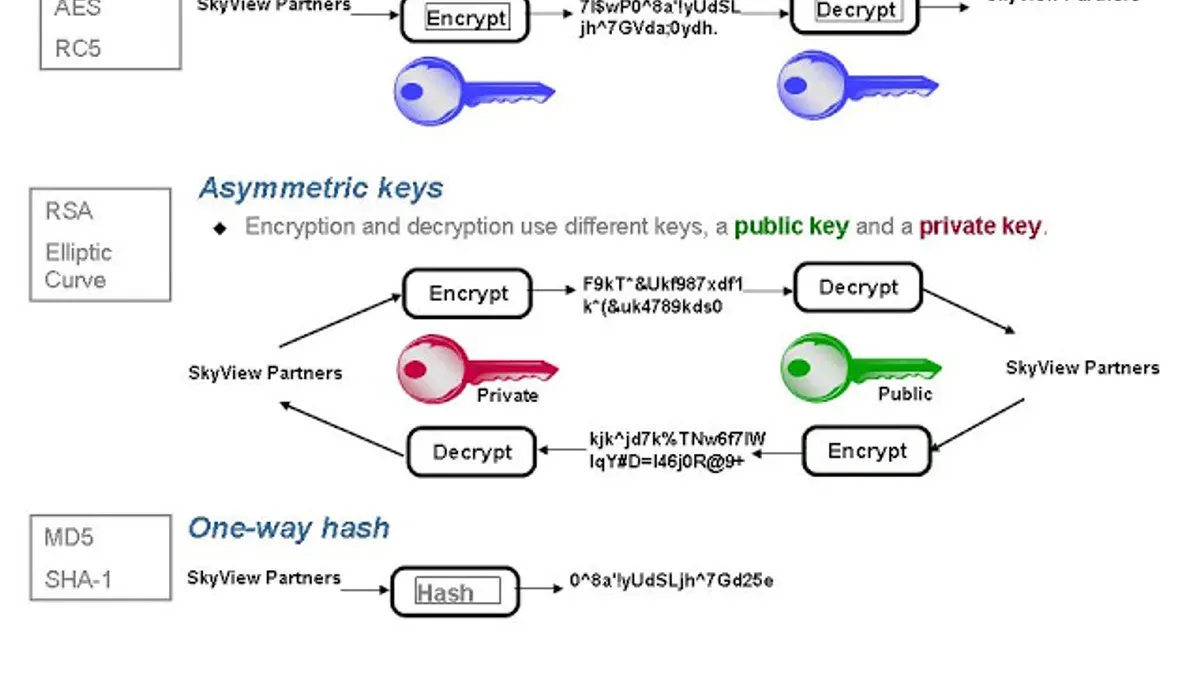
Encryption is fundamental to data protection, but the variety of encryption types can be confusing. Symmetric encryption, using the same key for encryption and decryption, is common in disk encryption tools like BitLocker and LUKS. Asymmetric encryption involves separate public and private keys, often used in secure communications and cryptocurrencies such as Bitcoin. Hash functions, while not encryption per se, play a crucial role in verifying data integrity. Understanding these distinctions helps clarify their typical uses and limitations.
Tip: Identifying the type of encryption behind a tool can help assess its suitability for specific security needs.
What types of encryption are there
Encryption transforms readable data into a coded format to protect information from unauthorized access. It relies on algorithms and keys to control how data is encrypted and decrypted, ensuring confidentiality and integrity.
Encryption generally divides into two main types: symmetric and asymmetric. Symmetric encryption uses a single key for both encrypting and decrypting data, while asymmetric encryption employs a pair of keys—a public key to encrypt and a private key to decrypt.
Within symmetric encryption, algorithms further categorize into block ciphers and stream ciphers. Block ciphers encrypt data in fixed-size chunks (blocks), such as AES (Advanced Encryption Standard), whereas stream ciphers process data as a continuous stream of bits or bytes, like RC4.
| Characteristic | Symmetric Encryption | Asymmetric Encryption |
|---|---|---|
| Number of keys | One shared key | Two keys (public and private) |
| Speed | Faster, suitable for large data | Slower, often used for small data or key exchange |
| Common Algorithms | AES, DES, RC4 | RSA, ECC, DSA |
| Use cases | File encryption, disk encryption | Secure email, digital signatures |
For example, when sending a confidential file, symmetric encryption quickly secures the file’s content, but the symmetric key itself may be sent encrypted via asymmetric encryption to ensure it only reaches the intended recipient.
What type of encryption do ransomware use
Ransomware typically employs a combination of strong symmetric and asymmetric encryption to efficiently lock victims’ data while securely managing encryption keys. The most common practice involves using a fast symmetric algorithm like AES (Advanced Encryption Standard) to encrypt files. AES is favored for its speed and strength, enabling ransomware to quickly lock large volumes of data.
To protect the symmetric AES key itself, ransomware often uses asymmetric encryption such as RSA. The RSA algorithm encrypts the AES key with the attacker’s public key, ensuring only the attacker can decrypt it using their private key. This two-tier approach complicates recovery efforts because even if encrypted files are found, without the private RSA key, the AES key remains inaccessible.
For example, ransomware might first generate a unique AES key and encrypt all victim files with AES-256. Then, it encrypts this AES key using an RSA-2048 public key embedded in the malware. The victim ends up with files encrypted by AES and an inaccessible AES key locked by RSA, which is why paying the ransom is often the only way to restore data.
Tip: The choice of RSA key size affects security; larger RSA keys increase protection but can slow down the key exchange process during infection.
What type of encryption is utilized by LUKS
LUKS (Linux Unified Key Setup) is a widely used disk encryption specification designed for securing entire storage volumes on Linux systems. It primarily relies on the Advanced Encryption Standard (AES) algorithm, typically using 256-bit keys for strong security.
The default encryption mode in LUKS is XTS, a block cipher mode adapted for disk encryption that provides protection against certain types of data manipulation. AES-XTS combines two AES keys, effectively doubling key material length—for example, two 256-bit keys resulting in a 512-bit key size used internally.
LUKS manages encryption keys through a layered approach: the master key encrypts the disk data and is itself encrypted by multiple user passphrases or keyslots. This keyslot system allows several passphrases or key files to unlock the master key, enhancing flexibility and security. For instance, a user can add or revoke passphrases without re-encrypting the entire disk.
A concrete example: when a user sets a passphrase during LUKS setup, that passphrase encrypts a keyslot containing the master key. Upon unlocking the disk, LUKS decrypts the master key with the passphrase, then uses the master key with AES-XTS to transparently encrypt and decrypt data blocks on the fly.
What type of encryption does Bitcoin use
Bitcoin primarily relies on cryptographic methods rather than traditional encryption to secure transactions and wallets. Central to its security model is elliptic curve cryptography (ECC), specifically the secp256k1 curve, which generates the public and private key pairs used to sign transactions. This signing process ensures that only the owner of the private key can authorize spending of the associated bitcoins.
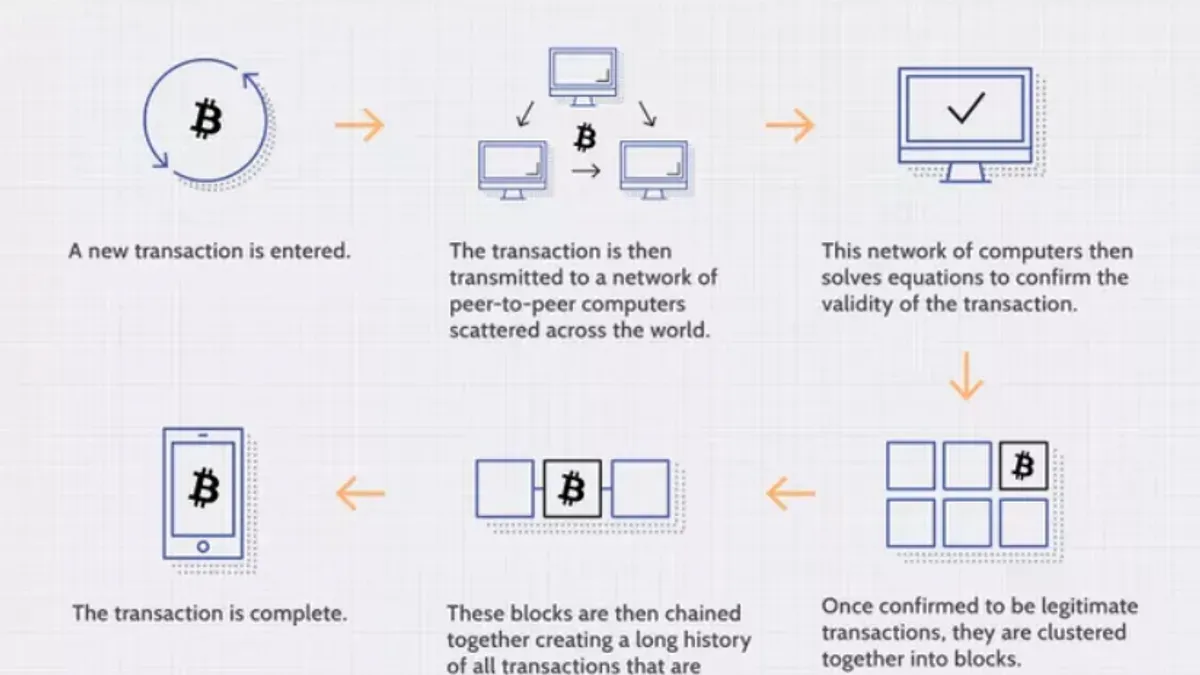
Additionally, Bitcoin uses the SHA-256 hash function extensively. SHA-256 plays a crucial role in the proof-of-work consensus mechanism by hashing block headers repeatedly to meet a target difficulty. It is also used to create Bitcoin addresses by hashing public keys, providing a layer of obfuscation and integrity verification.
For example, when a user sends bitcoins, their wallet software generates a digital signature using their private key (ECC) to sign the transaction data, which includes the recipient's address and amount. This signature, combined with the transaction data hashed through SHA-256, allows network nodes to verify the authenticity without revealing the private key.
Tip: Understanding the difference between encryption and cryptographic hashing clarifies Bitcoin's security: it does not encrypt data but uses these methods to secure ownership and integrity.
Diagram: A flowchart of Bitcoin transaction signing shows the private key generating a signature via ECC, transaction data hashed by SHA-256, and nodes verifying the signature against the public key.
What type of encryption does WPA2 use
WPA2 secures Wi-Fi networks primarily through the use of AES (Advanced Encryption Standard) in CCMP (Counter Mode with Cipher Block Chaining Message Authentication Code Protocol) mode. This combination provides robust confidentiality, integrity, and authentication for wireless communications.
Earlier Wi-Fi security standards like WPA relied on TKIP (Temporal Key Integrity Protocol), which was designed to extend the life of the older WEP encryption. However, TKIP has known vulnerabilities and does not offer the same level of security as AES-CCMP. WPA2's adoption of AES-CCMP replaced TKIP to address these weaknesses and improve resistance against modern attacks.
For example, when a user connects to a WPA2-protected Wi-Fi network, each data packet is encrypted with AES-CCMP, ensuring that even intercepted packets cannot be decrypted without the correct session key. This contrasts with TKIP, where attackers had demonstrated the ability to exploit flaws to decrypt traffic under certain conditions.
| Protocol | Encryption Method | Security Notes |
|---|---|---|
| WPA | TKIP | Improved over WEP but vulnerable to certain attacks |
| WPA2 | AES in CCMP mode | Strong encryption, widely trusted, standard for Wi-Fi security |
| WPA3 | Simultaneous Authentication of Equals (SAE) with AES | Improved key exchange and forward secrecy |
Tip: When configuring routers or Wi-Fi access points, always select WPA2 with AES-CCMP over TKIP to maximize wireless security and compatibility.
What type of encryption does BitLocker use
BitLocker drive encryption primarily uses the Advanced Encryption Standard (AES) with either 128-bit or 256-bit keys. The encryption can be applied in different modes, notably Cipher Block Chaining (CBC) or XTS mode, depending on the Windows version and configuration. XTS mode, introduced in Windows 10, provides enhanced integrity protection against certain types of attacks compared to the older CBC mode.
BitLocker integrates closely with the Trusted Platform Module (TPM), a hardware chip that securely stores encryption keys. This integration allows for automatic unlocking of the drive during boot if the system integrity checks pass, improving usability without compromising security.
For example, in Windows 10 Pro or Enterprise, a user enabling BitLocker on a system with TPM will typically see AES-128 or AES-256 in XTS mode as the default encryption algorithm. This balances strong data protection with performance. Users can change these settings through Group Policy under Computer Configuration > Administrative Templates > Windows Components > BitLocker Drive Encryption.
Tip: Choosing 256-bit AES provides stronger encryption but may slightly affect system performance compared to 128-bit AES.
What type of encryption does WhatsApp use
WhatsApp secures messages through end-to-end encryption based on the Signal Protocol, which integrates both asymmetric and symmetric encryption methods. When a user sends a message, the app first uses asymmetric cryptography to securely exchange ephemeral keys between the sender and recipient. These keys establish a shared secret used in symmetric encryption for the actual message content, ensuring efficiency and strong confidentiality.
For example, when Alice sends a message to Bob, her WhatsApp client retrieves Bob’s public identity key and ephemeral session keys. Alice’s app uses these to perform a key agreement, deriving a symmetric session key. The message is then encrypted with this key using AES in cipher block chaining (CBC) mode, along with a message authentication code (MAC) for integrity.
Upon receiving the message, Bob’s client uses his private keys to derive the same symmetric key, decrypting the message and verifying its authenticity. This process happens transparently with every message, generating new keys frequently to provide forward secrecy and prevent retrospective decryption if keys are compromised.
Tip: Users can verify encryption by comparing security codes in the chat settings, confirming that the end-to-end encryption is active and uncompromised.
How many types of encryption are there
Encryption encompasses a broad spectrum beyond the familiar symmetric and asymmetric categories. It includes hashing algorithms like SHA-2 and SHA-3, which produce fixed-size digests to verify data integrity rather than conceal content. Homomorphic encryption allows computations on encrypted data without decryption, opening possibilities for secure cloud processing. Quantum-resistant algorithms, designed to withstand future quantum computer attacks, are emerging as critical for long-term security.
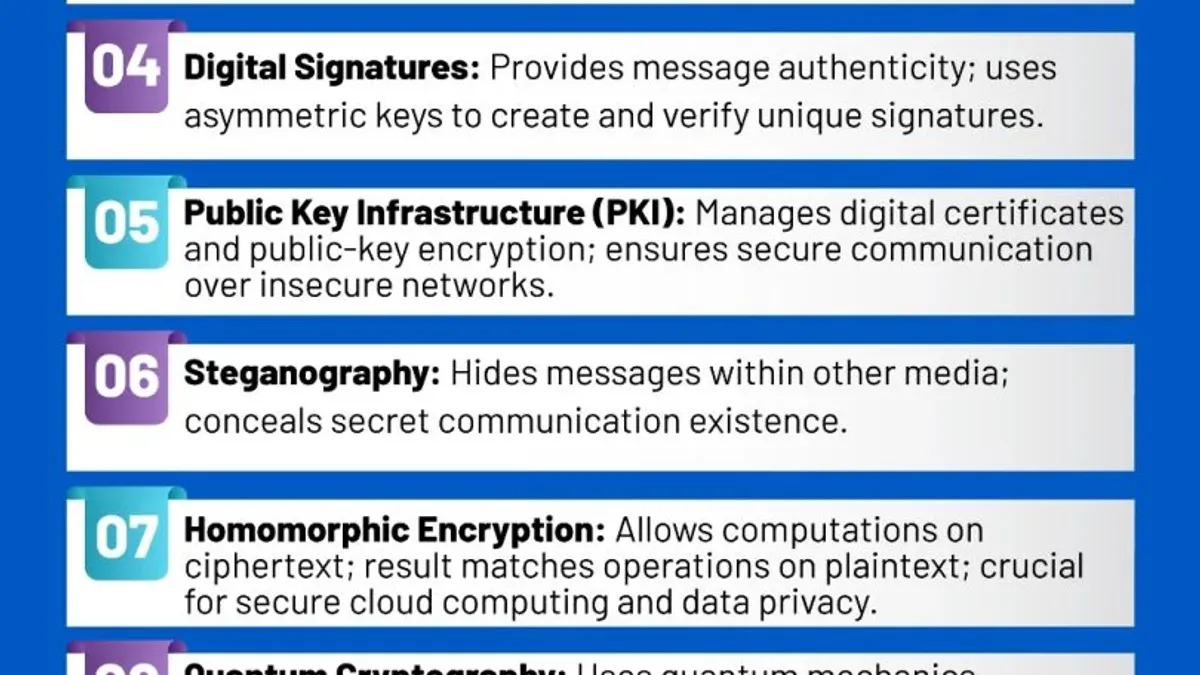
Encryption can also be classified by algorithm type—block ciphers, stream ciphers, or hash functions—by key usage—single key, key pairs, or keyless methods—or by application context, such as disk encryption, messaging, or network security. For example, a corporate system might combine symmetric AES for fast file encryption with asymmetric RSA for secure key exchange, while using hashing to verify file integrity.
Tip: Understanding these types helps in selecting encryption suited to specific needs, balancing performance, security, and usability.
An infographic categorizing encryption types would illustrate each method, their key characteristics, and common use cases, helping clarify their distinct roles in data protection.
Common mistakes to avoid with encryption
One frequent error is using outdated or weak encryption algorithms, such as DES or MD5, which attackers can break with relative ease. Selecting strong, current standards like AES or SHA-256 helps prevent vulnerabilities.
Key management often poses a bigger risk than the encryption algorithm itself. Storing encryption keys alongside encrypted data, using weak passwords, or failing to rotate keys regularly can expose sensitive information. For example, a notable data breach occurred when a company stored encryption keys in plaintext on the same server as protected files, allowing attackers to access both and compromise customer data.
Another common misunderstanding is assuming encryption protects data in all states. Encrypting only data in transit, while leaving stored data unencrypted, leaves it vulnerable to breaches. Comprehensive protection requires encrypting data both at rest and during transmission.
Finally, relying solely on encryption without additional security controls—such as access management, intrusion detection, or regular software updates—can create a false sense of security. Encryption should be part of a layered defense strategy, not a standalone solution.
Tip: Implement a clear key management policy with secure storage, regular key rotation, and strict access controls to maximize encryption effectiveness.
Further reading
- Types of Cyber Attacks: A Comprehensive Explainer Guide
- Best Certifications for Cryptographer in 2026: Expert Guide to Career and Skills
- How to Check If an Email Sender Is Legit: Step-by-Step Guide
- How to Check If a Website Is Legit: A Step-by-Step Guide
Frequently asked questions
What are encryption types?
Encryption types refer to the different methods or algorithms used to encode data, making it unreadable to unauthorized users. Common categories include symmetric encryption, where the same key encrypts and decrypts data, and asymmetric encryption, which uses a paired public and private key.
What are encryption types and examples
Encryption types include symmetric algorithms like AES (Advanced Encryption Standard) and DES (Data Encryption Standard), and asymmetric algorithms such as RSA and ECC (Elliptic Curve Cryptography). For example, AES is widely used for securing files and communications, while RSA is common in digital signatures and key exchanges.
What types of encryption and decryption exist
There are two main types: symmetric encryption uses one secret key for both encryption and decryption, while asymmetric encryption uses a public key to encrypt data and a private key to decrypt it. Hybrid approaches combine both to optimize security and performance, such as using asymmetric encryption to exchange symmetric keys.
What types of encryption in cyber security are most effective
Effectiveness depends on use case and implementation, but AES is widely regarded as strong for symmetric encryption due to its speed and security. For asymmetric encryption, RSA and ECC are effective choices, with ECC offering similar security with smaller key sizes, benefiting resource-constrained environments.
What are encryption engine types
Encryption engine types typically refer to hardware or software modules that perform encryption operations. Hardware encryption engines, like those in CPUs or dedicated cryptographic chips, accelerate processing and improve security, while software engines provide flexibility and ease of updates but may have slower performance.
What this advice does not cover and when to seek expert help
This article does not cover detailed cryptographic protocol implementations or vulnerabilities that require specialized security expertise. It focuses on explaining common types of encryption and their typical applications rather than deep technical analysis or advanced cryptographic research.
Organizations operating in regulated industries, handling highly sensitive data, or facing targeted cyber threats should consult professional guidance for encryption deployment. These environments often require tailored security assessments, continuous monitoring, and compliance with specific standards that go beyond general encryption choice and usage advice.
For those evaluating encryption solutions, the most useful next step is to review the specific encryption settings and key management options within the security tools planned for deployment. Ensuring proper configuration—such as selecting strong algorithms, using adequate key lengths, and enabling automatic key rotation—often has a greater impact on security than the choice of encryption type alone.