Best Certifications for Cloud Security Architect in 2026
Explore the top certifications that validate expertise and advance careers for cloud security architects in 2026.

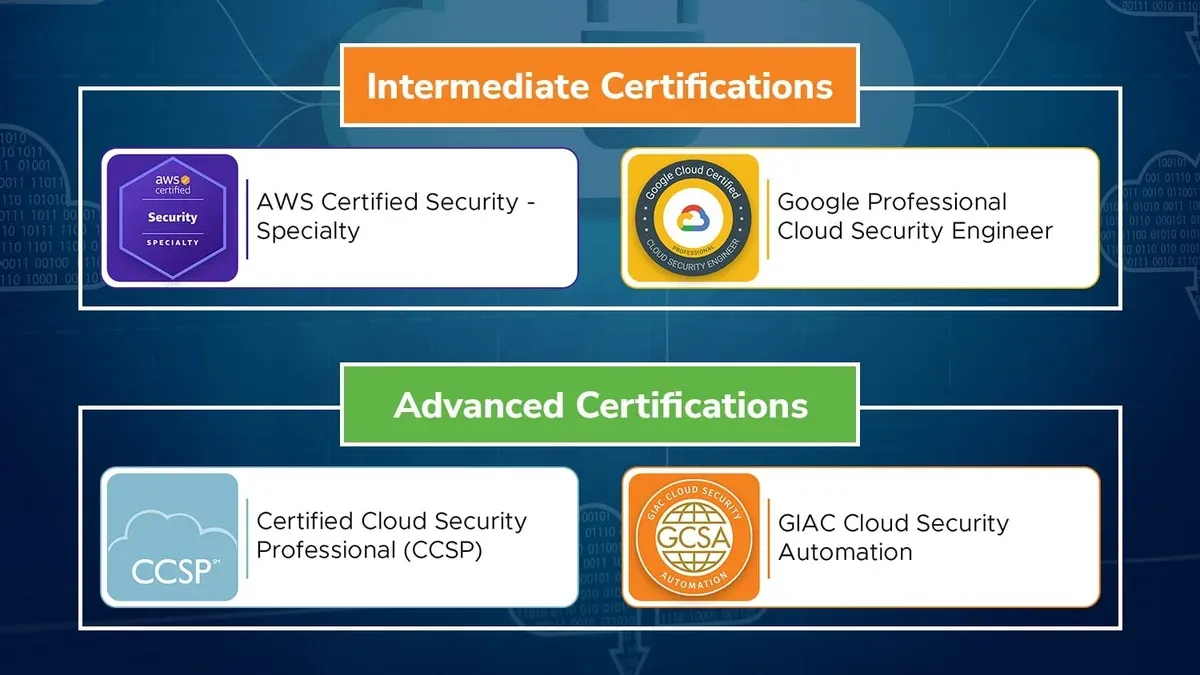
This article outlines the best certifications for cloud security architect roles in 2026, focusing on qualifications that align with current industry demands and career advancement opportunities.
Cloud security architects require specialized certifications that validate expertise in securing cloud infrastructures, managing risks, and implementing compliance measures. The certifications discussed here specifically address these areas, distinguishing them from general cloud or cybersecurity credentials. Evaluating factors such as vendor recognition, exam content, practical applicability, and career impact helps IT professionals select the most relevant certification path for their goals in 2026.
How we chose the best cloud security architect certifications
Certifications were evaluated primarily on their industry recognition and vendor neutrality, ensuring they are respected across diverse employers rather than tied to a single platform. Vendor-neutral certifications like the Certified Cloud Security Professional (CCSP) offer broad applicability, ideal for architects working across multiple clouds; their strength lies in comprehensive coverage, though they often require substantial prior experience.
Curriculum relevance was measured by alignment with core cloud security architecture responsibilities such as secure design, governance, and risk management. Certifications updated within the last 18 months to reflect 2026 cloud security trends scored higher, as they better prepare candidates for current challenges. For example, the AWS Certified Security – Specialty was refreshed recently, focusing heavily on AWS-specific threat models, making it strong for AWS-centric roles but less ideal for multi-cloud architects.
We considered difficulty levels and prerequisites to balance accessibility with rigor. Certifications like Microsoft's Azure Security Engineer Associate are more accessible for early-career professionals, providing foundational skills, but they may lack depth compared to advanced certs. Salary impact and employer demand were assessed using industry surveys and job market data, indicating that certifications such as CCSP and CISSP with cloud specializations tend to correlate with higher salary brackets and frequent job postings.
Feedback from certified professionals and hiring managers helped gauge real-world value. Professionals often cite the CISSP with cloud specialty as prestigious but demanding, requiring significant study time. Popularity statistics from certification bodies and LinkedIn profiles helped validate the certifications’ market presence, ensuring recommendations reflect both current demand and career impact.
Which cloud security certification is best for career advancement
Among cloud security certifications, the Certified Cloud Security Professional (CCSP) consistently ranks highest for career growth. It offers comprehensive, vendor-neutral coverage of cloud security architecture, making it suitable for professionals aiming at senior architect or leadership roles in diverse environments. Organizations like Deloitte, IBM, and AWS partners often list CCSP as a preferred credential, reflecting its broad industry recognition. A notable strength is its alignment with industry standards and frameworks, but its depth requires significant prior security experience, which can be a barrier.
The AWS Certified Security – Specialty is a top choice for those focused on AWS cloud environments. It suits architects working primarily with AWS infrastructure, offering detailed knowledge of AWS security services and best practices. This certification often leads to roles in companies heavily invested in AWS, such as Amazon, Netflix, and Capital One. Its strength lies in vendor specialization that translates to immediate job relevance, though its narrow focus limits applicability outside AWS-centric roles.
The Google Professional Cloud Security Engineer certification is ideal for architects operating in Google Cloud environments. It emphasizes designing and implementing secure infrastructure on Google Cloud, favored by firms like Spotify and PayPal. Its practical focus on Google Cloud tools is a strength, but the smaller market share compared to AWS may limit some opportunities.
Tip: Choose certifications based on the cloud platforms prevalent in your target job market to maximize career impact.
Certified Cloud Security Professional (CCSP): What it is and who it suits
The Certified Cloud Security Professional (CCSP) certification is offered by (ISC)², a globally recognized non-profit specializing in information security certifications. It covers six core domains that align closely with cloud security architecture, including Cloud Concepts, Architecture and Design, Cloud Data Security, Cloud Platform and Infrastructure Security, Cloud Application Security, Operations, and Legal/Compliance. This vendor-neutral certification is designed for experienced security professionals who want to validate their skills specifically in cloud security environments.
Ideal candidates typically have at least five years of cumulative work experience in IT, including three years in information security and one year in one or more of the CCSP domains. The exam consists of 125 multiple-choice questions to be completed within four hours. Certification holders must recertify every three years through Continuing Professional Education (CPE) credits and a fee.
One significant strength of the CCSP is its broad industry recognition and applicability across various cloud platforms, making it versatile for professionals working in multi-cloud environments. However, a drawback is its demanding prerequisite experience and relatively challenging exam, which can be a barrier for those newer to cloud security roles.
AWS Certified Security – Specialty: What it is and who it suits
The AWS Certified Security – Specialty certification focuses on securing AWS cloud environments, validating expertise in areas such as data protection, incident response, logging, and infrastructure security within AWS. Given AWS’s significant market share—holding the largest portion of the cloud infrastructure market in 2026—this certification is highly valued for architects working primarily in AWS ecosystems.
What it is: This specialized certification tests advanced knowledge of AWS-specific security controls, including identity and access management (IAM), encryption, and threat detection using AWS tools like AWS CloudTrail and AWS Config. The exam blueprint emphasizes skills in designing and implementing secure solutions tailored to AWS’s infrastructure.
Who it suits: IT professionals and cloud security architects with a solid understanding of AWS services and security best practices benefit most. Candidates typically have experience with AWS environments and prior certifications such as AWS Certified Cloud Practitioner or AWS Certified Solutions Architect Associate are recommended.
One concrete strength: The certification’s detailed focus on AWS security features equips architects to design robust, compliant, and scalable security architectures within AWS, aligning closely with the platform’s unique tools and services.
One honest drawback: Its specialization limits applicability for professionals targeting multi-cloud roles or vendor-neutral positions, as the content centers exclusively on AWS security rather than broader cloud security principles.
Exam difficulty and preparation: The exam is considered challenging, requiring thorough preparation via AWS’s official exam guide, whitepapers, and hands-on experience. Training courses and practice exams are widely available to support candidates.
Salary data: Cloud security architects certified with AWS Security Specialty often command salaries above the average for cloud security roles, reflecting AWS’s dominant market presence and demand for specialized skills.
Google Professional Cloud Security Engineer: What it is and who it suits
The Google Professional Cloud Security Engineer certification targets professionals responsible for designing and implementing secure infrastructure on Google Cloud Platform (GCP). It covers security best practices, identity and access management, data protection, network security, and compliance within the GCP environment. The exam tests practical knowledge through scenario-based questions emphasizing hands-on skills.
This certification suits cloud security architects working primarily with GCP or those transitioning from other cloud providers seeking specialized expertise in Google Cloud security. Candidates typically have experience with GCP services, security concepts, and cloud infrastructure design.
One strength of this certification is its deep integration with Google Cloud’s evolving services, reflecting current industry practices and Google's growing market adoption, which appeals to companies increasingly investing in GCP.
However, a notable drawback is its narrow focus: professionals aiming for multi-cloud or vendor-neutral roles may find its specialization limits broader applicability. Unlike vendor-neutral certifications, it is less suited for architects who need to secure hybrid or multi-cloud environments beyond Google Cloud.
Tip: Candidates benefit from hands-on experience using Google Cloud Console and command-line tools, as the exam emphasizes practical tasks and configuration skills.
Microsoft Certified: Security, Compliance, and Identity Fundamentals and Azure Security Engineer Associate
The Microsoft Certified: Security, Compliance, and Identity Fundamentals certification offers a foundational overview of security principles, compliance frameworks, and identity management within Microsoft cloud environments. It is designed for individuals new to cloud security or those seeking to understand the basics before advancing further. This certification suits IT professionals starting their cloud security career, providing a solid base but with limited depth for architect-level responsibilities.
A key strength is its accessibility, requiring no prior experience and serving as a stepping stone toward more advanced certifications. However, its coverage is broad and introductory, making it insufficient alone for architect roles.
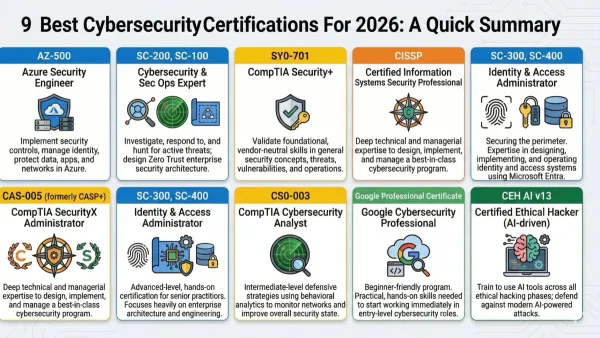
The Azure Security Engineer Associate certification targets professionals who implement security controls and threat protection, manage identity and access, and protect data, applications, and networks in Azure. It is particularly relevant for cloud security architects working primarily within Microsoft ecosystems and Azure's substantial market share in enterprise cloud services.
This associate-level certification demands hands-on experience and passing Exam AZ-500. It aligns closely with the cloud security architect role, offering practical skills directly applicable to securing Azure workloads. Its renewal cycle requires recertification every year to maintain relevance amid rapidly evolving cloud security threats.
While the Azure Security Engineer Associate certification provides in-depth Azure security expertise, it is less suitable for professionals aiming for vendor-neutral or multi-cloud roles. The Microsoft certification pathway typically progresses from fundamentals to associate, then to expert-level certifications, offering a clear roadmap for career development.
Tip: Candidates unfamiliar with Microsoft cloud concepts may benefit from starting with the Fundamentals certification before attempting the Azure Security Engineer Associate exam.
Certified Information Systems Security Professional (CISSP) with Cloud Security Specialty
The CISSP is a globally recognized, broad cybersecurity certification administered by (ISC)², known for validating comprehensive security knowledge across multiple domains. It is highly regarded in the security field and often considered a benchmark for senior security professionals.
The cloud security specialty adds focused expertise on cloud environments, making it suitable for those who want to combine a strong foundational understanding of security principles with advanced cloud-specific skills. This combination is particularly beneficial for architects aiming to design secure cloud infrastructures while managing overall enterprise security risks.
Ideal candidates typically have at least five years of cumulative work experience in two or more of the eight CISSP domains, including security and risk management, with additional experience in cloud security for the specialty. The CISSP exam covers eight domains, while the cloud security specialty requires passing a separate, targeted exam. Both certifications require ongoing continuing professional education to maintain.
Strength: The broad security foundation of CISSP equips cloud architects with versatile skills applicable beyond any single cloud platform.
Drawback: The trade-off is less depth in cloud-specific technologies compared to vendor-specific certifications, which may limit hands-on technical proficiency in rapidly evolving cloud environments.
Industry surveys consistently place CISSP among the top-paying security certifications, reflecting its strong market demand and value in 2026. However, passing rates are moderate, indicating the exam's rigor and the need for substantial preparation.
Cloud Security Architect salary expectations in 2026
Certified cloud security architects command a salary premium compared to non-certified peers, with variations driven by certification type, cloud platform specialization, region, and industry sector. According to aggregated data from PayScale and Glassdoor, average base salaries for cloud security architects with certifications typically range from $120,000 to $160,000 annually, depending on these factors.

CCSP Certification
The Certified Cloud Security Professional (CCSP) certification is vendor-neutral and suits experienced professionals aiming for broad cloud security roles. Its strength lies in its wide industry recognition, often translating into higher salary brackets especially in finance and healthcare sectors. However, the requirement for significant prior experience can limit early-career salary boosts.
AWS Certified Security – Specialty
Focusing on AWS environments, this certification fits architects working primarily with Amazon Web Services. It often leads to salaries on the higher end of the scale in regions with a dense AWS user base, such as North America and Europe. A drawback is its limited applicability outside AWS-centric roles, which may restrict salary growth in multi-cloud settings.
Google Professional Cloud Security Engineer
Designed for professionals specializing in Google Cloud Platform, this certification suits architects in organizations adopting GCP. It offers competitive pay particularly in tech hubs embracing Google Cloud. Its limitation is similar to AWS’s—narrow cloud platform focus that can constrain opportunities in diverse cloud environments.
Microsoft Security Certifications
Microsoft’s Security, Compliance, and Identity Fundamentals and Azure Security Engineer Associate certifications are best for those focused on Azure. They provide solid salary prospects in enterprises heavily invested in Microsoft technologies. The main drawback is that these certifications may not yield as high a salary premium in regions or industries dominated by AWS or Google Cloud.
CISSP with Cloud Security Specialty
The CISSP with a cloud security specialty fits experienced architects seeking broad security roles including cloud. It offers versatility and steady salary growth across industries. Yet, its less technical depth compared to vendor-specific certs may limit top-tier salary potential in highly specialized cloud roles.
Tip: When evaluating salary expectations in 2026, consider regional demand, industry cloud adoption, and whether your certification aligns with your target platform to maximize compensation benefits.
Common challenges and considerations when choosing a cloud security architect certification
Certification costs and exam retake policies: Certification fees vary widely, with vendor-neutral options like CCSP typically costing more upfront than vendor-specific exams such as AWS Security Specialty. Candidates benefit from understanding retake policies; for example, AWS allows multiple attempts with waiting periods, while some certifications limit retakes annually. This suits professionals balancing budgets but may deter those needing multiple attempts.
Time required for preparation and maintenance: Preparation times range from a few weeks for associate-level certs to several months for advanced ones like CISSP with cloud specialty. Continuing education or recertification is often mandatory, requiring ongoing time investment. This appeals to those committed to long-term skill development but can conflict with demanding work schedules.
Vendor lock-in risks versus vendor-neutral benefits: Vendor-specific certifications (AWS, Azure, Google) deepen platform expertise and can boost job prospects within those clouds, but may limit flexibility if careers shift. Vendor-neutral certifications offer broader applicability across environments but can be less technical. Candidates aiming for multi-cloud roles benefit from neutrality; those focused on a single cloud gain depth.
How certifications fit into broader career development plans: Certifications are one element among experience, networking, and soft skills. Professionals aiming for leadership roles should complement certifications with project management or strategic knowledge. Sole reliance on certifications may not yield desired advancement.
When certification might not be the best investment: Early-career professionals without foundational IT security experience might find hands-on roles or training more beneficial initially. Some candidates report that vendor-specific certs lose value if cloud strategies change. Assessing current job requirements and market trends helps avoid costly misalignment.
Further reading
- Best Certifications for AI Security Researchers in 2026
- Vulnerability Analyst Resume Example and Career Guide
- Vulnerability Analyst Interview Questions: What to Expect and How to Prepare
- How to Set Up Cloudflare WAF Rules for Effective Website Protection
Frequently asked questions
Which cloud security certification is best for beginners?
For beginners, the Microsoft Certified: Security, Compliance, and Identity Fundamentals offers an accessible entry point. It covers foundational concepts without requiring extensive prior experience, making it ideal for those new to cloud security architecture.
How long does it take to become a certified cloud security architect?
The timeline varies depending on prior knowledge and study pace. Generally, candidates can expect to spend several months preparing for certifications like the CCSP or AWS Certified Security – Specialty, which require both technical understanding and practical experience.
Are vendor-specific certifications better than vendor-neutral ones?
Vendor-specific certifications, such as AWS Certified Security – Specialty or Google Professional Cloud Security Engineer, offer deep expertise in particular platforms and are valuable for roles focused on those clouds. Vendor-neutral certifications like CCSP provide broader principles applicable across multiple cloud environments, beneficial for architects working with diverse infrastructures.
What is the average salary of a cloud security architect in 2026?
Salary ranges for cloud security architects in 2026 typically vary by region, experience, and certification levels. While precise figures fluctuate, professionals with recognized certifications often command competitive salaries reflecting the high demand for their specialized skills.
What this advice does not cover and important limitations
This article does not cover entry-level cloud or general cybersecurity certifications that do not focus on security architecture, such as CompTIA Security+ or AWS Certified Cloud Practitioner. Certification alone does not guarantee job placement or salary increases, as practical experience, soft skills, and a proven track record remain critical factors for career progression. Additionally, the cloud security landscape continues to evolve rapidly; certification content and market demand may shift beyond 2026, requiring ongoing learning and adaptation.
For those early in their IT career or seeking broad security fundamentals, pursuing foundational certifications and gaining hands-on experience before specializing as a cloud security architect may be more effective.
The most useful next step for IT professionals targeting a cloud security architect role is to evaluate the specific cloud platforms and technologies prevalent in their desired job market and select certifications that align directly with those environments, balancing recognized credentials with relevant practical skills.