Vulnerability Analyst Resume Example and Career Guide
Explore a vulnerability analyst resume example with tips on showcasing skills and career insights for cybersecurity success.

This article provides a comprehensive vulnerability analyst resume example alongside a clear explanation of the role’s responsibilities and career trajectory. Understanding both what to include in a resume and why certain skills matter can guide aspiring cybersecurity professionals toward success in vulnerability analysis positions.
A vulnerability analyst identifies and assesses security weaknesses in software, systems, and networks to help organizations protect against cyber threats. Crafting an effective resume for this role requires highlighting technical skills such as vulnerability scanning tools, knowledge of common vulnerabilities and exposures (CVEs), and experience with risk assessment frameworks. Additionally, demonstrating problem-solving abilities and communication skills is crucial since analysts often collaborate with IT teams to prioritize and remediate issues.
Tip: Tailoring a vulnerability analyst resume example to reflect both technical expertise and practical impact can improve chances of advancing in this competitive field.
What is a vulnerability analyst
A vulnerability analyst is a cybersecurity professional responsible for identifying, evaluating, and reporting security weaknesses within an organization's systems and networks. This role is integral to cybersecurity teams, focusing specifically on discovering vulnerabilities before they can be exploited by attackers.
Typical tasks include conducting vulnerability scans using tools such as Nessus or Qualys, analyzing scan results to assess risk levels, prioritizing vulnerabilities based on potential impact, and preparing detailed reports for IT teams and management. The analyst’s focus is narrower than broader vulnerability management, which also involves remediation tracking and policy creation.
For example, a vulnerability analyst might run a weekly automated scan on the company’s external-facing servers, identify a critical outdated software version, assess the risk it poses, and communicate findings to the network security team for patching. This proactive approach helps prevent exploitation and strengthens the organization’s security posture.
Job descriptions across multiple organizations consistently emphasize tasks such as vulnerability scanning, risk assessment, and collaboration with remediation teams. While exact responsibilities can vary, the core objective remains identifying vulnerabilities and enabling timely mitigation. Vulnerability analysts contribute directly to reducing security incidents and data breaches by highlighting risks that require immediate attention.
What is a vulnerability analysis
Vulnerability analysis is a systematic process aimed at discovering, evaluating, and documenting security weaknesses within an organization’s IT environment. It typically begins with identification, where automated vulnerability scanners like Nessus, Qualys, or OpenVAS scan networks, systems, or applications for known security flaws. This is followed by evaluation, which involves assessing the severity and potential impact of each vulnerability, often using a standardized scoring system such as CVSS (Common Vulnerability Scoring System).
After evaluation, findings are documented in detailed reports that prioritize vulnerabilities for remediation based on risk levels. These results guide security teams in making informed decisions to patch, mitigate, or monitor vulnerabilities, reducing the chance of exploitation.
Vulnerability analysis primarily focuses on identifying and measuring weaknesses, while penetration testing goes further by actively exploiting vulnerabilities to test defenses and response capabilities. For example, a vulnerability scanner might report an outdated SSL protocol on a web server, whereas a penetration test would attempt to exploit this to gain unauthorized access.
| Aspect | Vulnerability Analysis | Penetration Testing |
|---|---|---|
| Goal | Identify and assess vulnerabilities | Exploit vulnerabilities to test defenses |
| Approach | Automated scanning and manual review | Simulated attack scenarios |
| Output | Lists and prioritizes vulnerabilities | Proof of exploit with risk context |
| Frequency | Regular and continuous | Periodic and targeted |
For instance, a vulnerability analysis might reveal that a company’s web server software is outdated and susceptible to known injection attacks, prompting immediate patching. This structured approach ensures organizations understand their vulnerabilities and take timely action to improve security posture.
Tip: Combining automated tools with manual analysis often uncovers vulnerabilities that scanners alone may miss.
How to become a vulnerability analyst
Becoming a vulnerability analyst typically involves a combination of formal education, relevant certifications, and practical experience. Many employers prefer candidates with bachelor's degrees in computer science, information technology, cybersecurity, or related fields, though some job postings accept equivalent hands-on experience or associate degrees. Entry-level roles such as IT support technician or junior security analyst often serve as stepping stones without strict degree requirements.
Technical skills essential for vulnerability analysts include proficiency in operating systems (Linux, Windows), network protocols, scripting languages (Python, Bash), and familiarity with vulnerability scanning tools like Nessus, Qualys, or OpenVAS. Understanding common security frameworks such as NIST or ISO 27001 also adds value.
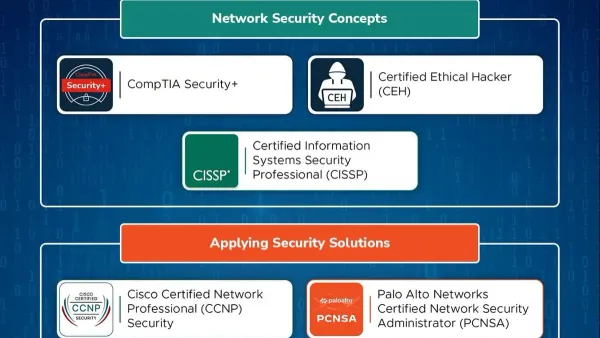
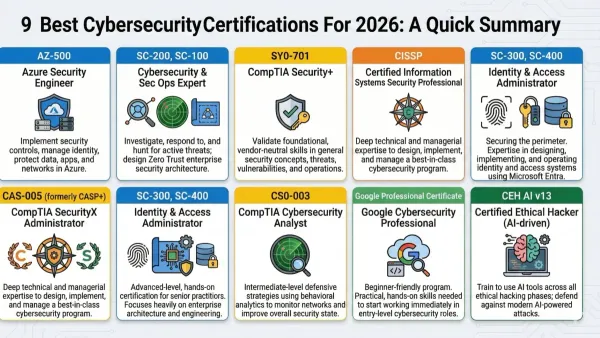
Certifications are frequently cited in job descriptions, with certifications like CompTIA Security+, Certified Ethical Hacker (CEH), and Certified Information Systems Security Professional (CISSP) being particularly valued. For instance, an entry-level analyst may start with Security+ to demonstrate foundational knowledge, progressing to CEH or CISSP as experience grows.
Career progression commonly moves from junior analyst roles to senior vulnerability analyst or vulnerability management specialist. Some professionals specialize further in areas like penetration testing or risk assessment. Salary ranges vary broadly; entry-level analysts earn modestly, while experienced analysts with advanced certifications and specialization command higher compensation.
Tip: Gaining hands-on experience through internships, lab environments, or capture-the-flag (CTF) competitions can significantly enhance practical skills and employability.
Crafting a vulnerability analyst resume example
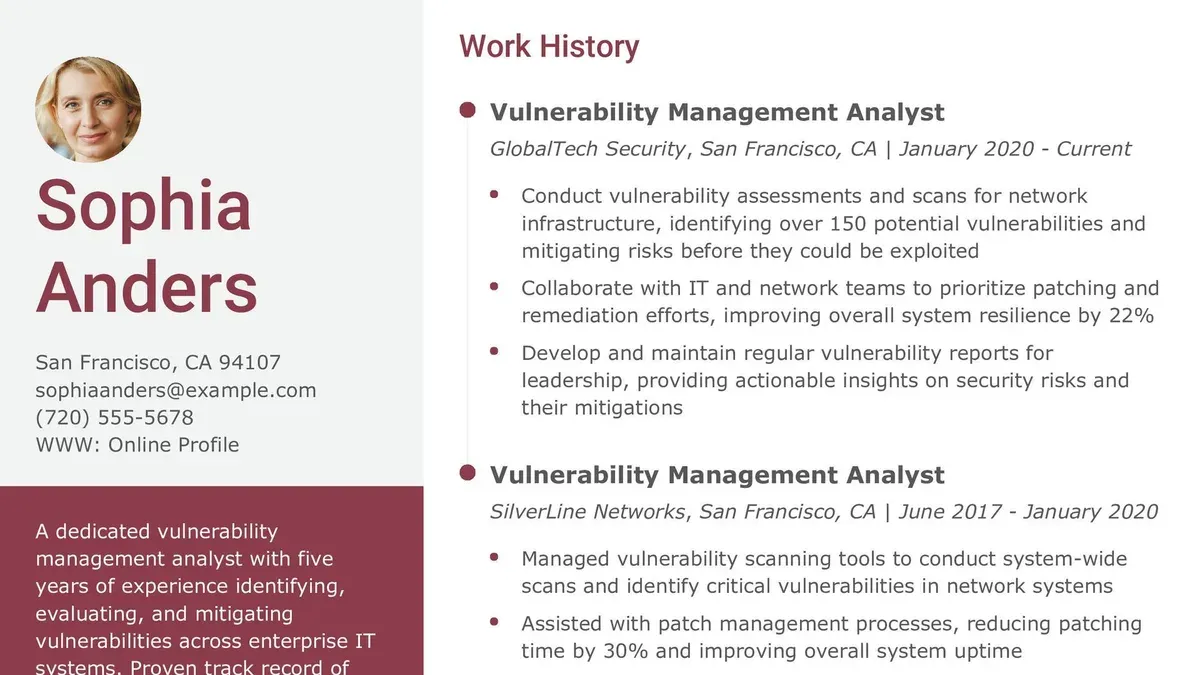
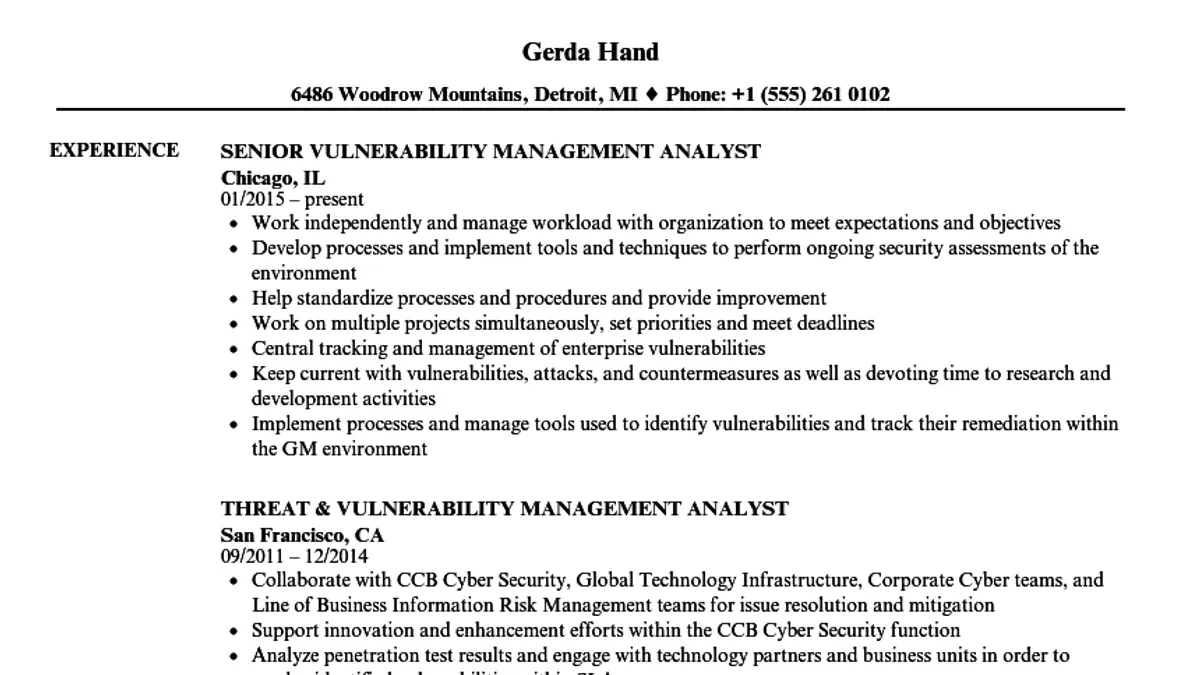
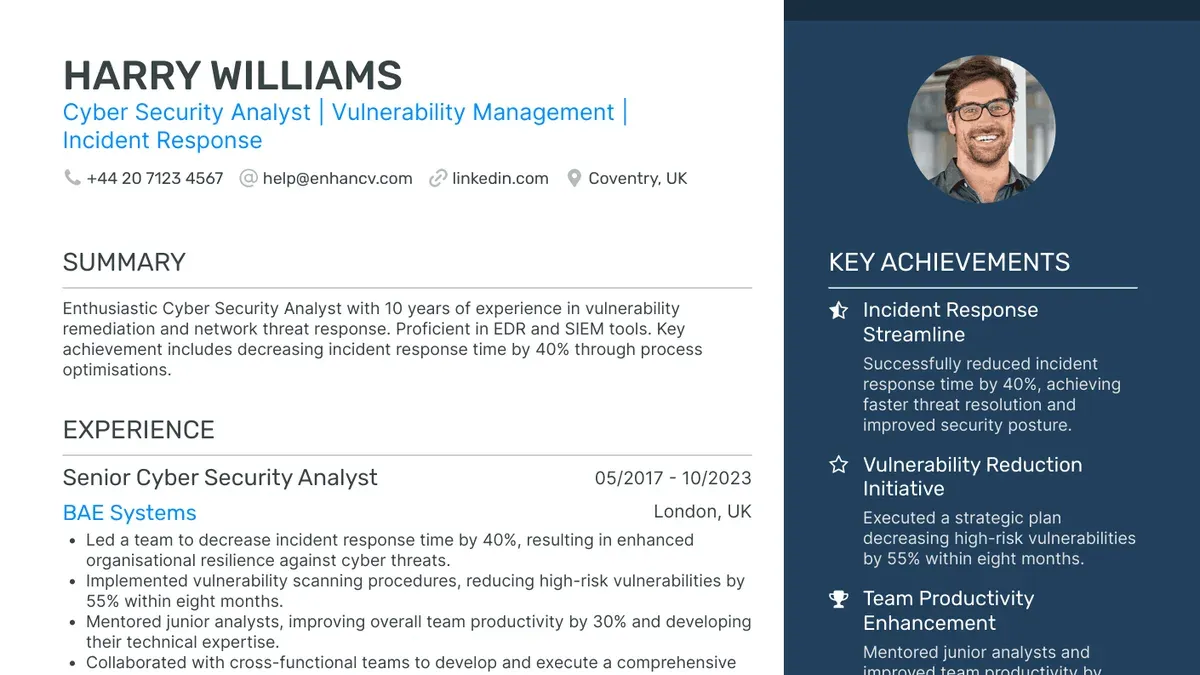
Effective vulnerability analyst resumes balance technical skills with measurable outcomes, clearly demonstrating value to potential employers. Key sections include a concise summary, core skills, relevant experience, certifications, and education.
Summary: A brief statement should highlight familiarity with vulnerability management frameworks and a commitment to proactive security. For example: "Detail-oriented vulnerability analyst experienced in identifying and prioritizing security risks using Nessus and Qualys, with a track record of reducing system vulnerabilities through targeted remediation recommendations."
Skills: List tools like Nessus, Qualys, OpenVAS, and methodologies such as CVSS scoring and risk assessment. Including scripting languages (e.g., Python) or familiarity with SIEM tools can strengthen the profile.
Experience: Quantify achievements where possible. For instance, "Conducted over 200 vulnerability assessments, resulting in a 30% reduction of critical vulnerabilities within six months." Avoid vague descriptions like "performed vulnerability scans." Instead, specify scope and impact.
Certifications and Education: Include industry-recognized certifications such as CompTIA Security+, CEH, or CISSP, and relevant degrees. These validate expertise and dedication to the field.
Tips for entry-level and non-traditional candidates: Highlight internships, lab projects, or relevant coursework. Demonstrating familiarity with open-source vulnerability scanners or participation in Capture The Flag (CTF) competitions can compensate for limited professional experience.
Example comparison:
- Weak snippet: "Performed security scans and reported issues."
- Strong snippet: "Executed weekly vulnerability scans using Nessus across a network of 500+ endpoints, identifying and prioritizing 150+ security risks for remediation."
Tip: Tailor the resume to the job description by mirroring terminology and emphasizing required skills and tools.
Common mistakes to avoid in vulnerability analyst resumes and career planning
One frequent mistake in vulnerability analyst resumes is overgeneralizing skills without demonstrating specific expertise in vulnerability assessment tools or methodologies. For instance, listing "cybersecurity skills" without mentioning tools like Nessus, Qualys, or experience with CVSS scoring can make a resume blend into a generic IT profile, often resulting in fewer interview calls.
Another common error is ignoring soft skills such as communication and teamwork. A vulnerability analyst must often explain complex security issues to non-technical stakeholders and collaborate with cross-functional teams. Hiring managers frequently note that candidates who do not highlight these abilities risk being perceived as poor fits for collaborative environments.
Failing to tailor resumes to the specific vulnerability analyst job description also reduces chances of success. Resumes that omit keywords or relevant achievements aligned with the job requirements often do not pass applicant tracking systems or attract recruiter attention.
Misunderstanding the scope of the role can lead to unrealistic career expectations. Some candidates expect vulnerability analysts to perform penetration testing or incident response exclusively, which may cause dissatisfaction or misalignment with employer needs.
Example: A candidate submitted a resume emphasizing general IT administration skills but lacked references to vulnerability scanning or risk prioritization. Despite strong technical background, this oversight led to rejection due to insufficient demonstration of vulnerability-specific competencies.
Further reading
Frequently asked questions
What is analysis of vulnerabilities?
Analysis of vulnerabilities involves identifying, evaluating, and prioritizing security weaknesses in hardware, software, or network systems. This process helps organizations understand potential risks and apply appropriate measures to mitigate threats before they can be exploited. Techniques often include scanning tools, manual assessments, and reviewing system configurations.
Are there vulnerability analyst jobs that do not require a degree?
Yes, some vulnerability analyst positions do not strictly require a formal degree, especially at entry or junior levels. Employers may prioritize relevant certifications like CEH (Certified Ethical Hacker) or OSCP (Offensive Security Certified Professional), hands-on experience, and demonstrated skills in cybersecurity tools and techniques. However, having a degree can improve job prospects and career advancement opportunities.
What is the typical salary range for a vulnerability assessment analyst?
The salary for vulnerability assessment analysts can vary widely based on location, experience, and company size. Typically, entry-level roles offer moderate compensation, while experienced analysts may earn salaries reflecting their expertise in advanced vulnerability management and risk mitigation. Exact figures depend on market conditions but generally fall within a competitive range for cybersecurity roles.
Are part-time or remote vulnerability management analyst jobs available?
Part-time and remote vulnerability management analyst positions exist, particularly as organizations adopt flexible work models. Remote roles often require strong self-discipline and communication skills, while part-time positions may be available in smaller firms or as contract work. Availability depends on employer policies and the sensitivity of the systems involved.
What this advice does not cover
This article does not cover advanced penetration testing techniques or detailed cybersecurity certifications beyond those relevant to vulnerability analysis. Salary and job availability can vary significantly by region and industry, so readers should supplement this information with local market research. Professionals aiming for specialized roles in offensive security or incident response may require additional training and a different focus in their resumes and career planning.
The single most useful next step is to tailor the resume to match specific job descriptions closely, emphasizing relevant skills and experiences that align with the employer’s needs. This includes incorporating keywords from job postings, quantifying achievements where possible, and clearly demonstrating familiarity with common vulnerability management tools and processes.