Best Certifications for IoT Security Engineers in 2026
Explore top certifications tailored for IoT security engineers to enhance practical skills and career growth in 2026.


This article ranks the best certifications for IoT security engineer professionals seeking targeted credentials in 2026.
The Internet of Things (IoT) combines connected devices with networked systems, creating unique security challenges that require specialized knowledge. Generic IT security certifications often cover broad concepts but may not address the nuances of IoT environments, such as embedded systems vulnerabilities, device-to-device communication, and industrial control systems. The certifications listed here focus on practical skills and industry-recognized standards that align directly with securing IoT infrastructures. Readers will find options that balance technical depth and career relevance, supporting roles from entry-level engineers to seasoned security practitioners aiming to deepen their IoT expertise.
How we chose the best certifications for IoT security engineers
Certifications included in this ranking were selected based on five key criteria tailored to the IoT security domain. First, relevance focuses on how directly the certification addresses IoT-specific security challenges and skills, identifying those that bridge cybersecurity knowledge with IoT architectures. This suits professionals seeking targeted expertise; its strength is specialized content, but a drawback is narrower applicability outside IoT contexts.
Industry recognition and employer demand were assessed through market analysis and feedback from hiring managers. Certifications with widespread acknowledgment help candidates stand out to recruiters. This benefits those aiming for roles in organizations prioritizing IoT security; however, some highly demanded certifications may have limited course updates aligned with evolving threats.
Certification provider credibility and course quality matter for ensuring rigorous training and assessment standards. Well-established bodies offer comprehensive curricula with practical labs, ideal for candidates valuing thorough preparation. Conversely, top-tier providers sometimes have higher costs and more stringent prerequisites.
Difficulty level and prerequisites were considered to balance accessibility and professional rigor. Certifications that require prior experience or foundational knowledge suit mid-career engineers, while entry-level options support newcomers. The trade-off involves balancing depth of content with achievable entry points.
Cost and availability of training materials influence accessibility. Open-access resources or widely available instructor-led courses reduce barriers, helpful for self-funded learners. However, affordable options might lack advanced hands-on components present in costlier programs.
| Criterion | What it is | Who it suits | Strength | Drawback |
|---|---|---|---|---|
| Relevance to IoT security domain and skills | Focus on IoT-specific cybersecurity knowledge | Professionals seeking targeted IoT expertise | Specialized, practical content | Limited use outside IoT |
| Industry recognition and employer demand | Market acceptance and hiring preference | Job seekers targeting IoT security roles | Greater hiring advantage | Occasional outdated content |
| Certification provider credibility and course quality | Reputation and training comprehensiveness | Candidates wanting rigorous preparation | High-quality curriculum and labs | Higher cost and stricter prerequisites |
| Difficulty level and prerequisites | Entry requirements and exam challenge | Newcomers or experienced engineers | Balanced accessibility and rigor | More difficult for beginners |
| Cost and availability of training materials | Price and resource accessibility | Self-funded learners or organizations | Wide availability of resources | Lower-cost options may lack depth |
Certified Internet of Things Security Practitioner (CIoTSP)
The Certified Internet of Things Security Practitioner (CIoTSP) is a certification tailored specifically for professionals working at the intersection of IoT and security. It covers key areas such as device security, network protocols specific to IoT environments, threat detection, and mitigation strategies relevant to connected devices and embedded systems.
This certification suits engineers who focus exclusively on IoT environments, including those responsible for securing embedded systems, smart devices, and industrial IoT networks. Candidates typically need some prior experience in IoT systems or a background in general cybersecurity to meet the prerequisite knowledge requirements.
A concrete strength of the CIoTSP is its practical orientation toward IoT-specific security challenges, which makes it highly relevant for employers seeking professionals who understand the unique risks inherent in IoT ecosystems. Employer adoption is growing steadily, particularly in sectors deploying large-scale connected device infrastructures.
One drawback is the certification's mid-range cost and the requirement for prior experience, which might pose a barrier for newcomers to the IoT security field. Pass rates indicate a moderate difficulty level, reflecting its balance between accessibility and technical depth.
Example skills covered: IoT device authentication, secure communication protocols, firmware vulnerability assessment, and threat modeling for IoT systems.
GIAC Global Industrial Cyber Security Professional (GICSP)
What it is: The GICSP certification targets security professionals working at the intersection of operational technology (OT) and IoT-enabled industrial environments. It emphasizes protecting industrial control systems (ICS), SCADA networks, and IoT devices critical to infrastructure sectors. The exam covers topics such as ICS architecture, risk management, threat intelligence, and incident response tailored to industrial contexts.
Who it suits: This certification is ideal for engineers engaged with critical infrastructure or industrial IoT deployments who require a balanced expertise in both IT and OT security. Candidates typically have roles in energy, manufacturing, transportation, or utilities where securing interconnected devices and control systems is vital.
One strength: GICSP offers a comprehensive framework that bridges traditional IT security and specialized OT/IoT security, making it highly relevant for industrial environments increasingly adopting IoT technologies.
One drawback: The certification demands hands-on experience with industrial systems and protocols, which can be a barrier for those without direct exposure. Preparation requires dedicated study of OT environments alongside IoT security concepts.
Industry demand for professionals skilled in both OT and IoT security continues to grow as organizations seek to protect critical infrastructure from evolving cyber threats. The GICSP exam highlights practical skills in securing industrial networks and IoT components, reflecting this market need.
Certified Information Systems Security Professional (CISSP) with IoT Security Focus
What it is: The CISSP is a globally recognized cybersecurity certification covering a comprehensive range of security domains, including asset security, security architecture, and risk management. While not IoT-specific, many CISSP holders enhance their credentials by pursuing IoT-focused continuing education or electives that address device security, network vulnerabilities, and emerging IoT threats.
Who it suits: This certification is ideal for experienced security engineers seeking a respected, broad cybersecurity credential with the option to specialize in IoT security through targeted professional development. It serves professionals aiming to demonstrate both foundational security expertise and an awareness of IoT challenges.
One concrete strength: CISSP’s rigorous syllabus covers foundational security principles essential to securing IoT ecosystems, such as cryptography, identity and access management, and security operations, providing a strong theoretical base applicable to various IoT contexts.
One honest drawback: The IoT focus within CISSP is indirect and requires additional IoT-specific training or elective courses to gain practical, up-to-date expertise. Furthermore, CISSP’s broad scope and challenging exam—typically passing rates are moderate—can be demanding for those solely focused on IoT security.
Tip: Candidates aiming for IoT specialization should complement CISSP certification with vendor-specific IoT security modules or workshops to bridge gaps in practical IoT knowledge.
IoT Security Foundation Certified Practitioner
The IoT Security Foundation Certified Practitioner is a certification provided by the IoT Security Foundation that focuses on core principles and practical implementation of IoT security frameworks. It covers essential best practices for securing IoT devices and ecosystems, emphasizing a vendor-neutral approach that aligns with established security standards.
This certification suits professionals who are new to IoT security or those seeking a foundational credential grounded in recognized frameworks rather than vendor-specific technologies. It is particularly relevant for engineers or security practitioners aiming to understand the broader security landscape of IoT without deep technical specialization.
Strength: The certification’s key advantage lies in its clear focus on practical frameworks and best practices, making it an accessible entry point for those transitioning into IoT security roles or needing a structured overview of relevant security models.
Drawback: The certification offers less technical depth compared to other certifications such as CIoTSP or GICSP. Feedback from IoT Security Foundation members indicates it is best suited as an introductory credential rather than a qualification for advanced or highly technical IoT security positions.
Tip: Candidates aiming to progress beyond foundational knowledge should consider supplementing this certification with more technical or specialized credentials.
Certified Ethical Hacker (CEH) with IoT Security Modules
The Certified Ethical Hacker (CEH) certification validates skills in penetration testing and vulnerability assessment across various IT domains, including a growing emphasis on IoT-specific attack vectors. The certification covers techniques for exploiting vulnerabilities in IoT devices such as smart sensors, connected cameras, and embedded controllers, demonstrating practical scenarios like firmware manipulation and network infiltration.
This certification suits security engineers who specialize in offensive security testing within IoT ecosystems, particularly those aiming to identify and mitigate risks before malicious actors do. Professionals with an interest in ethical hacking and hands-on exploitation techniques will find value in CEH's structured approach to attack simulation.
A key strength of the CEH with IoT modules is the comprehensive training on real-world IoT attack scenarios, including man-in-the-middle attacks on wireless IoT communications and exploitation of weak authentication protocols. Some IoT security professionals have leveraged this knowledge to enhance their penetration testing services and improve device security postures.
The main drawback is that CEH is primarily a general ethical hacking certification; its IoT content is supplementary and not as in-depth as specialized IoT security certifications. Candidates often need additional focused study or experience to fully master IoT-specific security challenges beyond the core CEH curriculum.
Certified Network Defender (CND) with IoT Network Security Emphasis
The Certified Network Defender (CND) certification focuses on core network security principles, including the protection of IoT communication channels and infrastructure. It equips professionals with skills to detect, mitigate, and respond to network-based attacks that commonly target IoT environments, such as Distributed Denial of Service (DDoS) and unauthorized access attempts.
This certification suits engineers responsible for securing the network layer of IoT systems, particularly those managing device communications, gateways, and edge networks. It is valuable for professionals tasked with maintaining network integrity and monitoring traffic patterns to identify anomalies within IoT deployments.
A key strength of the CND with an IoT emphasis is its practical approach to network defense tactics aligned with current IoT network vulnerabilities, such as weak encryption protocols and insecure wireless links. The CND syllabus covers essential topics including firewall configuration, intrusion detection systems, and network traffic analysis, which are critical for defending IoT networks.
However, its focus on network security means it may overlook critical device-level security aspects like firmware integrity and secure boot processes. For comprehensive IoT security expertise, the CND is best combined with an IoT-specific credential to address the full attack surface.
How to become an IoT engineer
Educational background typically involves degrees in computer science, electrical engineering, or cybersecurity. Computer science suits those focused on software and networking, offering strong programming skills but less hardware exposure. Engineering appeals to individuals interested in device design and integration, providing deep hardware knowledge but sometimes limited software scope. Cybersecurity degrees fit those aiming to specialize in IoT security, with a strong emphasis on threat mitigation though potentially narrower in general IoT development.
Gaining hands-on experience with IoT devices and protocols like MQTT, CoAP, and Zigbee is crucial. This suits learners who prefer practical engagement and real-world problem solving. Its strength lies in developing immediate, applicable skills; the drawback is that access to diverse IoT hardware can be costly or limited.
Certifications and continuous learning help keep pace with evolving IoT security challenges and technology. This approach benefits professionals seeking formal recognition and skill validation. Its concrete advantage is market credibility; however, certification costs and time commitments can be significant.
Career progression often starts with roles such as software developer, network engineer, or hardware technician before moving into specialized IoT engineering positions. This path suits those willing to bridge multiple disciplines, offering broad experience but sometimes requiring longer timeframes to specialize.
Job market insights indicate growing demand for engineers who can navigate both software and hardware aspects of IoT, especially with a security focus. Interviews with IoT engineers reveal that versatility and continuous skill updates are key to advancement.
What is the best IT security certification
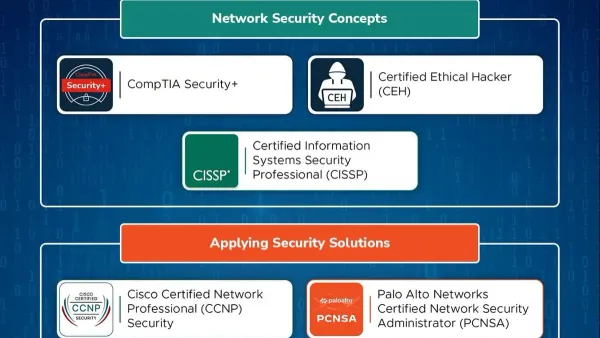
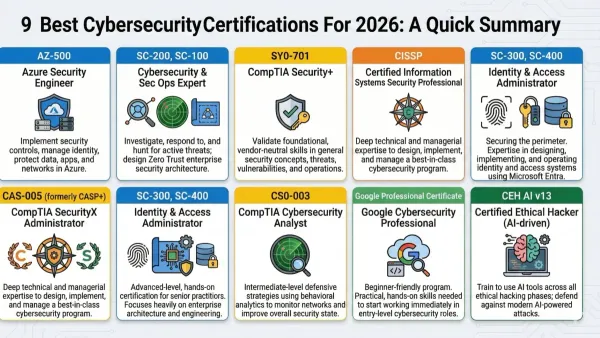
In 2026, several IT security certifications are widely recognized across industries. The Certified Information Systems Security Professional (CISSP) is suited for experienced security professionals aiming for leadership roles; its strength lies in broad coverage and global recognition, but it requires extensive experience and can be costly to maintain. The Certified Ethical Hacker (CEH) targets those interested in penetration testing and offensive security; it offers practical hacking skills yet may lack depth in specialized domains like IoT security. CompTIA Security+ is ideal for entry-level candidates seeking foundational knowledge; it is accessible and vendor-neutral but does not focus on advanced or niche security areas.
IoT security certifications complement these general credentials by focusing on the unique challenges of connected devices, embedded systems, and industrial environments. Unlike broad IT security certifications, IoT credentials emphasize device-level security, network protocols specific to IoT, and operational technology integration. When choosing between general IT and IoT-focused certifications, professionals should consider their career goals, current expertise, and the demand in their target sector.
Tip: Combining a reputable general IT security certification with an IoT-specific credential can provide a balanced skill set attractive to employers.
Further reading
- Best Certifications for Detection Engineers in 2026
- Best Certifications for Cyber Threat Hunters in 2026
- Best Certifications for Cryptographer in 2026: Expert Guide to Career and Skills
- Best Certifications for AI Security Researchers in 2026
Frequently asked questions
certifications for iot engineers
Certifications for IoT engineers typically focus on a combination of embedded systems, networking, and security skills specific to IoT environments. Popular certifications include the Certified Internet of Things Security Practitioner (CIoTSP) and the GIAC Global Industrial Cyber Security Professional (GICSP), which emphasize securing IoT devices and infrastructures. These certifications help engineers demonstrate expertise in IoT protocols, device security, and threat mitigation.
iot security foundation certification
The IoT Security Foundation Certified Practitioner certification targets professionals aiming to validate their knowledge of IoT security principles and best practices. It covers core IoT security challenges, risk management, and standards compliance. This certification suits those seeking a vendor-neutral credential that focuses strictly on IoT security rather than broader IT security topics.
top engineer offering security certifications
Leading organizations offering security certifications relevant to engineers include (ISC)², GIAC, EC-Council, and the IoT Security Foundation. Each provides credentials geared toward different aspects of security engineering, with some specializing in IoT-specific domains. Selecting a top provider depends on career goals, industry recognition, and the specific IoT security skills an engineer wants to showcase.
iot certification course free
Free IoT certification courses are available from platforms like Coursera, edX, and Udemy, often providing foundational knowledge on IoT concepts and some security aspects. However, fully recognized IoT security certifications usually require payment for exams and official credentials. Free courses can serve as introductory resources but may lack the depth and industry validation of paid certifications.
What this advice does not cover
This article focuses on certifications relevant to IoT security engineers and does not cover IoT hardware engineering or purely software development certifications unless they have a security focus. Professionals seeking deep expertise in embedded systems design, firmware development, or non-security IoT software stacks should explore specialized hardware or software certifications outside the security domain.
Individuals aiming for broader IT security roles without a specific IoT emphasis may find more value in general cybersecurity certifications that cover enterprise or cloud security in greater depth.
Next step for advancing IoT security expertise
After identifying the certifications aligned with IoT security engineering, the most practical next step is to select a certification that matches current skills and career goals, then schedule a focused study plan. Prioritizing certifications with hands-on labs or real-world scenarios, such as the Certified Internet of Things Security Practitioner (CIoTSP), can accelerate practical understanding. Registering for official training or boot camps, and joining relevant professional communities, often provides the guidance and peer support crucial for success.