Best Certifications for AI Security Researchers in 2026
Explore the top certifications that combine AI and cybersecurity skills essential for AI security researchers in 2026.

This article ranks the best certifications for AI security researcher roles, focusing on those that integrate AI expertise with cybersecurity skills essential for 2026.
As AI systems become integral to critical infrastructure and digital services, security researchers must master both AI concepts and threat mitigation strategies. The certifications selected here address this dual need, targeting early to mid-career professionals who want to align credentials with evolving industry demands. Each certification is evaluated for its relevance, depth, and practical application, highlighting who benefits most and where gaps remain in the current credential landscape.
How we chose the best AI security researcher certifications
Certifications featured here were selected based on their direct relevance to AI security research roles as defined in 2026. Priority was given to credentials recognized by industry leaders and frequently cited in job listings for AI security specialists. Each certification was evaluated for its coverage of AI-specific security topics, including adversarial machine learning, secure AI model deployment, and AI threat detection, as well as hands-on practical skills.
Accessibility factors such as prerequisites, cost, and typical time investment were considered to ensure recommendations suit early to mid-career professionals. Feedback from certified individuals and hiring managers was gathered from recent surveys and expert commentaries to assess real-world applicability and value.
| Certification | Who it suits | Strength | Drawback |
|---|---|---|---|
| Certified Artificial Intelligence Security Professional (CAISP) | AI practitioners seeking focused security expertise | Deep AI security content tailored for researchers | Higher cost and requires prior AI experience |
| GIAC Security Essentials (GSEC) with AI specialization | Security professionals expanding into AI | Strong foundational security skills with AI modules | Less AI depth compared to dedicated AI certifications |
| Certified Information Systems Security Professional (CISSP) with AI modules | Experienced security managers adding AI knowledge | Broad security management perspective including AI risks | AI content is supplemental, not core |
| Microsoft Certified: Azure AI Fundamentals with Security Focus | Cloud and AI beginners focusing on Microsoft ecosystem | Accessible entry point with practical cloud security tools | Limited depth on advanced AI adversarial techniques |
| Offensive Security Certified Professional (OSCP) with AI adversarial testing | Penetration testers integrating AI attack simulations | Hands-on offensive security skills applied to AI | Challenging for those without strong pentesting background |
| AI Forensic Investigator Certification | Investigators specializing in AI misuse and attacks | Unique focus on AI-specific forensic methods | Newer credential with limited industry recognition |
Tip: When choosing a certification, balance the depth of AI security content with your current skills and career goals to ensure the credential enhances your specific expertise.
Certified Artificial Intelligence Security Professional (CAISP)
The Certified Artificial Intelligence Security Professional (CAISP) is a specialized certification designed to validate expertise in AI security principles, threat modeling, and mitigation strategies. It targets professionals who already have a background in artificial intelligence and want to deepen their skills specifically in securing AI systems and conducting applied AI security research.
CAISP suits early to mid-career AI practitioners aiming to pivot into security-focused roles or enhance their ability to assess AI risks. Its curriculum covers topics such as adversarial machine learning attacks, secure AI system design, data poisoning prevention, and AI threat landscape analysis.
One strength of CAISP is its focus on the intersection of AI and security, offering detailed applied content that bridges theoretical AI knowledge with practical security challenges. However, as a relatively new certification introduced recently, it has limited industry adoption and recognition. Enrollment numbers remain modest compared to established security certifications, and some employers are still evaluating its relevance. The curriculum is also evolving to keep pace with rapid developments in AI security research.
Sample exam topics include AI attack vectors, defense mechanisms in neural networks, regulatory compliance specific to AI, and implementation of secure AI pipelines. While CAISP may not yet be a universal requirement, it provides a unique credential for those seeking to specialize in AI security research.
GIAC Security Essentials (GSEC) with AI specialization
The GIAC Security Essentials (GSEC) certification is a well-established credential designed to validate foundational security skills. In 2026, GIAC offers an optional AI security specialization module that introduces candidates to AI-specific security concerns, such as adversarial machine learning, AI model risk management, and secure AI deployment practices.
This certification suits security professionals who want a solid grounding in general cybersecurity principles alongside exposure to AI-related topics. It is particularly beneficial for those transitioning into AI security roles from traditional security positions, as the core GSEC curriculum covers essential skills like network security, incident handling, and cryptography, with AI concepts integrated as an extension rather than a core focus.
A concrete strength of the GSEC with AI specialization is its strong industry recognition and relatively high pass rates, reflecting a balanced difficulty level suitable for early to mid-career professionals. The AI module syllabus covers practical threats to AI systems and mitigation strategies without requiring prior deep AI research expertise.
The main drawback is that the AI content remains supplementary and does not deeply address emerging research challenges such as novel AI attack vectors or advanced adversarial techniques. Candidates seeking in-depth AI security research knowledge may find the coverage somewhat limited compared to more specialized certifications.
Tip: Candidates should treat the AI specialization as a valuable introduction to AI security concepts but consider supplementing it with specialized training or research for deeper expertise.
Certified Information Systems Security Professional (CISSP) with AI modules
The CISSP certification, renowned for its comprehensive coverage of information security management, incorporated AI security modules in its 2026 curriculum update. These additions address AI governance, risk management, and ethical considerations, reflecting the growing importance of AI in enterprise security frameworks.
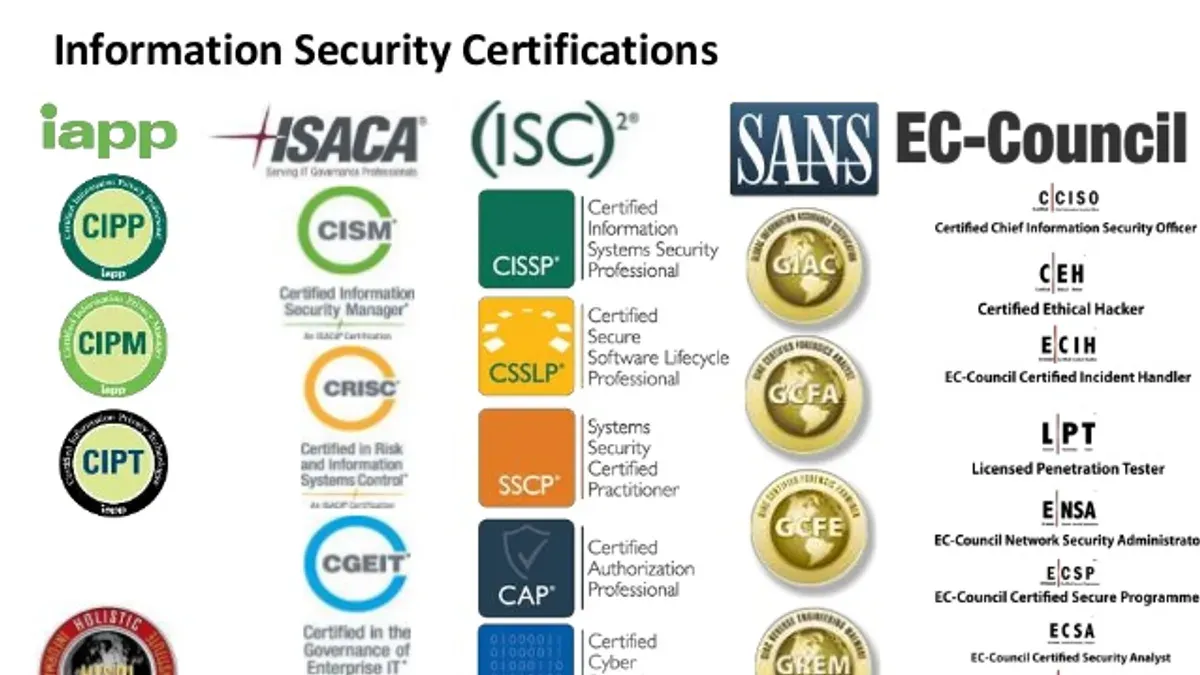
This certification suits experienced security professionals who aim to broaden their expertise into AI security governance rather than deep technical research. It is particularly valuable for those managing cross-disciplinary teams or aligning AI security strategies with organizational policies.
A key strength of the CISSP with AI modules is its strong emphasis on policy, compliance, and risk management aspects of AI security, which aligns well with employer preferences for leaders capable of overseeing AI initiatives responsibly. However, the certification offers limited technical depth in AI algorithms, adversarial machine learning, or hands-on AI threat analysis, which may require complementary technical training.
Renewal data from 2026 shows steady demand for this updated CISSP track, especially among professionals transitioning from general security roles into AI-focused governance. Employer surveys indicate preference for candidates who combine CISSP’s trusted security foundation with awareness of AI’s unique challenges, even if they lack specialized AI research skills.
Microsoft Certified: Azure AI Fundamentals with Security Focus
The Microsoft Certified: Azure AI Fundamentals with Security Focus certification targets professionals working with AI workloads within Microsoft's Azure cloud platform, emphasizing security best practices. It covers foundational AI concepts, Azure AI services, and specific security measures to protect AI deployments in cloud environments.
This certification suits cloud engineers, AI developers, and security practitioners who operate or oversee AI solutions on Azure. Its practical approach helps professionals integrate security controls such as identity management, data protection, and threat mitigation within AI projects hosted on Azure.
One concrete strength is its alignment with a widely used cloud provider, enabling candidates to demonstrate skills directly applicable to real-world Azure AI security scenarios. The certification exam evaluates knowledge through multiple-choice questions and scenario-based problems, focusing on Azure AI fundamentals and security implementation.
An honest drawback is its vendor-specific nature, which limits the scope to Azure technologies and offers less depth on theoretical AI security research or adversarial AI techniques. This focus may not satisfy those aiming for broader AI security research expertise beyond the Azure ecosystem.
Microsoft reports a growing number of certified professionals globally, reflecting the demand for cloud-based AI security skills. Job postings increasingly list this certification as a preferred qualification for positions blending AI and cloud security responsibilities.
Offensive Security Certified Professional (OSCP) with AI adversarial testing
The OSCP certification, known for its rigorous hands-on penetration testing, has expanded to include AI adversarial attack techniques, reflecting the growing need to assess AI system vulnerabilities. This extension integrates practical labs focused on adversarial machine learning, such as crafting adversarial inputs to deceive AI models and exploiting weaknesses in AI-driven authentication systems.
This certification suits security researchers specializing in offensive AI security testing who already possess strong penetration testing skills. Candidates typically have prior experience with traditional OSCP content and are comfortable with scripting and network exploitation. The AI adversarial component demands additional understanding of machine learning concepts and attack vectors unique to AI models.
A key strength of this OSCP variant is its emphasis on real-world application through challenging labs that simulate AI-targeted attacks, allowing candidates to demonstrate both offensive security expertise and AI-specific tactics. Success stories highlight professionals who leveraged this knowledge to identify critical flaws in AI-based security products within months of certification.
The main drawback is the steep learning curve: candidates must first master traditional penetration testing before tackling the emerging AI adversarial content, which remains relatively nascent and less comprehensive compared to core OSCP modules. Completion time can extend beyond the standard 90-day exam window if candidates invest heavily in AI study before attempting the practical exam.
Tip: Candidates should solidify their foundational pentesting skills before pursuing the AI adversarial labs to manage the certification’s increasing complexity effectively.
AI Forensic Investigator Certification
The AI Forensic Investigator Certification is a specialized credential emphasizing the investigation of incidents involving AI systems. It trains professionals in forensic techniques tailored to AI environments, such as analyzing algorithmic decision logs, reconstructing attack vectors on machine learning models, and validating data integrity after breaches.
This certification suits researchers and analysts who focus on the aftermath of AI attacks and the collection of digital evidence related to AI-driven systems. Professionals working in digital forensics units, cybersecurity incident response teams, or AI governance roles find this credential relevant to their niche.
The curriculum covers topics such as AI model behavior analysis, forensic data acquisition from AI platforms, chain-of-custody protocols for AI evidence, and case studies on adversarial AI attacks. Industry demand for AI forensic skills remains limited but steadily growing, primarily within sectors handling sensitive AI deployments like finance, healthcare, and critical infrastructure.
Strength: It offers deep, practical expertise in AI-specific forensic methods rarely found in general cybersecurity certifications.
Drawback: The certification is highly specialized, restricting career flexibility mostly to forensic or incident investigation roles focused on AI systems.
Certifications to watch: emerging AI security credentials in 2026
Several new AI security certifications are gaining attention in 2026, each with distinct advantages and trade-offs for early adopters.
1. AI Security Researcher Professional (AISRP) – Beta by the International Cybersecurity Institute
This certification targets professionals aiming to deepen AI threat modeling and vulnerability research skills. It offers cutting-edge content on emerging AI attack vectors, making it valuable for researchers focusing on proactive defenses. However, as a beta program, its industry acceptance is still limited, which may affect immediate career impact.
2. Certified Responsible AI Security Specialist (CRAISS) by the Global AI Ethics Board
CRAISS emphasizes AI security through an ethical and compliance lens, suited for professionals working at the intersection of AI governance and security. Its strength lies in integrating ethical standards with security practices, though it currently lacks technical depth in adversarial AI techniques.
3. Neural Network Penetration Tester (NNPT) – Pilot by Offensive Security Labs
This pilot program focuses on offensive security skills tailored to neural network architectures, ideal for experienced penetration testers expanding into AI-specific attack methods. It provides hands-on labs simulating AI system breaches, but early versions have limited coverage outside popular neural network frameworks.
Early adoption of these credentials can position professionals ahead in a rapidly evolving field but carries risks such as uncertain recognition and evolving curricula. Those aiming to future-proof their careers should weigh the novelty against their current expertise and career focus.
Further reading
- AI Security Researcher Resume Example and Guide for Effective Screening
- Key AI Security Researcher Interview Questions and How to Answer Them
- Understanding the Anthropic Bug Bounty Program: A Complete Guide
Frequently asked questions
What are the foundational skills needed before pursuing AI security researcher certifications?
Foundational skills generally include a solid understanding of cybersecurity principles, programming (often Python or similar), and basic machine learning concepts. Familiarity with data handling and statistical analysis also helps, as AI security research requires interpreting complex models and potential vulnerabilities. Candidates often benefit from prior exposure to network security or software development.
How do AI security certifications differ from general cybersecurity certifications?
AI security certifications focus specifically on protecting AI systems, including adversarial attacks, data poisoning, and model robustness, rather than general network or system security. They blend AI domain expertise with security research, addressing unique threats in AI pipelines that traditional cybersecurity certifications may not cover. General certifications tend to emphasize broader security controls and risk management.
Can certifications alone secure a job as an AI security researcher in 2026?
Certifications are valuable for demonstrating knowledge and commitment but rarely guarantee a position on their own. Employers typically look for practical experience, problem-solving skills, and a portfolio of relevant projects alongside certifications. Networking and staying current with AI security advancements are also critical for job placement.
Which certification offers the best balance of cost, time, and career impact?
The Certified Artificial Intelligence Security Professional (CAISP) is often considered the best-balanced option, combining a focused curriculum with manageable preparation time and widely recognized credentials. It targets professionals with a mix of AI and security knowledge and is designed for early to mid-career researchers. However, individual needs and backgrounds may make other certifications more suitable.
Limits of this certification-focused guidance
This article does not cover informal learning paths or non-certified experience which can also be crucial for AI security research careers. Practical experience with AI frameworks, hands-on security testing, and contributions to open-source projects often complement or even surpass formal certifications in value. Professionals targeting managerial or policy-oriented roles may find that certifications focused strictly on technical skills do not fully address their needs.
For those seeking the single most useful next step, researching and selecting a certification that best matches one’s current skill set and career goals is paramount. Begin by evaluating the Certified Artificial Intelligence Security Professional (CAISP) due to its focused curriculum on AI security fundamentals and emerging threats. This targeted approach helps build a solid, recognized foundation to navigate the evolving challenges in AI security research.