Best Certifications for Security Awareness Managers in 2026
Explore top certifications that blend security expertise with communication skills for security awareness managers in 2026.

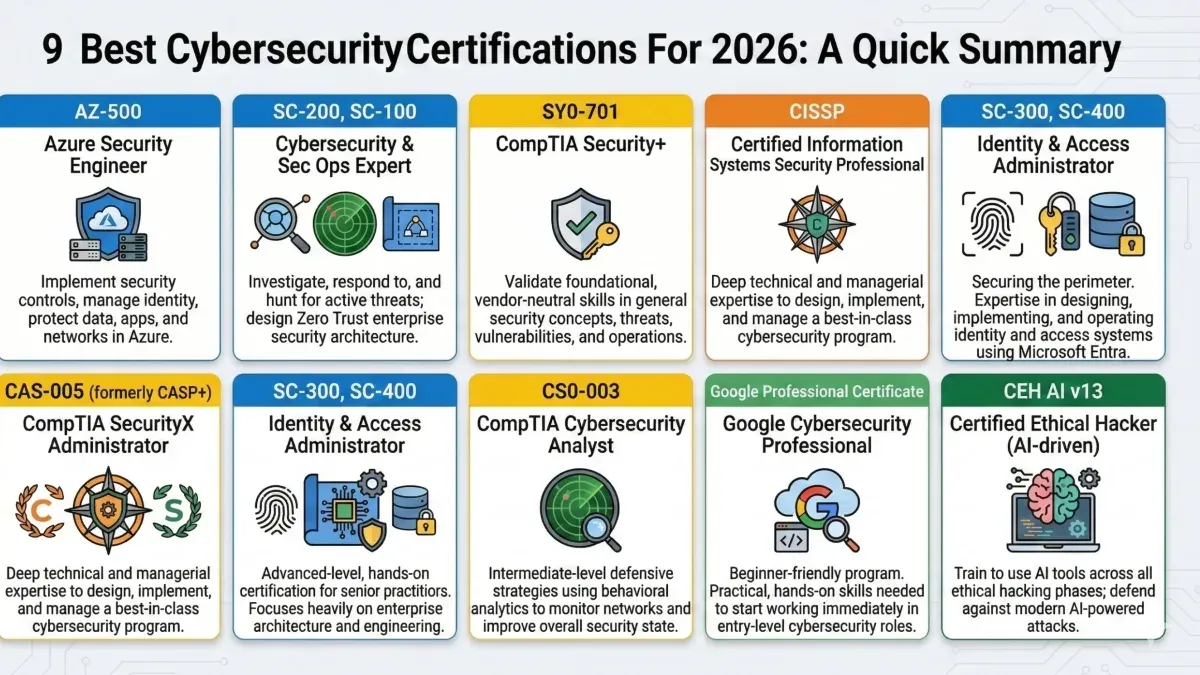
This article identifies the best certifications for security awareness manager roles in 2026, focusing on credentials that blend technical security expertise with communication and management skills.
Security awareness managers are responsible for designing, implementing, and leading human-centric security training programs that foster a security-conscious culture. The ideal certifications validate a combination of security knowledge, training delivery, and program leadership capabilities. This guide ranks leading certifications based on their relevance to the unique demands of security awareness management, including governance, behavioral change strategies, and technical background where applicable.
Choosing the right certification helps security professionals and HR or training managers ensure effective security awareness initiatives that reduce human risk and strengthen organizational defenses.
How we chose the best certifications for security awareness managers
Certifications for security awareness managers must balance thorough knowledge of security principles with skills in communication, training delivery, and program management. Selection prioritized industry-recognized credentials relevant to the 2026 threat landscape and evolving awareness trends, focusing on programs that foster practical behavior change and security culture development.
Vendor neutrality was a key factor to ensure broad applicability, alongside an examination of prerequisites, renewal requirements, and cost-to-value ratios. Certifications with excessive technical depth but limited focus on human factors were deprioritized.
| Certification | Who It Suits | Strength | Drawback | Cost | Duration | Renewal Cycle | Pass Rate |
|---|---|---|---|---|---|---|---|
| CISSP | Experienced security pros with leadership roles | Strong foundation in security concepts with management focus | Requires substantial technical background; less emphasis on communication skills | High | 6 hours exam | 3 years | Moderate |
| CISM | Managers focused on governance and risk | Emphasizes security governance and awareness strategy | Less practical training delivery content | Moderate | 4 hours exam | 3 years | Moderate |
| CSAP | Security awareness practitioners and trainers | Focused on behavior change and awareness program leadership | Less known outside niche circles | Moderate | Varies by provider | 2 years | Unavailable |
| SANS Securing The Human | Security professionals tasked with human-centric training | Practical, up-to-date awareness program content | Costly and time-intensive | High | 5 days training | 3 years | High |
| CEH | Technically skilled awareness managers | Deep technical knowledge useful for technical training | Limited focus on communication and program management | Moderate | 4 hours exam | 3 years | Moderate |
| CompTIA Security+ | Entry-level security professionals supplementing soft skills | Strong foundational security knowledge | Needs additional communication training | Low | 90 minutes exam | 3 years | Moderate |
| CPSA | Professionals focused exclusively on security awareness | Designed specifically for awareness program development | Newer credential with evolving recognition | Moderate | Varies | 2 years | Unavailable |
Tip: When choosing a certification, balance technical depth with communication and management skills to fit the specific role of a security awareness manager.
Certified Information Systems Security Professional (CISSP) with focus on training
The CISSP certification, offered by (ISC)², is a globally recognized credential covering eight broad security domains, including Security and Risk Management, Security Architecture, and Security Operations. It provides a deep technical foundation that supports the development of accurate and credible security awareness content.
This certification suits experienced security professionals—typically requiring at least five years of relevant work experience—who are transitioning into security awareness management roles and need industry-recognized credibility alongside technical depth.
One strength of CISSP is its comprehensive curriculum, which ensures awareness managers understand the technical context behind threats, vulnerabilities, and controls, enhancing the relevance and accuracy of training programs. Modules such as Security and Risk Management and Security Operations directly inform content design and risk communication strategies.
However, a notable drawback is that CISSP emphasizes technical knowledge and governance over communication or training delivery skills. Candidates may find limited direct focus on instructional design or behavior change techniques critical for effective awareness programs. Additionally, the experience requirement and the breadth of material make it a demanding certification to obtain.
Tip: Security awareness managers pursuing CISSP should complement it with targeted training in communication or instructional design to balance technical and human-centric skills.
Certified Information Security Manager (CISM) emphasizing security governance and awareness
The Certified Information Security Manager (CISM) is an ISACA certification geared toward management-level professionals responsible for enterprise security risk and program governance. It covers security program development and management, with a strong focus on governance frameworks that include security awareness initiatives as a key component.
CISM is best suited for mid- to senior-level managers who oversee security awareness as part of a broader organizational security strategy. Many CISM holders report roles involving policy creation, risk management, and alignment of security programs with business goals, which often encompass awareness and training efforts.
A concrete strength of CISM is its emphasis on integrating security awareness within governance and risk management frameworks, such as COBIT and ISO/IEC 27001, enabling managers to align awareness programs with overall security objectives. This governance perspective helps ensure that awareness initiatives receive executive support and resources.
The main drawback is that CISM places less emphasis on practical training delivery or communication skills, which are essential for hands-on awareness managers. Additionally, candidates must have at least five years of relevant work experience, making it less accessible to entry-level professionals.
Certified Security Awareness Practitioner (CSAP)
The Certified Security Awareness Practitioner (CSAP) is a specialized certification aimed at professionals who design, implement, and measure security awareness programs. It emphasizes practical skills in planning and delivering training that promotes behavior change within organizations.
CSAP suits individuals focused on the human elements of security, especially those without an extensive technical security background. It is well-suited for trainers, HR professionals, and security managers whose primary role is awareness program leadership rather than deep technical analysis.
One strength of the CSAP certification is its targeted curriculum on awareness program metrics and engagement strategies, which helps organizations improve the effectiveness of their security culture initiatives. Some organizations have reported enhanced employee participation and measurable improvement in phishing simulation results after employing CSAP-certified managers.
However, a notable drawback is that CSAP remains less recognized outside its niche. This can limit broader career opportunities unless complemented by more widely known technical certifications. The certification pass rates are moderate, reflecting a balance between accessibility and rigor, but detailed public statistics are limited.
SANS Securing The Human (STH) Program Certification
The SANS Securing The Human (STH) Program Certification is closely associated with SANS Institute’s renowned human-centric security awareness training curriculum. It certifies professionals who deliver or manage security awareness initiatives grounded in up-to-date, vendor-supported materials designed to address current threat landscapes and human factors in cybersecurity.
This certification suits security awareness practitioners and managers who prioritize comprehensive, structured training content backed by a leading security organization. It is particularly valuable for those seeking to align their programs with recognized industry best practices and want access to continuously refreshed training resources.
A key strength of the STH certification is its curriculum, which covers essential topics such as phishing, social engineering, password hygiene, and incident reporting, directly matching common job requirements for security awareness managers. Users have reported that the program’s vendor-backed content adds credibility and ensures relevance, aiding in stakeholder buy-in and program effectiveness.
The primary drawback is its close tie to SANS training offerings, making it more costly compared to some other certifications. Additionally, the certification’s dependence on SANS materials may limit flexibility for professionals who prefer a broader or more customizable approach.
Certified Ethical Hacker (CEH) for awareness managers with technical background
The Certified Ethical Hacker (CEH) certification, offered by EC-Council, focuses on penetration testing techniques and understanding attacker methodologies. It equips professionals with knowledge of hacking tools, tactics, and social engineering strategies used by cybercriminals.
This certification suits security awareness managers who develop training content that requires a solid technical foundation, especially in social engineering and cyberattack scenarios. Managers with a technical background benefit from CEH by gaining insight into attacker mindsets, enabling them to create more realistic and impactful awareness programs.
A key strength of CEH is its detailed coverage of attacker techniques, which can be directly applied to designing training modules that simulate real-world threats and improve employee vigilance. For example, understanding phishing tactics or network exploitation helps in crafting targeted awareness messages that resonate with users.
The main drawback is CEH’s primary focus on technical skills rather than communication or program management, offering limited guidance on running awareness campaigns or instructional design. It is best used as a supplement to certifications that emphasize program leadership and behavioral training.
Industry demand for CEH remains strong among IT security professionals, and awareness managers with CEH credentials often stand out when bridging technical knowledge with human-focused security training.
CompTIA Security+ combined with communication training
What it is: CompTIA Security+ is a vendor-neutral, entry-level certification that covers fundamental cybersecurity principles such as network security, threat management, and cryptography. It serves as a baseline for those entering security roles.
Who it suits: This certification is well-suited for entry-level security awareness managers or professionals transitioning from general IT roles who need to establish a solid security foundation before advancing to program leadership.
One concrete strength: Security+ holders often benefit from improved career progression opportunities within IT security, as it validates essential security concepts recognized across industries.
One honest drawback: Security+ does not address security awareness program management or effective training delivery. Awareness managers must supplement it with communication or instructional design certifications, such as Certified Professional in Learning and Performance (CPLP) or courses in public speaking and adult education.
Tip: Pairing Security+ with targeted communication training helps bridge the gap between technical knowledge and the interpersonal skills critical for leading successful security awareness initiatives.
Certified Professional in Security Awareness (CPSA)
The Certified Professional in Security Awareness (CPSA) is a relatively new certification emphasizing metrics-driven security awareness programs. It focuses on measurement, analytics, and continuous improvement to optimize awareness efforts and transform security culture within organizations.
This certification suits security awareness managers who prioritize data-driven program optimization and seek to align their initiatives closely with organizational objectives. CPSA holders often leverage analytics to demonstrate program ROI and refine messaging based on behavioral insights.
A key strength of the CPSA is its emphasis on using quantitative data to guide security culture transformation, helping managers make informed decisions backed by measurable results. Case examples include CPSA-certified managers who have successfully improved phishing simulation click rates and engagement scores in mid-sized enterprises.
However, the CPSA is still gaining market recognition and has less penetration compared to more established credentials. It also requires practical experience to effectively apply its methodologies, meaning candidates without hands-on program management may find it challenging to maximize its benefits.
Certifications to avoid or supplement for security awareness managers
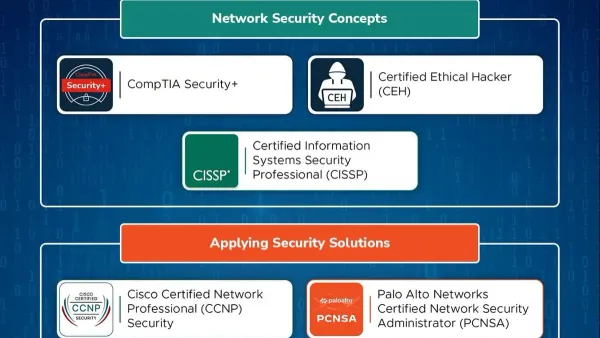
Several popular security certifications have limitations when applied to security awareness managers without additional skills or credentials. Technical-only certifications like Certified Information Systems Security Professional (CISSP) or Certified Ethical Hacker (CEH) offer deep security knowledge and credibility. They suit professionals with strong technical backgrounds and provide valuable insight into security threats, but their lack of focus on communication and program management means they should be supplemented with training in instructional design or leadership.
Certifications centered entirely on compliance or audit, such as Certified Information Systems Auditor (CISA), target professionals managing regulatory frameworks and audit processes. These are well-suited for compliance officers but do not adequately address the design or delivery of security awareness programs, limiting their relevance for awareness managers.
Soft skills and instructional design certifications, including those focused on adult learning principles or corporate training methodologies, serve as valuable supplements. They equip awareness managers with techniques to engage learners effectively but do not replace the need for solid security knowledge. Job postings frequently emphasize combinations of security certifications alongside communication or training credentials, underscoring the need for a balanced skill set.
Further reading
- Best Certifications for Cybersecurity Project Managers in 2026
- Best Certifications for Cyber Threat Hunters in 2026
- Top Certifications for Cyber Intelligence Officers in 2026
- Best Certifications for Cybersecurity Sales Engineers in 2026
Frequently asked questions
What certifications best combine security knowledge and training skills for awareness managers?
Certifications like the Certified Security Awareness Practitioner (CSAP) and the Certified Professional in Security Awareness (CPSA) specifically integrate security fundamentals with training delivery and program leadership. Additionally, CISSP and CISM offer strong security governance and technical foundations that can be paired with communication skills to support awareness roles effectively.
How often do security awareness certifications require renewal or continuing education?
Most security awareness certifications require renewal every three years, often through continuing professional education (CPE) credits or re-examination. For example, CISSP mandates 120 CPE credits over three years, while vendor-specific certifications may have different renewal cycles and specific training requirements.
Are vendor-specific awareness certifications better than vendor-neutral ones?
Vendor-specific certifications can provide deep knowledge of particular tools or platforms, useful for organizations standardized on those systems. Vendor-neutral certifications, however, tend to cover broader principles and best practices, making them more adaptable across diverse environments and potentially more valuable for strategic security awareness management.
Can a non-technical professional become a security awareness manager with the right certification?
Yes, non-technical professionals can become effective security awareness managers by pursuing certifications focused on security culture and communication, such as CSAP or CPSA. These certifications emphasize human factors and program leadership over deep technical skills, enabling those with training or HR backgrounds to lead successful awareness initiatives.
Limits of this advice and alternative paths
This article does not cover certifications focused solely on technical penetration testing or incident response, as they do not address the unique skills required for security awareness management. Professionals aiming for deeply technical roles in cybersecurity, such as ethical hacking or incident handling, should consider certifications like OSCP or GIAC certifications outside the scope of awareness management.
For those focused on building effective security awareness programs, the most practical next step is to evaluate organizational needs and select a certification that balances technical understanding with communication and leadership skills. Prioritizing a certification that offers hands-on training in program design and delivery will best prepare security awareness managers to influence and sustain a security-conscious culture.