Antisyphon Training Review: Effectiveness and Practical Insights for 2026
This Antisyphon Training review explores its practical effectiveness and strategic benefits for security teams facing siphoning threats.


This article offers an Antisyphon Training review focused on its practical effectiveness and relevance in 2026 security operations. Antisyphon training, a specialized approach aimed at countering siphoning attacks, has gained attention in both offensive and defensive security circles. This review evaluates how well the training translates into real-world offensive tooling capabilities and examines insights shared during recent SOC summits.
Security professionals and organizations looking to integrate antisyphon measures will find an analysis of training outcomes, user experiences, and community feedback. The assessment includes who benefits most from this training and how it measures up against alternative methods. By balancing technical details with strategic implications, this article provides an informed perspective to support decision-making in current security environments.
What is the antiphon
The antiphon, in the context of security training, refers to a specialized approach designed to counteract siphoning attacks and unauthorized data exfiltration. Rooted in principles that emphasize dynamic response and layered defense, the antiphon integrates both technical and procedural elements to create a resilient security posture. Its core concept revolves around anticipating attack vectors related to data siphoning and training security teams to recognize and mitigate these threats effectively.
Historically, the term "antiphon" emerged as a metaphor within cybersecurity circles to describe countermeasures that act as a 'call and response' to siphoning activities. By 2026, this concept has evolved into structured training modules that combine simulated offensive techniques with real-time defensive strategies. This evolution reflects the increasing sophistication of siphoning tactics observed in advanced persistent threat campaigns.
Antiphon training is closely related to anti-syphonage concepts, which focus specifically on preventing unauthorized data capture and removal. While anti-syphonage covers a broad range of technical controls like network segmentation and data loss prevention, the antiphon emphasizes the human and operational aspects, training security teams to identify subtle indicators and respond with tailored countermeasures.
Examples from 2026 SOC summits illustrate implementations where antiphon frameworks have been integrated into red team exercises and automated detection workflows. One notable case involved a financial sector SOC leveraging antiphon principles to disrupt an advanced siphoning attempt by dynamically adjusting firewall rules and endpoint monitoring in response to attacker behaviors observed during training simulations.
- Pros: Enhances proactive defense awareness; integrates offensive and defensive tactics; improves incident response readiness.
- Cons: Requires continuous updates to training content to match evolving threats; may demand significant resource investment for realistic simulations.
What is anti siphon
In cybersecurity, anti siphon refers to a set of measures and training focused specifically on preventing unauthorized data extraction or "siphoning" from networks and systems. Unlike the broader antiphon concept, which combines offensive and defensive strategies to counter data siphoning at an operational level, anti siphon training zeroes in on technical controls, detection techniques, and policy enforcement that block or limit data exfiltration attempts.
Anti siphon initiatives often include specialized tooling such as network traffic analyzers configured to detect anomalous data flows, endpoint monitoring for suspicious file transfers, and strict access controls to reduce the attack surface. Training emphasizes recognizing common siphoning methods like covert channels, DNS tunneling, or insider threats.
A common misunderstanding is that anti siphon is simply a subset of antiphon or interchangeable with it. In reality, anti siphon is more narrowly targeted toward preventing data leaks through specific technical and procedural controls, while antiphon encompasses a wider security posture including human factors and offensive simulation.
For example, recent 2026 training materials from leading security vendors distinguish anti siphon as a technical defense layer, whereas antiphon includes red team exercises to test organizational readiness. Both approaches are complementary, but organizations seeking immediate technical safeguards may prioritize anti siphon tools and training.
- Pros: Focused on tangible, technical controls; easier to measure effectiveness; directly addresses data exfiltration vectors.
- Cons: May overlook human and operational aspects; less emphasis on offensive simulation; potential gaps in holistic security readiness.
Tip: When adopting anti siphon training, integrate it with broader security exercises to ensure both technical defenses and human responses are aligned.
How does anti siphon work
Anti siphon employs a combination of behavioral analytics, network segmentation, and real-time anomaly detection to prevent unauthorized data extraction. Training scenarios typically begin with the deployment of simulated data exfiltration attempts, where participants learn to identify subtle indicators such as unusual outbound traffic patterns or unauthorized protocol usage.
Step-by-step, anti siphon training starts by configuring network monitoring tools—often through platforms like Zeek or Suricata—to flag suspicious activities aligned with siphoning tactics. Trainees then analyze these alerts, correlate them with endpoint logs, and implement containment strategies such as isolating affected nodes or blocking compromised user credentials.
Offensive tooling reflecting anti siphon principles includes red team frameworks that mimic data siphoning techniques without causing actual damage. For example, tools may simulate DNS tunneling or covert channel creation to test detection capabilities. These exercises reveal gaps in monitoring configurations and human response readiness.
Case studies from 2026 SOC summits highlight organizations reducing data leakage incidents by integrating anti siphon training with automated alert triage workflows. However, the approach requires continuous tuning to minimize false positives, which can strain analyst resources.
- Pros: Enhances detection of covert exfiltration methods; improves coordination between automated tools and human analysts.
- Cons: Resource-intensive to maintain; risk of alert fatigue due to false positives.
Who benefits from antisyphon training
Antisyphon training primarily benefits security teams tasked with safeguarding sensitive data against sophisticated exfiltration attempts. This includes incident response units, red teams, and SOC analysts working in environments where data leakage risks are high, such as financial institutions, healthcare providers, and technology companies handling intellectual property.
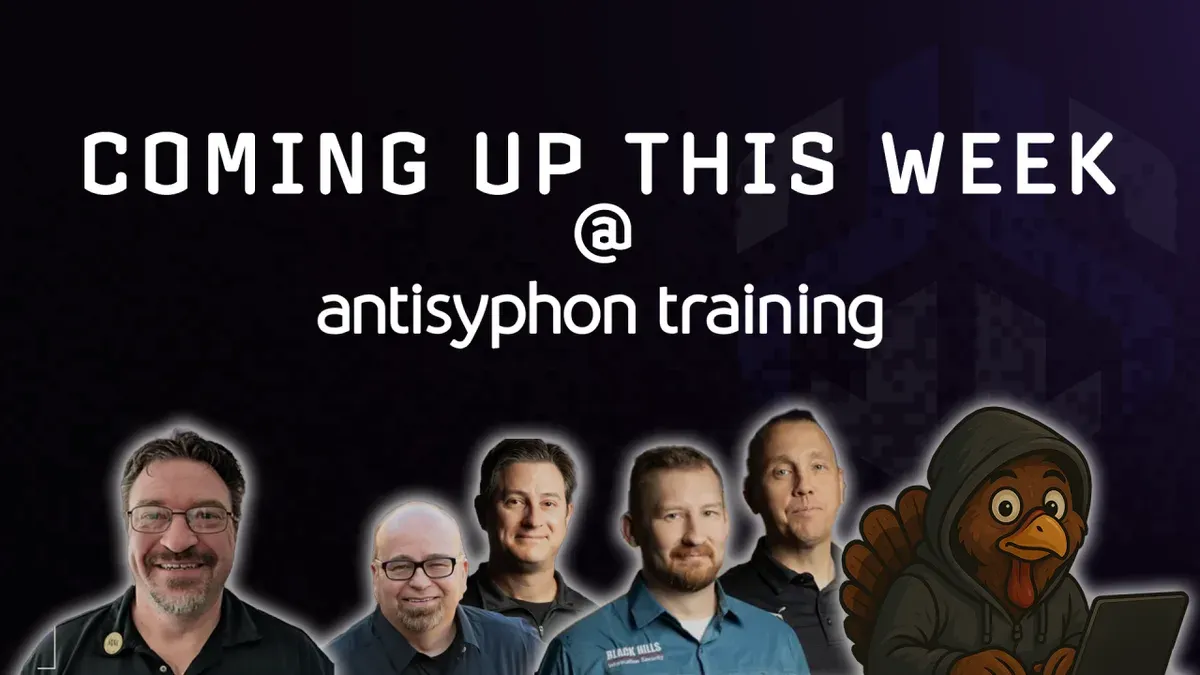
Organizations with mature security operations that integrate offensive and defensive tactics find antisyphon training particularly effective. The training enhances the readiness of teams to detect and respond to stealthy data siphoning attacks through simulated adversarial scenarios, improving operational resilience.
Survey feedback from 2026 shows that companies employing antisyphon training report improved coordination between red and blue teams and a better understanding of attack vectors specific to data exfiltration. However, smaller organizations with limited resources or those relying solely on compliance-driven security may not realize the full benefits due to the training's operational complexity and resource demands.
Pros:
- Improves detection and response capabilities for sophisticated data exfiltration threats
- Fosters collaboration between offensive and defensive security teams
- Tailored scenarios reflect real-world challenges discussed at 2026 SOC summits
Cons:
- Requires dedicated resources and skilled personnel to implement effectively
- Less suited for organizations without established security operations
- Should not be the sole training approach but part of a layered security strategy
Tip: Security leaders should assess their operational maturity and resource capacity before adopting antisyphon training to ensure alignment with organizational needs.
Performance and results of antisyphon training in practice
Recent evaluations from 2026 SOC summits indicate that antisyphon training has contributed to measurable improvements in offensive tooling effectiveness. Security teams report enhanced capabilities in simulating data exfiltration scenarios, with some citing up to moderate increases in the detection and response speed during red team exercises. These improvements are largely attributed to the training's focus on integrating offensive techniques with real-time defensive feedback loops.
In terms of SOC readiness, organizations employing antisyphon training noted better coordination between threat hunting and incident response teams. However, this readiness gain is often contingent on the organization's existing maturity level; less mature SOCs may struggle to fully leverage the training outcomes without additional investments in tooling and staff expertise.
When compared with alternative training methods such as purely technical anti siphon drills or generic cybersecurity simulations, antisyphon training offers a more holistic approach but with increased resource demands. Some organizations found alternatives easier to deploy and scale, albeit with less depth in offensive tooling integration.
- Pros: Improved offensive tooling effectiveness, enhanced SOC team coordination, practical alignment with real-world attack scenarios.
- Cons: High resource requirements, dependency on SOC maturity, steeper learning curve for staff.
Tip: Organizations should assess their operational maturity before adopting antisyphon training to ensure they can capitalize on its advanced offensive-defensive integration.
Pros and cons of antisyphon training
Antisyphon training offers several distinct advantages that appeal to security teams aiming to enhance their data exfiltration defenses. One notable benefit is its adaptability; the training can be tailored to various organizational environments, from small SOC teams to large enterprise operations. This flexibility supports diverse threat scenarios, improving readiness across different attack vectors.
- Adaptability: Customizable scenarios align with specific organizational risks and tooling.
- Skill enhancement: Integrates offensive tooling practice that sharpens detection and mitigation capabilities.
- Cost-effectiveness: When integrated with existing training frameworks, it leverages resources efficiently without requiring entirely new platforms.
However, antisyphon training is not without drawbacks. Its complexity demands a mature operational environment; organizations lacking established SOC processes may struggle to implement it effectively. Additionally, resource requirements can be significant, particularly for smaller teams that need to allocate time and personnel to develop and maintain training scenarios. The niche focus on data siphoning also limits its standalone applicability, making it less suitable as a sole training approach.
- Complexity: Requires advanced coordination and understanding of both offensive and defensive tactics.
- Resource intensive: Needs dedicated personnel and time investment for scenario creation and execution.
- Niche applicability: Best as a complement to broader security training rather than a replacement.
Expert feedback from 2026 SOC summits confirms these trade-offs, emphasizing that organizations with mature security operations realize the most benefit, while others may find the learning curve steep.
Alternatives to antisyphon training
Several offensive training programs and tooling options compete with antisyphon training in 2026, each varying in focus, cost, and suitability. Popular alternatives include Red Team Operations training, Breach and Attack Simulation (BAS) platforms, and specialized phishing simulation courses.
| Program | Focus | Cost Range | Key Outcome |
|---|---|---|---|
| Red Team Operations Training | Comprehensive offensive tactics beyond data exfiltration | High | Develops advanced adversarial skills but requires extensive resources |
| Breach and Attack Simulation (BAS) | Automated continuous security validation | Moderate | Offers scalable testing with less manual effort, ideal for ongoing validation |
| Phishing Simulation Courses | Focused on social engineering defense | Low to Moderate | Improves human factor resilience but limited to phishing vectors |
Choosing alternatives depends on organizational priorities. Red Team training is preferable when aiming for broad offensive skill development but demands high investment and mature infrastructure.
BAS platforms suit organizations seeking continuous automated testing with moderate operational overhead but may lack the tailored human response training found in antisyphon programs.
Phishing simulation is cost-effective and targets a common attack vector but does not address broader data siphoning challenges.
- Red Team Operations Training
- Pros: Comprehensive offensive skillset, realism in attack scenarios
- Cons: High cost, requires skilled personnel, resource-intensive
- Breach and Attack Simulation
- Pros: Automated, scalable, continuous validation
- Cons: Less focus on human response, limited to preconfigured scenarios
- Phishing Simulation
- Pros: Affordable, improves user awareness
- Cons: Narrow scope, limited to social engineering defense
Tip: Organizations with limited resources or less operational maturity might start with BAS platforms or phishing simulations before investing in comprehensive antisyphon or Red Team training.
Antisyphon training at SOC summits and community feedback
In 2026, Security Operations Center (SOC) summits have increasingly featured antisyphon training as a topic of interest, reflecting its growing relevance in defensive and offensive security strategies. Events such as the Global SOC Summit and the Cyber Defense Forum included multiple sessions dedicated to the practical deployment of antisyphon training, where experts demonstrated how simulated data exfiltration scenarios help sharpen detection and response tactics.

Presenters at these summits emphasized the adaptability of antisyphon training within mature SOC environments but also acknowledged its demands on resources and operational discipline. A recurring theme was the balance between investment and return, with some participants questioning whether smaller teams could integrate antisyphon techniques without overextending their capabilities.
Community feedback collected through panel discussions and surveys during these events revealed a mix of enthusiasm and caution. While many valued the hands-on nature of antisyphon exercises, some expressed concern about the complexity and the need for ongoing tuning to align with evolving threat landscapes.
- Pros: Encourages realistic offensive-defensive interplay, fosters team coordination, and updates response frameworks.
- Cons: High resource requirements, steep learning curve, and potential for operational disruption if not carefully managed.
Notably, a few training providers introduced pay-what-you-can pricing models in 2026 to lower barriers to adoption, which received positive responses for increasing accessibility. However, the consensus remains that antisyphon training best suits organizations with established SOC processes and mature security postures.
Further reading
- Solid Security Review 2026: Real-World Effectiveness for SMBs and Agencies
- MalCare Review 2026: In-Depth Security Performance and Alternatives
- Shield Security Review 2026: Real-World Protection for WordPress Sites
- Patchstack Review 2026: Real-World Security Impact for WordPress Users
Frequently asked questions
What is anti-syphonage?
Anti-syphonage refers to mechanisms or methods designed to prevent siphoning, which is the unintended flow of fluids or gases due to pressure differences. In a broader sense, especially in security contexts, it involves techniques that block unauthorized extraction or leakage of data or resources. The term is often used in both physical plumbing systems and metaphorically in cybersecurity to describe preventative measures.
What is antisyphon training offensive tooling?
Antisyphon training offensive tooling comprises specialized tools and techniques used to simulate or counter siphoning attacks within security environments. This training equips security professionals with practical skills to detect, analyze, and mitigate siphoning-related vulnerabilities that could be exploited in offensive operations. The tooling is frequently updated to reflect current threat models and is discussed actively at security operations center (SOC) summits in 2026.
Are there any antisyphon training reviews from users?
Yes, several user reviews from security professionals and organizations have emerged in 2026. These reviews commonly highlight improvements in offensive security capabilities and situational awareness but also note the need for continuous practice due to the complexity of real-world scenarios. Feedback from SOC summit attendees often reflects a balanced view, emphasizing both the strengths and limitations of the training.
How does the anti syphon p trap relate to cybersecurity?
The anti syphon P-trap is a plumbing component that prevents backflow and siphoning in water systems. Metaphorically in cybersecurity, it represents a preventive barrier that stops unauthorized data siphoning or leakage by maintaining control over network flow and access. Understanding this analogy helps security teams conceptualize how certain defensive mechanisms can block or redirect malicious siphoning attempts within digital infrastructures.
Limits of this review and who should look elsewhere
This review does not cover highly specialized or proprietary antisyphon training variants that may exist in closed enterprise environments. Organizations with unique infrastructure or compliance requirements should consult vendors or experts familiar with those specific contexts. Additionally, this assessment focuses on generalized training approaches and does not evaluate hardware-dependent or custom tooling integrations.
Security teams prioritizing highly tailored offensive capabilities or those needing integrated solutions with existing proprietary platforms may find more relevant insights through direct vendor engagement or pilot programs. Similarly, organizations seeking comprehensive risk management frameworks beyond the scope of antisyphon techniques should consider broader security training programs.
For those interested in exploring antisyphon training further, the most effective next step is to arrange a controlled pilot incorporating real offensive tooling scenarios aligned with your organization's threat model. This allows practical evaluation of training effectiveness and compatibility with existing defensive or offensive workflows before full adoption.