How to Understand and Secure Your Box Account After a Hack
Discover how to understand and secure your Box account after a hack with practical steps and cybersecurity insights.

You try to log into your Box account and notice unusual activity or a password change you didn’t make. The phrase "Box account hacked" suddenly feels all too real, raising questions about how the breach happened and what to do next.
This article guides you through understanding why Box accounts get compromised and offers clear steps to secure your data. It also explains how to use the cybersecurity platform Hack The Box safely, including insight into its subscriptions and how it can help you strengthen your security skills.
Key takeaways
- Recognize common vulnerabilities that lead to Box account hacks, such as reused passwords and phishing.
- Use multi-factor authentication and strong password management to protect your Box account.
- Approach Hack The Box with careful account security practices to avoid exposing your credentials.
- Know the subscription options for Hack The Box to access appropriate learning resources.
- Follow immediate recovery steps, including password resets and reviewing account activity, if a hack occurs.
What is Hack The Box and why it matters for cybersecurity learners
Hack The Box is an online platform designed to help individuals develop and test their cybersecurity skills through hands-on challenges and simulated hacking environments. It attracts a broad community ranging from beginners to seasoned professionals eager to sharpen their abilities in penetration testing, network security, and ethical hacking.
The platform hosts a variety of active users, making it one of the largest cybersecurity training communities globally. This community-driven approach fosters collaboration, knowledge sharing, and continuous learning, which benefits anyone serious about understanding digital security.
For example, a user might engage with a virtual machine intentionally configured with vulnerabilities, such as weak passwords or outdated software, to practice identifying and exploiting these security flaws safely. This practical experience is essential for understanding real-world threats, including those that could compromise your own accounts.
Understanding Hack The Box is relevant for anyone concerned about account security because it highlights common attack vectors and defensive techniques. By learning how attackers operate in a controlled environment, you gain insight into protecting your own accounts, including those on platforms like Box, from similar threats.
How to use Hack The Box safely to protect your account
When creating your Hack The Box account, start by choosing a unique username and a strong password that combines letters, numbers, and symbols. Avoid reusing passwords from other sites to reduce risk. During sign-up, use the official Hack The Box website to prevent falling victim to fake sites.
Immediately after registering, enable two-factor authentication (2FA) by navigating to your profile settings, selecting "Security," and activating 2FA via an authenticator app like Google Authenticator or Authy. This adds a crucial second layer of protection beyond your password.
Be vigilant for phishing attempts. For example, you might receive an email claiming to be from Hack The Box support asking you to verify your login details through a suspicious link. Always check the sender's email address for official domains and avoid clicking links in unsolicited messages. Instead, access your account directly through the official website.
During login, watch for unusual prompts or requests. If a login attempt triggers notifications or challenges you did not initiate, immediately change your password and review your account activity.
By following these steps—secure sign-up, enabling 2FA, and recognizing phishing—you significantly reduce the chances of unauthorized access to your Hack The Box account.
Understanding Hack The Box subscriptions and costs
Hack The Box offers both free and paid subscription options designed to accommodate different user needs. The free tier grants access to a selection of challenges and labs but limits the number of active machines and restricts access to some advanced content and features.
The paid subscriptions come in tiers, typically including VIP and VIP+. The VIP plan costs approximately $12 per month and provides access to all retired machines, exclusive labs, and the ability to reserve active machines for longer periods. VIP+ usually costs around $30 per month and adds features like early access to new content, dedicated servers, and additional benefits tailored for professional users or teams.
For example, a user subscribing to VIP can practice on a wide range of scenarios without the pressure of time limits found in the free plan, making it easier to deepen skills. This tier also supports learning through detailed write-ups and walkthroughs that are not always accessible to free users.
Compared to other platforms such as TryHackMe or Offensive Security, Hack The Box’s pricing is competitive, offering more extensive practical environments for a slightly higher monthly fee. User reviews often highlight the value of the paid tiers in providing comprehensive, up-to-date challenges that justify the subscription cost for serious learners.
Why your Box account might get hacked and common vulnerabilities
Your Box account can be compromised through several common vulnerabilities that attackers exploit. One primary cause is weak passwords or reusing credentials across multiple sites. If you use the same password for Box as for other services, a breach elsewhere can expose your Box login details.

Phishing and social engineering attacks are also frequent methods hackers use to gain access. For example, an attacker might send a convincing email appearing to be from Box support, prompting you to enter your credentials on a fake login page. Once entered, the attacker obtains your password directly.
Lack of multi-factor authentication (MFA) leaves accounts significantly more vulnerable. Without MFA enabled, a stolen password alone grants full access. Box offers MFA options such as authentication apps or SMS codes; neglecting these increases risk.
Consider a scenario where an employee uses a simple password like "Password123" for Box and other platforms. If a data breach on a less secure service reveals this password, hackers can try it on Box accounts. Without MFA, they can easily enter, access sensitive files, and potentially cause data loss or ransomware infection.
Security reports consistently show that credential stuffing, phishing, and absence of MFA rank among the top causes of cloud account compromises. Addressing these vulnerabilities reduces the chance your Box account will be hacked.
Steps to take immediately if your Box or Xbox account is hacked
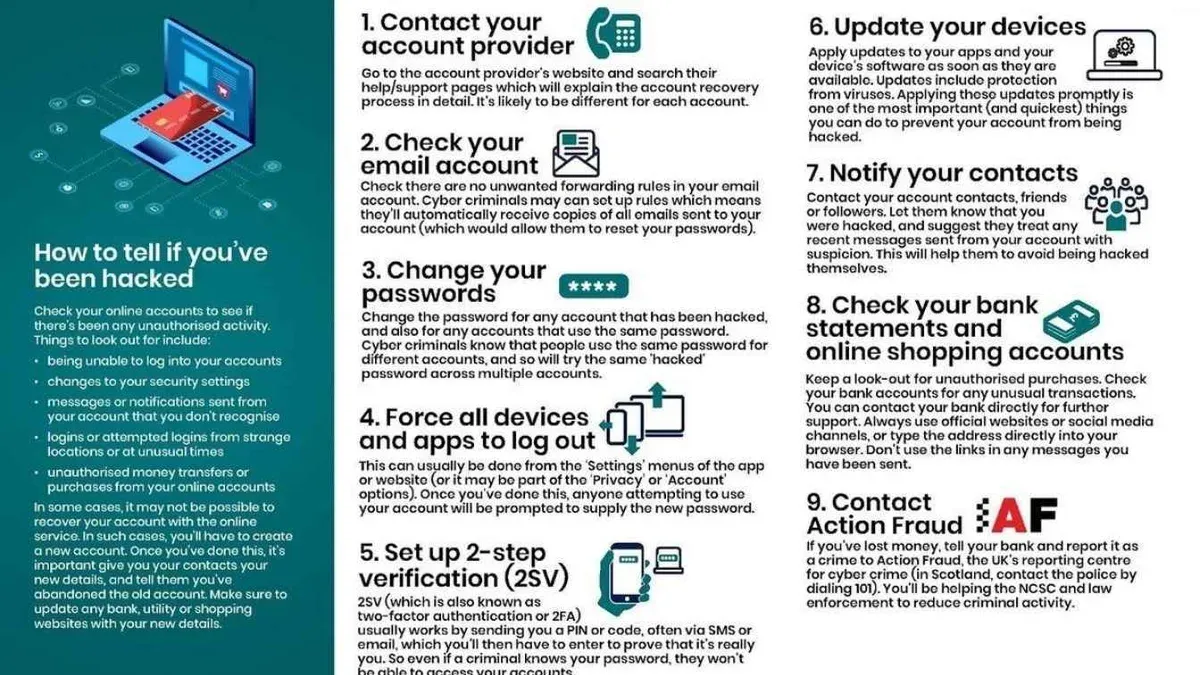
First, verify if your account has unauthorized access by checking recent activity logs. In Box, navigate to Account Settings > Security > Recent Activity to review login attempts and IP addresses. Xbox users can visit the Microsoft Account Security page to see recent sign-in history. If you spot unfamiliar locations or devices, act promptly.
Next, reset your password using a strong, unique combination. For Box, go to Account Settings > General > Change Password. Xbox users should change their Microsoft account password via the Security Basics portal. After resetting, update backup codes or recovery methods. In Box, you can manage backup codes under Account Settings > Security > Two-Step Verification. Xbox account recovery options are available through the Microsoft account security settings.
Contact support immediately if you suspect account compromise. Box recommends submitting a request through their Support Center, detailing the issue with timestamps from your recent activity. Xbox users should use the Microsoft Account Recovery process or contact Xbox Support directly. Recovery timelines vary but prompt reporting accelerates assistance and account restoration.
For example, if you notice a login from an unknown country in your Box recent activity, reset your password right away, update your two-factor authentication backup codes, and submit a support ticket referencing the suspicious login time. This coordinated approach limits damage and speeds recovery.
Best practices for account backup codes and recovery
Backup codes are one-time use codes generated by services like Box and Hack The Box to help you regain access if you lose your primary two-factor authentication device. They act as a last-resort entry point, so storing them securely is critical.
On Box, you can generate backup codes by navigating to Account Settings > Security > Two-Step Verification, then selecting Generate Backup Codes. Hack The Box offers similar options under Profile > Security Settings. Once generated, these codes should be saved offline—preferably printed and stored in a locked drawer or kept within a secure password manager that you trust.
A common mistake is storing backup codes in cloud storage without encryption or in email accounts vulnerable to hacking. For example, a user who saved backup codes in an unencrypted Google Drive folder lost access after their email was compromised, making account recovery impossible and forcing a lengthy support process.
To avoid this, always treat backup codes as sensitive credentials. Use physical storage or encrypted digital vaults and never share them. Regularly review and regenerate backup codes if you suspect they may have been exposed or after using any of them.
Why do I keep getting hacked and how to break the cycle
Repeated hacks often stem from overlooked vulnerabilities such as persistent malware infections or the reuse of credentials across multiple sites. For example, if your device is infected with keylogging malware, attackers can capture new passwords as you enter them, rendering password changes ineffective. Similarly, using the same password on your Box account and other platforms creates a risk that a breach elsewhere compromises your Box account as well.
Conducting regular security audits can help identify weak spots. Tools like Microsoft Defender or Malwarebytes can scan for malware, while services such as Have I Been Pwned enable you to check if your email or credentials have appeared in data breaches. Combining these checks with password hygiene—changing passwords periodically and ensuring uniqueness—reduces exposure.
Security monitoring software that alerts you to unusual account activity adds an extra layer of defense. For instance, setting up login notifications in Box's security settings or using third-party identity protection apps can promptly inform you of unauthorized access attempts, enabling faster response.
In practice, if you notice unexpected login alerts on your Box account, immediately run a malware scan on all devices used to access the account. Then, change your password to a unique, strong one and confirm that two-factor authentication is active. This cycle of detection, cleanup, and strengthened access controls forms the foundation for breaking repeated hacking incidents.
Comparing Hack The Box to other cybersecurity platforms
Hack The Box distinguishes itself with a hands-on, gamified approach to cybersecurity training, focusing on real-world penetration testing scenarios. Its platform features a constantly updated range of challenges and labs, designed to mimic actual environments, which sets it apart from more theoretical or video-based platforms like Cybrary or Pluralsight.
When comparing costs, Hack The Box offers both free and paid tiers, with paid subscriptions providing access to exclusive machines and labs. This pricing model is competitive but may be higher than some platforms that offer broader, less specialized content. The learning curve is moderate; users with some technical background can start quickly, but beginners might find the initial challenges steep without prior knowledge.
Community support is a strong point for Hack The Box, with active forums and Discord channels where users share tips and solutions. This contrasts with platforms that rely more heavily on formal instructor-led courses, where peer interaction is limited.
For example, a cybersecurity student aiming to practice penetration testing practical skills will benefit more from Hack The Box’s diverse labs and real-time environment than from a platform emphasizing certification prep or theory. Conversely, individuals seeking broad IT security fundamentals may prefer platforms offering structured courses and certifications.
| Feature | Hack The Box | Cybrary | Pluralsight |
|---|---|---|---|
| Hands-on Labs | Extensive, real-world scenarios | Limited, mostly simulations | Few, focus on videos |
| Subscription Cost | Free & paid tiers, moderate cost | Free & paid, often lower | Paid, subscription-based |
| Learning Curve | Moderate to steep | Gentle, beginner-friendly | Varies, mostly beginner to intermediate |
| Community Support | Active forums and Discord | Moderate forums | Limited peer interaction |
- How to Protect Your Binance Account from Hacks and Login Issues
- What to Do If Your Best Buy Account Is Hacked: A 2026 Guide
- How to Protect Yourself if Your Apple Pay Account Is Hacked
Frequently asked questions
Does hack the box actually work?
Hack The Box provides practical, hands-on challenges that simulate real-world cybersecurity scenarios. Many users find it effective for improving penetration testing and ethical hacking skills through its progressive difficulty levels and diverse labs. However, the effectiveness depends on consistent practice and engagement.
How much is hack the box subscription?
Hack The Box offers several subscription tiers, including a free tier with limited access and paid plans that vary in price based on features and lab access. Paid subscriptions generally range from modest monthly fees to higher costs for VIP or professional levels, which offer more machines, exclusive content, and faster access. Exact pricing can be found on their official website and may change over time.
Is hack the box worth it?
For individuals serious about developing practical cybersecurity skills, Hack The Box can be worth the investment due to its extensive, realistic challenges and community support. It may be less valuable for casual users who prefer theoretical learning or do not plan to apply the skills professionally. Evaluating your learning goals helps determine if the platform fits your needs.
Is hack the box good?
Hack The Box is widely regarded as a solid platform for hands-on cybersecurity training, offering a variety of labs that cover multiple skill levels and topics. Its user interface and challenge design support effective learning, though some users may find the initial difficulty curve steep. The active community and frequent content updates add to its quality.
Is hack the box free?
Yes, Hack The Box offers a free tier that provides access to a limited number of machines and challenges, allowing users to explore the platform and test basic skills. To access more advanced labs, features, and faster machine availability, a paid subscription is required. The free tier serves as an introduction rather than a full experience.
Limits of this advice and when to seek expert help
This guide focuses on practical steps and general security practices for users concerned about Box account hacks and the safe use of Hack The Box. It does not cover advanced incident response techniques, forensic analysis, or legal actions that may be necessary after a severe breach. If your account compromise involves sensitive data exposure or persistent unauthorized access, consulting certified cybersecurity professionals or legal advisors is essential. Additionally, recommendations for Hack The Box assume you have some baseline technical knowledge; absolute beginners might find additional foundational training helpful before fully engaging with the platform.
The single most useful next step is to enable two-factor authentication (2FA) on your Box account and any other critical services. This simple action significantly reduces the risk of unauthorized access by requiring a second verification method beyond your password, effectively breaking the cycle of repeated hacks that rely on credential theft or reuse.