Top Certifications for Cyber Intelligence Officers in 2026
Explore top certifications tailored for cyber intelligence officers to enhance strategic cyber threat analysis and operational skills in 2026.

This article outlines the best certifications for cyber intelligence officer roles in 2026, focusing on credentials that align with strategic intelligence functions rather than general cybersecurity tasks.
Cyber intelligence officers operate at the intersection of cyber defense, threat analysis, and strategic decision-making. Their certifications should reflect skills in collecting, analyzing, and applying cyber threat intelligence to support operational goals. This list ranks certifications that provide practical, role-specific knowledge—ranging from specialized intelligence analysis to offensive tactics—helping professionals distinguish themselves in an evolving field.
How we chose these certifications
The selection process for the top certifications focused on their direct applicability to the cyber intelligence officer role and responsibilities, ensuring alignment with real-world intelligence tasks rather than generic cybersecurity functions. Industry recognition was gauged through widespread acceptance in both intelligence and cybersecurity communities, supported by comparisons of certification objectives, pass rates, and surveys reflecting perceived value.
Each certification was assessed for its balance of technical, analytical, and operational content, recognizing that cyber intelligence officers require a diverse skill set. Difficulty levels and prerequisites were considered to help candidates understand the commitment needed; some certifications demand extensive prior experience, while others are more accessible but still rigorous.
Career impact was evaluated using available salary benchmarks and reports from industry surveys, indicating which certifications tend to correlate with advancement opportunities and higher compensation. For each certification, the analysis includes its target audience, a distinct strength reflecting its unique contribution to cyber intelligence capabilities, and one honest drawback such as limited scope or high entry barriers.
Certified Cyber Intelligence Professional (CCIP)
The Certified Cyber Intelligence Professional (CCIP) is a certification specifically designed for cyber intelligence analysts. It encompasses core topics such as cyber threat intelligence, advanced data collection methods, and analytical techniques essential for interpreting complex intelligence data. The program emphasizes practical skills that align with the operational demands of cyber intelligence officers.
CCIP is best suited for mid-level cyber intelligence officers who aim to advance their tradecraft and enhance their analytical capabilities. Candidates typically have prior experience in cybersecurity or intelligence roles before pursuing this certification. The exam is known for its rigor, combining theoretical questions with practical scenarios that test real-world application.
A key strength of CCIP lies in its focused curriculum tailored exclusively to cyber intelligence, making it highly relevant for professionals in government agencies and specialized units. Testimonials from certified officers highlight the certification's role in improving their threat detection and intelligence reporting skills.
One drawback is the prerequisite experience requirement, which may limit accessibility for those new to the field. Additionally, the exam's practical nature demands significant preparation beyond standard study materials, posing a challenge for some candidates. Pass rates are moderate, reflecting the certification's demanding standards.
GIAC Cyber Threat Intelligence (GCTI)
The GIAC Cyber Threat Intelligence (GCTI) certification focuses on equipping cyber intelligence officers with tactical and strategic threat intelligence skills. It covers the collection, analysis, and operational application of cyber threat data, emphasizing real-world intelligence scenarios relevant to both private sector and government roles.
This certification suits analysts and officers seeking a credential recognized across industries that require a strong understanding of adversary tactics and cyber threat landscapes. GCTI holders often work in roles that demand actionable intelligence to inform defensive measures and strategic decisions.
A key strength of GCTI is its reputation for bridging technical cybersecurity knowledge with intelligence analysis, making it highly regarded among employers. It often leads to competitive salaries, typically above average for cyber intelligence roles, and is frequently listed among desired qualifications in job postings for threat intelligence positions.
The main drawback is the prerequisite of a solid technical cybersecurity background; candidates without foundational experience may find the material challenging. Additionally, the associated training courses and exam fees can be expensive, potentially limiting access for some professionals.
Tip: Candidates typically benefit from hands-on experience with threat intelligence tools before attempting the GCTI exam.
Certified Information Systems Security Professional (CISSP) with Intelligence Concentration
The CISSP certification is a globally recognized credential that covers a broad range of cybersecurity domains. When combined with an intelligence concentration—either through specialized continuing education or targeted professional experience—it becomes a valuable asset for cyber intelligence officers aiming for leadership roles. This path builds a comprehensive security foundation while integrating elements of intelligence analysis and operational context.
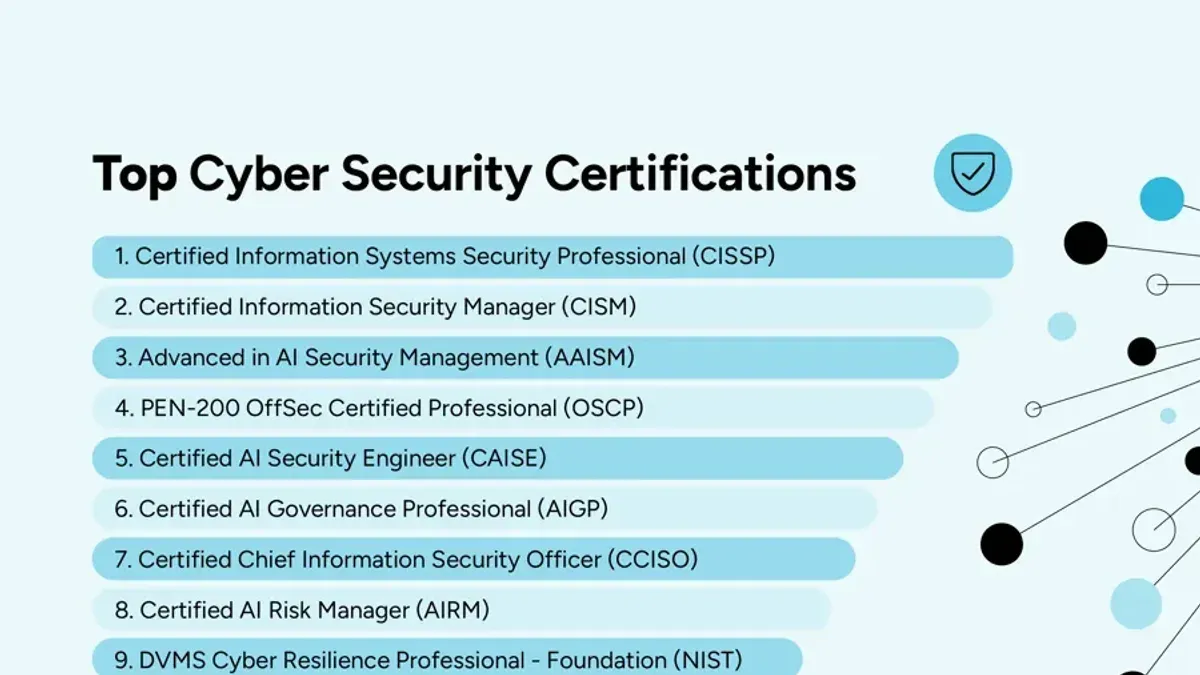
The certification suits cyber intelligence officers who seek to advance into management or strategic positions within organizations. Its broad scope helps officers understand the interplay of security policies, risk management, and technical controls, crucial for coordinating intelligence efforts across teams. Employers often prefer CISSP holders for roles requiring oversight of diverse security functions, including intelligence.
A notable strength of CISSP with intelligence focus is its alignment with career trajectories toward senior roles, supported by mandatory continuing professional education every three years to maintain certification relevance. This ensures officers stay updated on evolving threats and intelligence methodologies.
However, the CISSP's broad nature means it lacks in-depth coverage of intelligence-specific skills compared to more specialized certifications. Candidates also need extensive experience—typically five years in security—to qualify, which can be a barrier for those earlier in their careers.
SANS FOR578: Cyber Threat Intelligence Training and Certification
The SANS FOR578 course is a hands-on training program paired with a certification that focuses on practical cyber threat intelligence gathering and analysis. Participants engage with real-world datasets to develop skills in threat hunting, malware analysis, and adversary profiling, making it a strong fit for professionals seeking applied, operational intelligence capabilities.
This course suits cyber intelligence officers who want to deepen their expertise in turning raw data into actionable threat intelligence reports. It emphasizes techniques for identifying adversary tactics, techniques, and procedures (TTPs) and is valued by employers for enhancing analytical precision and response readiness.
One key strength of FOR578 is its immersive, scenario-driven labs that simulate real threat environments, offering a direct bridge between theory and practice. However, the course demands significant time investment and financial resources, positioning it best for candidates prepared to commit fully to an intensive learning experience.
Completion rates reflect a dedicated subset of professionals, with employers often highlighting the certification’s practical value in improving threat detection and reporting quality. The main trade-off remains balancing the course’s rigor and cost against the tangible operational skills acquired.
Certified Threat Intelligence Analyst (CTIA)
The Certified Threat Intelligence Analyst (CTIA) is a vendor-neutral certification that comprehensively covers the intelligence life cycle, from collection and processing to analysis and dissemination. It is designed to provide a structured understanding of intelligence operations relevant to cyber threats.
This certification suits entry to mid-level cyber intelligence officers seeking a thorough introduction to intelligence tasks without requiring advanced technical expertise. It is often chosen by professionals aiming to build a solid foundation in intelligence analysis before pursuing more specialized or technical certifications.
A key strength of the CTIA lies in its broad approach to the intelligence life cycle, making it accessible and practical for those new to cyber intelligence roles. Industry recognition positions it as a credible starting point, often recommended alongside or prior to certifications like the GIAC Cyber Threat Intelligence (GCTI).
However, the CTIA offers less technical depth compared to certifications such as GIAC or the SANS FOR578 course. This makes it less suitable for professionals who require advanced technical threat hunting or detailed malware analysis skills immediately. Salary impact for CTIA holders tends to be moderate, reflecting its role as an entry-level credential rather than a premium qualification.
Offensive Security Certified Expert (OSCE) – Intelligence Focus
The Offensive Security Certified Expert (OSCE) is an advanced certification emphasizing offensive security tactics, tailored to scenarios that support cyber intelligence gathering. It challenges candidates with complex penetration testing exercises that simulate real-world adversary tactics, including covert information extraction and evasion techniques relevant to intelligence officers.
Officers who operate at the intersection of offensive operations and intelligence analysis, particularly those involved in red team assignments, benefit from the OSCE. It suits professionals aiming to understand attacker behavior deeply and apply that insight to anticipate and counter threats through informed intelligence strategies.
A core strength of the OSCE is its rigorous, hands-on approach to exploiting vulnerabilities under realistic conditions, fostering skills in stealthy reconnaissance and lateral movement which are critical for intelligence collection. However, the certification is known for its high difficulty, requiring a strong technical foundation and prior certifications such as the OSCP, making it less accessible for newcomers.
Exam pass rates are generally low due to the challenging technical and practical demands, but OSCE holders often report enhanced career opportunities in specialized roles where offensive expertise directly supports intelligence objectives. This includes roles in advanced persistent threat (APT) simulation and threat actor profiling.
Certified Ethical Hacker (CEH) with Intelligence Modules
The Certified Ethical Hacker (CEH) certification is widely recognized for its focus on ethical hacking techniques and penetration testing. Its inclusion of intelligence-related modules adds a layer of insight into threat actor behaviors and information gathering, making it relevant for cyber intelligence officers seeking foundational offensive skills combined with intelligence awareness.
This certification suits beginners and intermediate professionals aiming to build a versatile skill set that bridges offensive cybersecurity and intelligence analysis. It supports understanding of how hackers think, which aids in anticipating and mitigating cyber threats in real-world scenarios.
A key strength of the CEH with intelligence modules lies in its broad industry acceptance and structured curriculum, which provides solid practical skills applicable in many operational environments. The certification enjoys relatively high pass rates compared to more specialized credentials, making it accessible for those starting in cyber intelligence roles.
However, intelligence professionals often critique CEH for being too generalist, lacking in-depth focus on advanced intelligence methodologies. It is best considered a foundational step rather than a terminal certification for those specializing in cyber intelligence.
Cyber Intelligence Officer Career Paths and Certification Combinations
Career progression for cyber intelligence officers typically aligns with distinct certification milestones that address evolving roles from entry-level to leadership. Entry-level officers often begin with the Certified Threat Intelligence Analyst (CTIA), which suits newcomers by offering a structured introduction to the intelligence life cycle. Its strength lies in accessibility, while its drawback is limited technical depth, potentially requiring follow-up certifications.
Mid-career professionals benefit from combining technical certifications like GIAC Cyber Threat Intelligence (GCTI) with analytical credentials such as SANS FOR578. This blend supports roles such as Cyber Threat Analyst or Intelligence Researcher, providing practical skills and threat analysis expertise. The combination’s strength is balanced skill coverage; however, the cost and time commitment can be significant.
Senior roles, including Cyber Intelligence Officer or Red Team Lead, align with advanced certifications like the Offensive Security Certified Expert (OSCE) with an intelligence focus and the Certified Cyber Intelligence Professional (CCIP). These certifications demand extensive experience and offer deep operational intelligence capabilities, though they require rigorous preparation and prior skill mastery.
Leadership positions, such as Chief Intelligence Officer or Cybersecurity Intelligence Manager, often augment broad certifications like CISSP with Intelligence Concentration alongside specialized certificates to bridge strategic oversight and technical understanding. This approach strengthens management skills but may spread focus thin across technical and leadership domains.
Tip: Combining certifications that balance technical prowess and analytical acumen enhances adaptability across cyber intelligence career paths.
Further reading
- Best Certifications for Cryptographer in 2026: Expert Guide to Career and Skills
- Best Certifications for Cloud Security Architect in 2026
- Best Certifications for AI Security Researchers in 2026
Frequently asked questions
Which certification is best for a beginner cyber intelligence officer?
The Certified Cyber Intelligence Professional (CCIP) is widely regarded as the most accessible entry point for beginners. It covers foundational concepts in cyber intelligence operations without assuming extensive prior experience. This certification helps establish a baseline understanding of intelligence lifecycle and analytical techniques relevant to the field.
Are vendor-neutral certifications better for cyber intelligence careers?
Vendor-neutral certifications, such as the GIAC Cyber Threat Intelligence (GCTI), offer broad applicability across different platforms and industries. They focus on universal intelligence principles rather than specific products, providing flexibility when working with diverse tools. However, vendor-specific certifications can be valuable when targeting roles that require proficiency in particular technologies.
How often should cyber intelligence officers renew their certifications?
Most cyber intelligence certifications require renewal every three years through continuing education or retesting to maintain relevance with evolving threats and methodologies. For example, certifications like CISSP with Intelligence Concentration mandate ongoing professional development credits. Staying current ensures officers remain proficient in the latest intelligence practices.
Can certifications substitute for hands-on experience in cyber intelligence?
Certifications provide essential theoretical knowledge and validate skills but cannot fully replace practical, hands-on experience. Real-world intelligence work involves dynamic scenarios and operational decision-making that develop through active engagement. Combining certifications with field experience produces the most effective cyber intelligence officers.
Limits of this guidance and who should consider other routes
This article focuses on certifications relevant to cyber intelligence officers but does not cover all possible career paths in cybersecurity or intelligence, nor does it substitute for practical experience and continuous learning. Professionals seeking roles outside of cyber intelligence, such as pure network defense, incident response, or intelligence analysis without a cybersecurity component, should explore certifications tailored to those specialties. Additionally, operational roles requiring deep technical hands-on skills or law enforcement cyber investigations may require different or additional credentials.
The most useful next step for aspiring or current cyber intelligence officers is to complement certification efforts with real-world application through targeted internships, mentorships, or project-based experiences within intelligence units or cyber operations teams. This hands-on engagement solidifies theoretical knowledge and sharpens analytical skills critical for success in the dynamic cyber intelligence environment of 2026.